

Biomethane for Scaling Agro-Processing in Ukraine: UABIO at BLACK SEA GRAIN. KYIV-2026
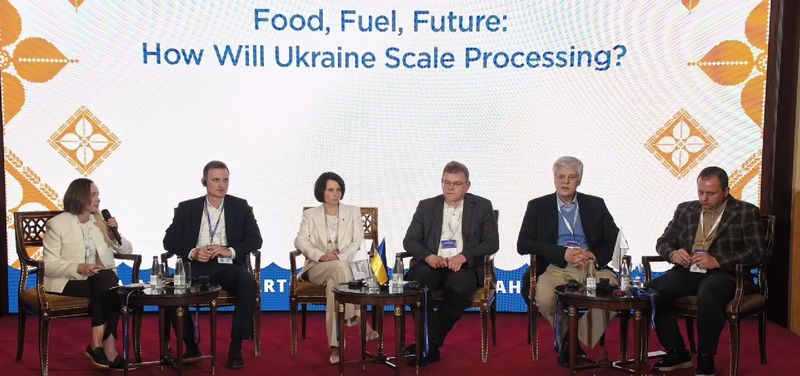
On April 22, the large-scale international agro event BLACK SEA GRAIN.KYIV-2026 took place, focusing on UA Agro Restart: Future Strategies 2026–2030. The event was dedicated to the strategic development of the agricultural sector through 2030: investments, energy independence, processing, and exports of high-tech products. UABIO was an official partner of the conference.
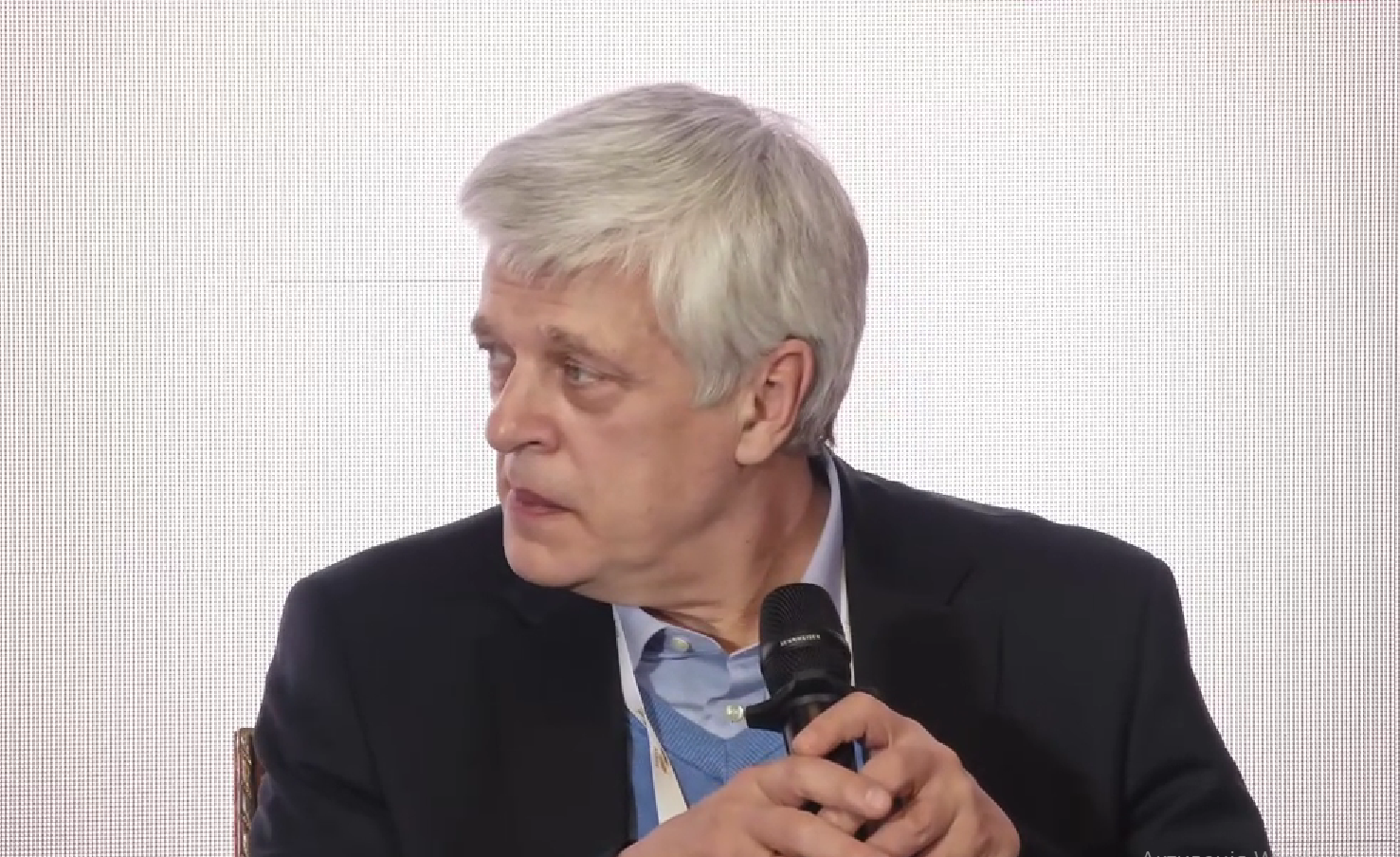
As part of the panel discussion “Food, Fuel, Future: How Will Ukraine Scale Processing?”, speakers included Georgii Geletukha, Chairman of the Board of UABIO, and Serhii Kravchuk, CEO of Hals Agro. The panel was moderated by Yuliia Harkavenko, Head of Analytics at UkrAgroConsult.
Other panel participants included:
- Andrii Tsehelik, CEO of biotech company Enzym Group
- Valentyna Hrechka, Partner at INTELEVRAZ investment company and Strong Energy fund
- Jobst Frank, Procurement and Trading Manager at Rostock Power Oil Plant, Germany
Key Points from Georgii Geletukha’s Speech
“The most promising direction in bioenergy today is biomethane. There are several reasons for this. Biomethane is a full substitute for natural gas. The EU has set a political goal to decarbonize by 2050. This means that by 2050, renewable gas should replace natural gas in pipelines. Among renewable gases, there are not many options — and biomethane is the main one.”
He emphasized that the EU’s biomethane deficit market is highly attractive for Ukraine, the largest agricultural country in Europe:
“Today, Europe produces only 5 billion cubic meters of biomethane per year, while aiming for 35 billion by 2030 and 150 billion by 2050. Imagine if Ukraine already had 20–30 billion cubic meters — the European market would eagerly absorb this volume. Moreover, Ukrainian agricultural enterprises are quite large, unlike in Europe. This allows sufficient feedstock to be gathered from single sources to build large biomethane plants with stronger competitive advantages compared to smaller European facilities.”
He also thanked Ukrainian authorities for consistent support:
“The basic biomethane law appeared at the end of 2021. In February 2022, the full-scale invasion began, and we didn’t have time to develop the sector. However, all biomethane-related legislation is being adopted by Parliament with strong support. We have no negative comments toward the government — only gratitude. A coordination council under the Ministry of Economy is actively working on bioenergy development.”
He also shared future plans:
“As an association, we expect thousands of biomethane plants in Ukraine. There is room for growth, and most importantly — there is a market. Currently it is European, but as Ukraine integrates into the EU, a domestic market will also emerge. Biomethane is already cost-effective in transport: switching vehicles to compressed or liquefied biomethane is significantly cheaper than diesel.”
Key Points from Serhii Kravchuk’s Speech
“The biomethane sector is a ‘blue ocean’ — a niche with huge potential. It allows for steady development within available investment and credit capacities.”
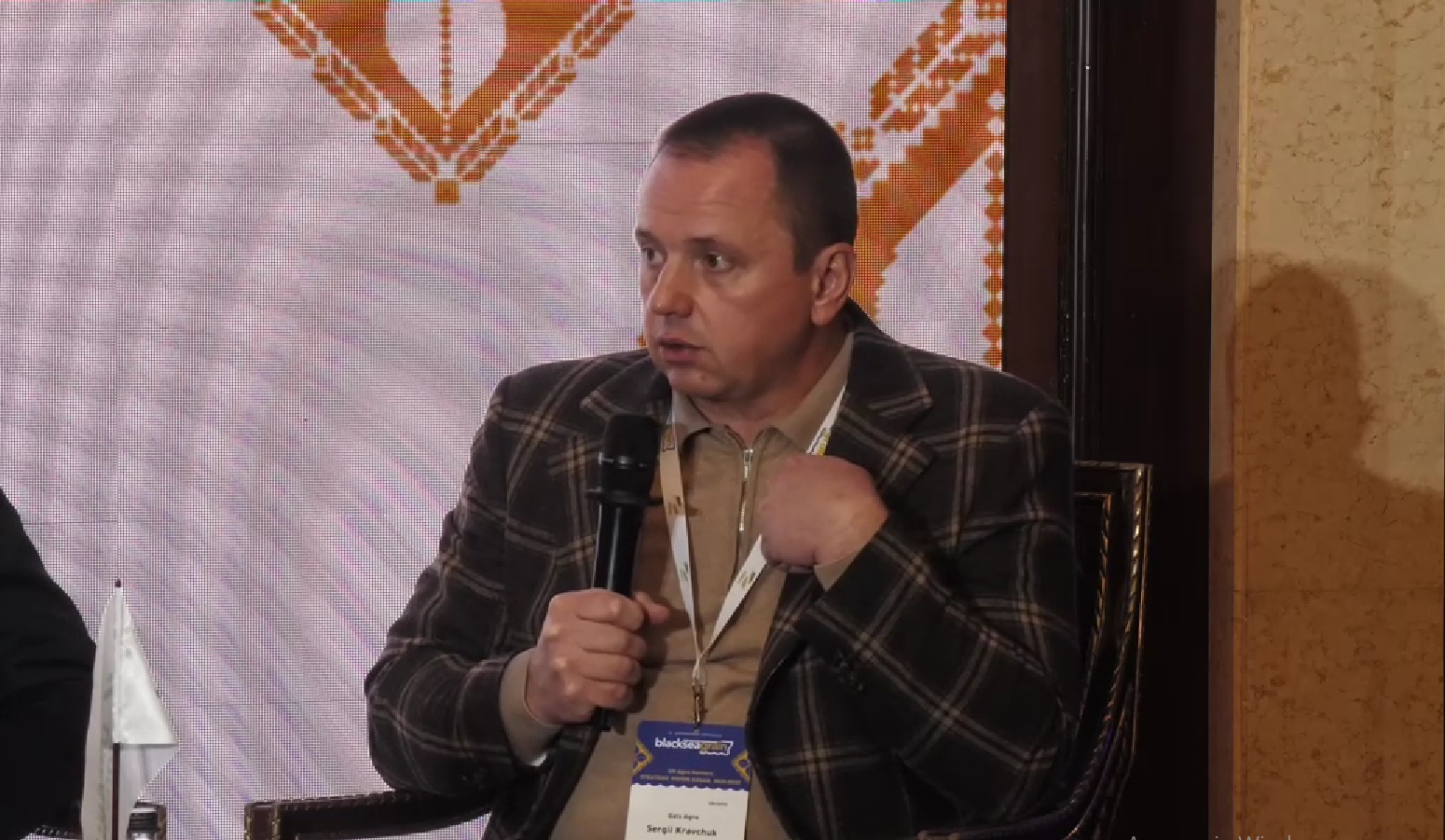
“Should farmers move into processing? Absolutely. But risks must be clearly understood: building new capacities without secured sales channels leads to disaster. We already see this in the sugar market. The same could happen with rapeseed oil or bioethanol if plants are built without considering EU market protection and without long-term contracts.”
He stressed the need for a systemic approach: Ukraine needs a development strategy aligned with key markets (EU, Asia) to avoid overproduction. Competition between “Food and Fuel” sectors is healthy, as seen in the U.S., but every step in processing must be based on guaranteed demand, not just raw material availability.
Read also
Ukrainian farmers may reduce pea planting due to low prices and high logistics costs
Ukrainian farmers expand commercial pumpkin production
US soybean crush falls to 13-month low
Global wheat supply deficit triples, increasing upside price risks
India to involve 40,000 farmers in mustard yield improvement program




Got additional questions?
We will be happy to assist!
Write to us
Our manager will contact you soon