

African scientists seek to domesticate drought-resistant marama bean as an alternative to soybeans and peanuts
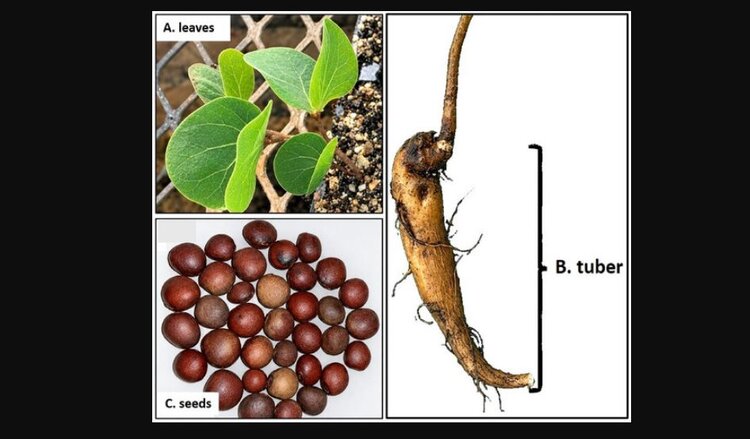
African scientists are working to domesticate the wild legume marama bean (Tylosema esculentum), which could become an alternative to soybeans and peanuts thanks to its exceptional drought tolerance and high protein and oil content. The plant grows naturally in the Kalahari Desert across Namibia, Botswana and South Africa, tolerating prolonged water shortages, high temperatures and poor sandy soils. Researchers consider it a promising crop for agriculture in arid regions.
Marama’s most distinctive feature is its large underground tuber, which stores water and nutrients. In young plants, the tuber weighs around 1 kg, while in mature plants it can exceed 10 kg. These reserves allow the plant to survive months of drought and resume growth when conditions improve. Marama also reduces water loss by closing leaf stomata and shedding some of its leaves during dry periods.
The nutritional composition of marama seeds is of particular interest to the agricultural sector. They contain approximately 30–40% protein and 35–48% edible oil, making the crop a potential competitor to soybeans in terms of protein content and peanuts in terms of oil content. The main fatty acids include oleic, linoleic, palmitic and stearic acids. The seeds also contain minerals, antioxidants and other bioactive compounds.
The high edible oil content creates opportunities for using marama in the edible oil processing industry. Its seeds can be processed into edible vegetable oil, while the remaining material can be used to produce defatted flour rich in protein and dietary fiber. Researchers are also exploring the production of plant-based milk similar to soy milk. However, the seeds require heat treatment because they contain antinutritional compounds that may reduce nutrient absorption.
Despite its considerable potential, marama remains largely a wild crop, traditionally harvested by local communities from natural habitats. Commercial cultivation is limited by insufficient knowledge of agricultural practices, difficulties with seed germination and the lack of adapted varieties. Scientists at the University of the Western Cape and South Africa’s Agricultural Research Council are studying the plant’s genetic characteristics, drought tolerance mechanisms and opportunities for selective breeding.
According to researchers, domesticating marama could provide a new source of vegetable protein and oil for regions where traditional oilseed crops suffer from water shortages. However, commercial production will require effective cultivation technologies, field yield assessments and consistent product quality. In the longer term, marama could complement soybeans and peanuts in the food and processing industries, particularly in countries with arid climates.
Read also
Ukraine, US and Russia may discuss Black Sea ceasefire — Zelenskyy
Brazil’s soybean exports to decline in 2027 amid rising domestic crushing
Ukraine and Romania to strengthen cooperation to protect Black Sea shipping
Pakistan raises wheat procurement prices amid rising grain costs
Coming Up in UkrAgroConsult Reports: Key Market Signals




Got additional questions?
We will be happy to assist!
Write to us
Our manager will contact you soon