

Strait of Hormuz is following the Black Sea scenario: Commercial ships become targets of war
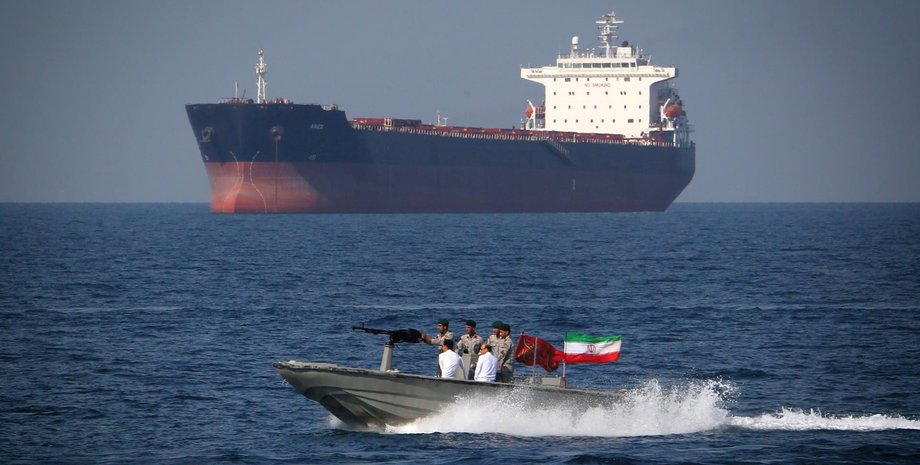
The situation in the Strait of Hormuz is increasingly resembling developments in the Black Sea, where military confrontation is directly affecting commercial shipping. The United States and Iran have carried out attacks on vessels, raising concerns about prolonged disruptions to oil supplies from the Middle East.
Against this backdrop, oil prices continued to rise on September 7. Brent crude futures gained 79 cents, or 0.82%, to $97.07 per barrel, while West Texas Intermediate (WTI) rose 80 cents, or 0.87%, to $92.28 per barrel. The market is reacting to the risk that restrictions on tanker traffic through the Strait of Hormuz could persist.
According to Kpler, an average of only around 10 commercial vessels a day passed through the Strait of Hormuz over the past 10 days, the lowest level since May. Maritime intelligence company Marisks said commercial tankers are now deliberately being used as instruments of mutual economic pressure, significantly weakening the distinction between military confrontation and commercial shipping.
A similar process is already taking place in the Black Sea, where commercial vessels have also come under direct threat from military attacks. Shipowners are being forced to factor security risks into port calls, while some vessels are adopting additional protective measures against attacks. For global trade, this means higher logistics costs and a search for alternative routes.
At the same time, the two maritime conflicts directly affect different but interconnected segments of global trade. The Black Sea is primarily critical for agricultural exports — grain, vegetable oils and other farm products, while the Strait of Hormuz is a key route for energy exports — crude oil, petroleum products, gas and related resources, including fertilizers. Restrictions on two major trade routes simultaneously are putting additional pressure on agricultural markets: freight, fuel and logistics costs are rising, while disruptions to energy supplies and fertilizer availability increase production costs. As a result, problems in the Black Sea and the Strait of Hormuz may not only affect agricultural markets separately but also reinforce each other.
ANZ analysts expect export restrictions through the Strait of Hormuz to remain in place until the end of 2026, with a gradual recovery only toward the end of the fourth quarter. They do not expect a return to pre-war shipping capacity until late in the first quarter or early in the second quarter of 2027. Thus, as in the Black Sea, military risks around a key maritime trade route could continue to affect global commodity and agricultural markets for an extended period.
Read also
Romania proposes joint NATO command to protect the Black Sea
Drought in India threatens sugar and biofuel production
Record sunseed harvest in Russia threatens to drive down prices in Kazakhstan
Corn drying costs in Ukraine could exceed the value of the grain at current prices
Oilseeds remain the only profitable segment of crop production in Russia




Got additional questions?
We will be happy to assist!
Write to us
Our manager will contact you soon