

Cassava is becoming a strategic crop for Africa’s food security
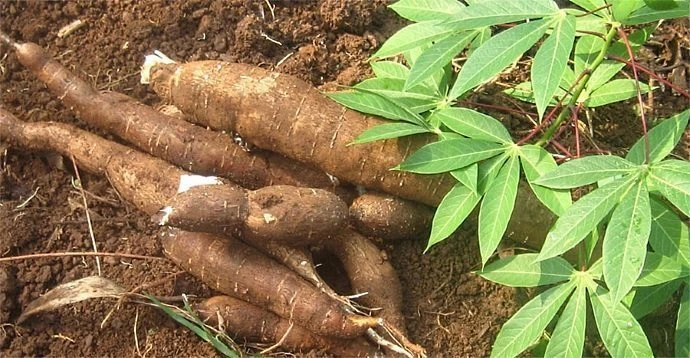
Cassava is strengthening its role as one of Africa’s key food crops amid rising imported wheat prices and climate change. Across many African countries, cassava flour is increasingly being used to produce bread, flatbreads, porridge, and confectionery products. Thanks to its exceptional drought tolerance and ability to grow on poor soils, the crop is regarded as one of the most promising for improving food security.
Cassava provides a significant share of daily calories for people in sub-Saharan Africa and serves as a staple food for hundreds of millions. The crop can withstand temperatures of up to 35°C, prolonged drought, and can remain in the ground for up to three years without losing its nutritional value, making it especially valuable under increasingly challenging climate conditions.
However, cassava production faces a major threat from Cassava Brown Streak Disease (CBSD), a viral disease that damages the roots while often showing few visible symptoms until harvest. As a result, farmers frequently discover the infection only when harvesting, leading to substantial crop losses.
To address this challenge, an international team of researchers conducted field trials of a new multispectral imaging (MSI) technology at the International Institute of Tropical Agriculture (IITA) in Tanzania. The system analyzes cassava leaves using multiple wavelengths of light, while machine-learning models identify infected plants before visible symptoms appear.
Laboratory tests showed that the technology could detect CBSD with about 95% accuracy just 28 days after infection. Field trials helped evaluate the system under real farming conditions and improve disease-spread models by incorporating factors such as crop varieties, whitefly populations, and field management practices.
Researchers believe that combining early disease detection with epidemiological modeling could improve protection not only for cassava but also for other vegetatively propagated crops, including potatoes, sweet potatoes, taro, and yams. The technology could become an important tool for strengthening food security in regions most vulnerable to climate change.
For almost 30 years of expertise in the agri markets, UkrAgroConsult has accumulated an extensive database, which became the basis of the platform AgriSupp.
It is a multi-functional online platform with market intelligence for grains and oilseeds that enables to get access to daily operational information on the Black Sea & Danube markets, analytical reports, historical data.
You are welcome to get a 7-day free demo access!!!
Read also
Romania proposes joint NATO command to protect the Black Sea
Drought in India threatens sugar and biofuel production
Record sunseed harvest in Russia threatens to drive down prices in Kazakhstan
Corn drying costs in Ukraine could exceed the value of the grain at current prices
Oilseeds remain the only profitable segment of crop production in Russia




Got additional questions?
We will be happy to assist!
Write to us
Our manager will contact you soon