

Caspian corridor struggles to handle Russian grain exports
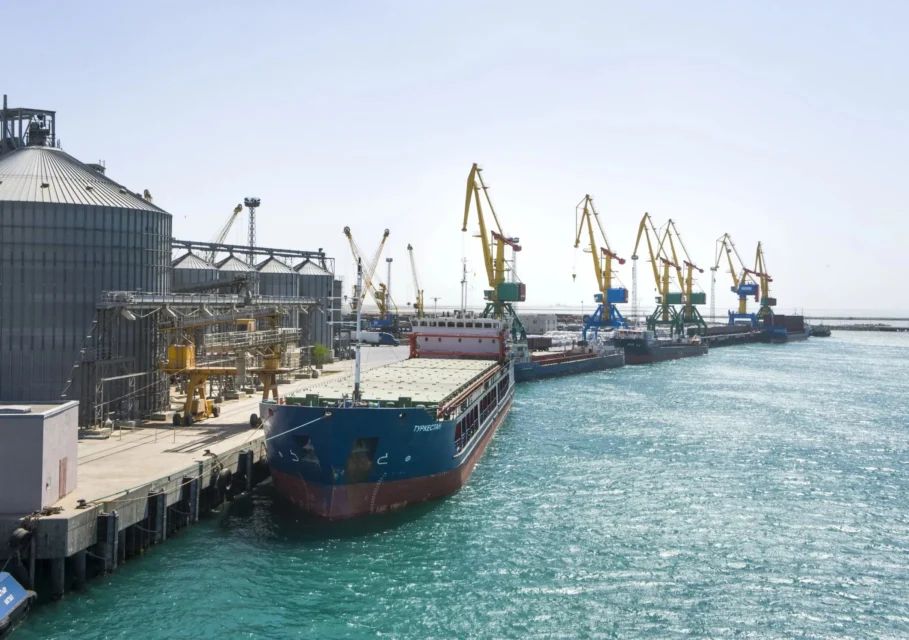
Russia is facing serious challenges in exporting grain via the Caspian Sea, which has become one of the main alternative routes following restrictions on operations at Azov-Black Sea ports. Despite a sharp increase in transshipment volumes, the Caspian corridor has nearly exhausted its capacity. This was stated by Alexander Morozov, Logistics Director at Trade Overseas, during the Golden Autumn forum.
In the first eight months of 2025, the ports of Astrakhan and Olya handled around 84% of their annual grain transshipment volume. In the first half of the year, grain accounted for 48% of total cargo turnover at these ports, while shipment volumes tripled. An additional 650 thsd tons of grain were shipped through Makhachkala, while another 400 thsd tons were transported directly from the Volga River to Iran by river-sea vessels.
However, the sharp increase in cargo flows has overwhelmed infrastructure. Large volumes of grain have accumulated in Astrakhan, effectively forcing ports to suspend acceptance of new shipments. Meanwhile, vessels face waiting times of up to two weeks for unloading at Iranian ports, while low water levels in the Caspian Sea further complicate navigation and loading operations.
Freight costs have surged amid vessel shortages and port congestion. Over three months, freight rates on the Caspian Sea increased more than 2.5 times. As of October 6, grain transportation on a vessel with a deadweight capacity of 3 thsd tons cost at least $130/t. Such expenses significantly weaken the competitiveness of Russian grain in international markets and reduce exporters’ revenues.
According to Morozov, rapidly expanding the Caspian corridor’s capacity is not feasible, as upgrading ports and logistics infrastructure will take several years. In the short term, this threatens further grain accumulation, shipment delays, and rising transportation costs. As a result, the route intended to compensate for the loss of Black Sea export capacity is itself becoming a major bottleneck in Russian grain logistics.
Read also
Malaysia’s palm oil stocks may have risen to a record 3.45 mln tons in September
China sharply cuts corn consumption forecast amid shift to alternative feeds
China cuts soybean production forecast by 590 thsd tons but keeps import outlook u...
India’s rice production to decline by 7 mln tons amid weakest monsoon in nea...
Farmers in occupied Crimea may abandon grain production amid fuel shortages and po...




Got additional questions?
We will be happy to assist!
Write to us
Our manager will contact you soon