

Rhine water levels approach critical levels, threatening barge transport in Europe
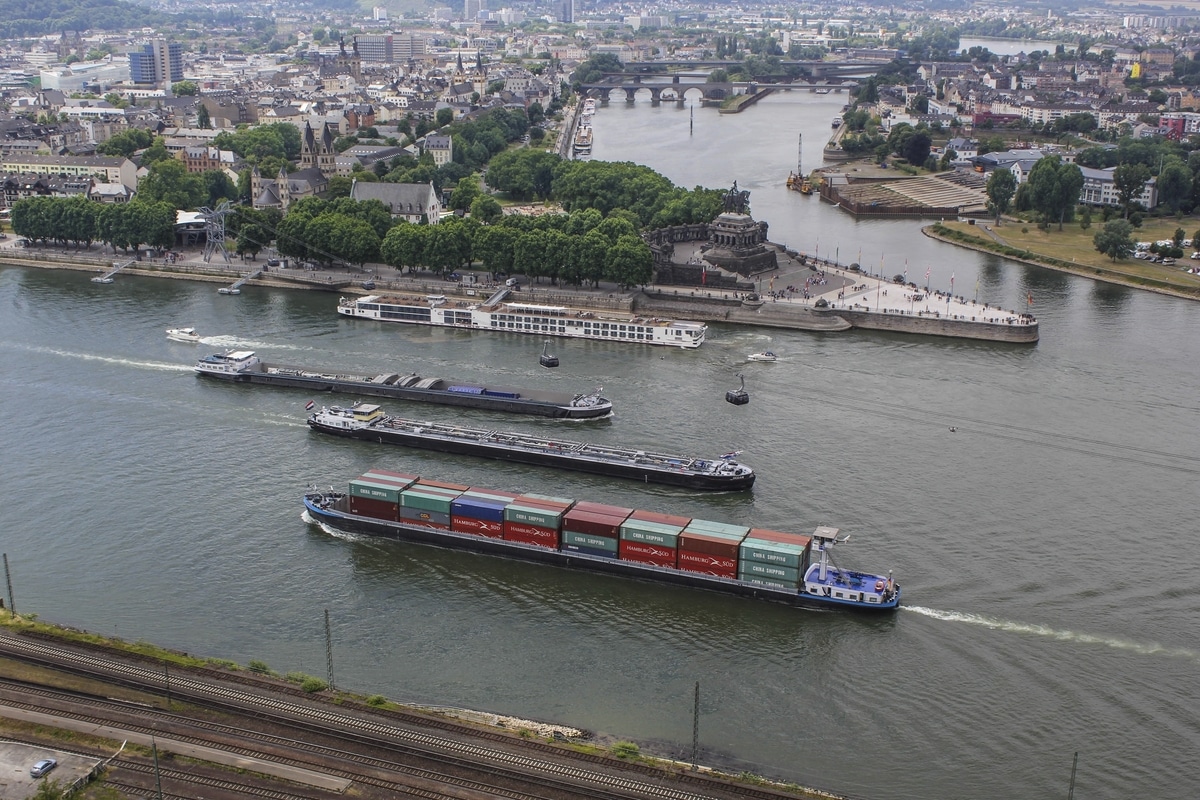
Water levels on the Rhine continue to fall and are approaching critical levels, threatening further restrictions on barge transport along one of Europe’s key transport arteries. At the Kaub gauge, water levels fell to 20 cm on September 18.
Forecasts indicate that the Kaub reading could approach the zero mark by September 28 and remain near that level for at least several days. On the Upper Rhine, critically low water levels are already significantly limiting normal barge loading.
Worsening navigation conditions are sharply increasing transport costs. Freight rates from the Amsterdam–Rotterdam–Antwerp hub to Basel rose to €215/t from €165/t a week earlier. Due to draft restrictions, barges are being forced to carry smaller cargo volumes.
Some cargo flows are being redirected to rail and road transport, but available capacity is insufficient to fully replace normal river shipment volumes. Rail capacity in Germany is also constrained by maintenance work on one of the key freight routes along the Rhine.
Prolonged low water levels could keep logistics costs for bulk commodities elevated across Central and Western Europe, including agricultural products and feed materials. The decline in river levels is already raising transport costs and forcing market participants to rely more heavily on alternative routes.
Read also
Monthly Report «VegOil Market Risk Navigator for Ukraine»
Turkey’s sunseed production may increase by 24% in MY 2026/27
USDA keeps Kazakhstan wheat export forecast at 9.5 mln tons
High fertilizer prices push US farmers to cut corn acreage
Drought and corn shortages paralyze Sudan’s feed industry




Got additional questions?
We will be happy to assist!
Write to us
Our manager will contact you soon