

How the war with Iran affected global commodity prices

Since the outbreak of hostilities between the United States, Israel, and Iran in February 2026, global commodity markets have experienced a major shock. Energy and chemical products were hit the hardest due to disruptions in the Strait of Hormuz — the main route for oil, gas, and fertilizer supplies from the Persian Gulf. According to analysts, prices for key commodities surged by dozens of percentage points during the first months of the conflict.
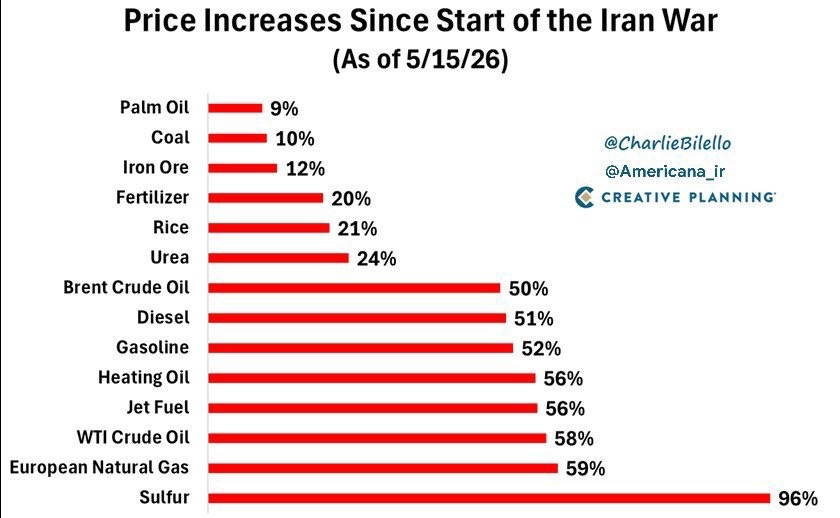
Sulfur recorded the sharpest increase, soaring by 95%, immediately impacting fertilizer production and the steel industry. European natural gas prices at the TTF hub jumped by 59%, while US WTI crude oil rose by 58%. Brent crude gained 50%. Petroleum products also saw strong growth: jet fuel and fuel oil climbed by 56%, gasoline by 52%, and diesel by 51%.
The agricultural sector also came under pressure. Urea prices increased by 24%, the overall fertilizer index rose by 20%, and rice prices climbed by 21%. Industrial metals and raw materials posted more moderate gains: iron ore rose by 12%, coal by 10%, and palm oil by 9%. Experts note that indirect effects from higher logistics and energy costs are spreading throughout global supply chains.
International organizations, including the World Bank, warn that a prolonged disruption in the Strait of Hormuz could trigger a new wave of global inflation. Analysts believe price stabilization will only be possible once safe shipping in the region is restored.
Price increases since the start of the war:
Read also
Coming Up in UkrAgroConsult Reports: Key Market Signals
Dragon Capital forecasts reopening of Black Sea grain corridor in 2027
Iran and Afghanistan are the only markets where Russian wheat has gained market share
USDA raises US corn production forecast
Global palm oil stocks to fall to lowest level since 2017/18 — USDA




Got additional questions?
We will be happy to assist!
Write to us
Our manager will contact you soon