

High crude oil prices for more than two months will cause severe damage to the global agricultural sector
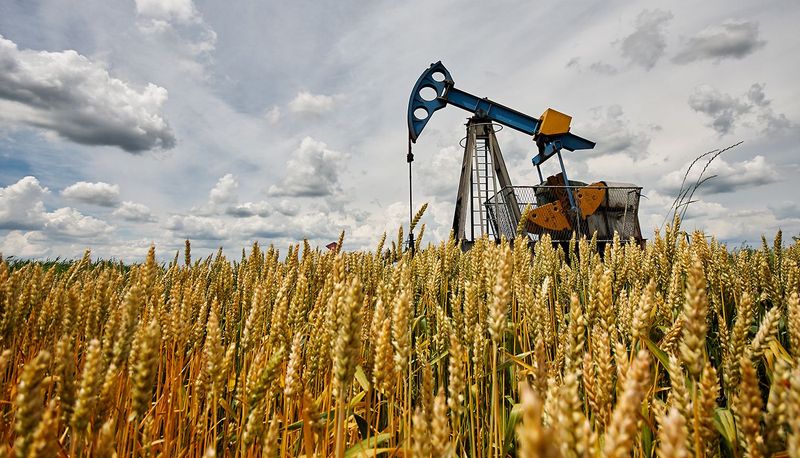
The sharp increase in crude oil prices caused by the war with Iran will negatively affect not only the energy market, but also other markets, in particular the agricultural market, warn Atlantic Council experts.
Up to 35% of the world’s crude oil, 20% of liquefied natural gas and up to 30% of fertilizers passed through the Strait of Hormuz every day. Its closure was a shock to the whole world and has already led to a sharp increase in the prices of oil, gas, fertilizers and increased costs in many industries. In addition, the Persian Gulf countries provide almost half of the world’s sulfur trade, needed to produce sulfuric acid, which is used in the production of phosphate fertilizers.
Modern agriculture is heavily dependent on nitrogen fertilizers, a significant portion of which is also produced and supplied from the Persian Gulf region. Rising fertilizer prices will increase the cost of growing crops and lead to a decrease in yields and sowing areas in the next season.
Corn, the most energy- and nitrogen-intensive crop, will be hit hardest. The lack of the right amount of fertilizer will lead to a decrease in yields and force farmers to reconsider their crop structure in favor of less energy-intensive crops.
Rising grain prices will have a cascading effect. Corn is a major component of livestock feed, so its price hike will raise the prices of meat, milk, and eggs, hitting low-income households that spend most of their budgets on groceries.
Atlantic Council experts emphasize that in the future, the condition for global economic stability will be systemic measures to diversify supply chains, invest in strategic reserves, and reduce dependence on narrow logistics hubs, such as the Strait of Hormuz.
The restrictions on shipping have led to an increase in the cost of insurance from 0.25% to 10% of the value of the vessel, and this rate is recalculated every 7 days. Even after the conflict ends, it will take months for normal shipping conditions to return, the UN believes.
Disruptions in fertilizer supplies have already been felt by farmers around the world. In the first week of March, the cost of granulated urea in the Middle East increased by 19%, in Egypt by 28%. The main raw material in the production of nitrogen fertilizers is natural gas, so further increases in its prices will continue to increase the cost of fertilizers.
According to FAO estimates, if the crisis continues, global fertilizer prices will increase by an average of 15-20% in the first half of the year. This will cause farmers to switch to less resource-intensive crops (soybeans) or reduce fertilizer application, which will greatly reduce yields.
If supply disruptions last no more than a month, the consequences will be local, as global food supplies are still sufficient, and the situation will stabilize within three months. If disruptions last more than three months, the risks will increase significantly, which will change the area sown in 2026 and beyond.
For almost 30 years of expertise in the agri markets, UkrAgroConsult has accumulated an extensive database, which became the basis of the platform AgriSupp.
It is a multi-functional online platform with market intelligence for grains and oilseeds that enables to get access to daily operational information on the Black Sea & Danube markets, analytical reports, historical data.
You are welcome to get a 7-day free demo access!!!
Read also
Coming Up in UkrAgroConsult Reports: Key Market Signals
Dragon Capital forecasts reopening of Black Sea grain corridor in 2027
Iran and Afghanistan are the only markets where Russian wheat has gained market share
USDA raises US corn production forecast
Global palm oil stocks to fall to lowest level since 2017/18 — USDA




Got additional questions?
We will be happy to assist!
Write to us
Our manager will contact you soon