

Greece plans new route for Ukrainian grain exports via Alexandroupolis port
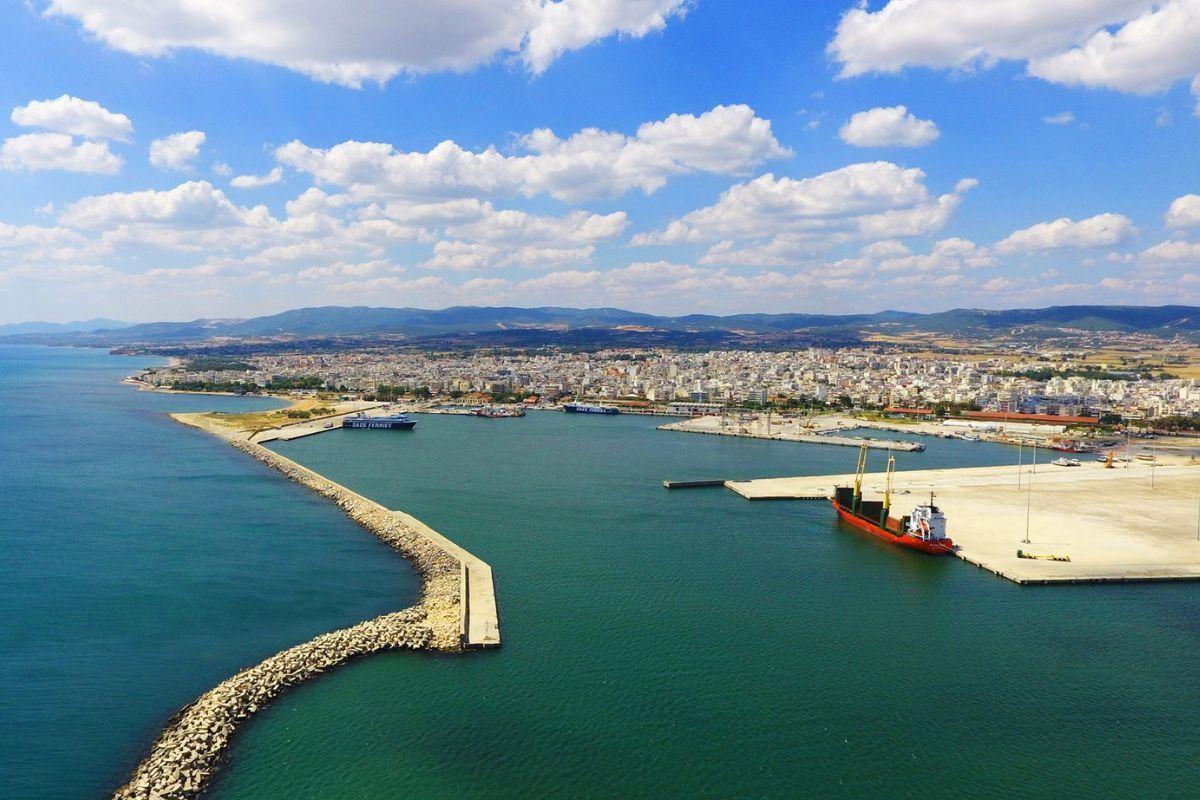
Greece and Ukraine are considering establishing a new transport corridor to export Ukrainian grain through Greek ports to the Mediterranean Sea. According to To Vima, the project involves launching a pilot multimodal route between Ukraine and Greece using the railway infrastructure of Romania and Bulgaria. The port of Alexandroupolis is expected to serve as the main logistics hub, while Thessaloniki port could provide additional grain handling capacity. The proposed route is being considered as an alternative to Black Sea export routes, which have been disrupted by Russian attacks.
The development of the grain corridor was discussed in September 2026 by Greek Minister of Infrastructure and Transport Christos Dimas and Ukrainian Deputy Minister for Communities and Territories Development Artem Rybchenko. The project builds on agreements reached between Ukrainian President Volodymyr Zelenskyy and Greek Prime Minister Kyriakos Mitsotakis in September 2025. The initiative envisages establishing an Alexandroupolis–Odesa transport axis within the Baltic Sea–Black Sea–Aegean Sea European corridor, which connects the transport networks of 13 countries.
A key feature of the proposed route will be two-way freight transportation. Ukraine will be able to export grain through Greek ports while receiving diesel fuel, particularly winter-grade diesel, electrical equipment and construction materials in the opposite direction. According to To Vima, ensuring the corridor’s commercial viability will require at least 2–3 freight trains per day travelling from south to north. This would help reduce empty return journeys and improve railway logistics efficiency.
Pilot shipments of grain and other goods could be carried out through cooperation between railway operators Hellenic Train and GFR Hellas, a subsidiary of Romania’s GFR group. However, implementing the project will require increased railway infrastructure capacity and the involvement of Greek companies. An additional challenge will be the planned closure of the Ruse–Giurgiu bridge across the Danube on the Bulgaria–Romania border from April to December 2027, which could disrupt regular freight train operations.
In addition to rail transport, road freight is also being considered, although this option is more expensive. Existing regulations allow Ukrainian and Greek carriers to conduct bilateral transport operations without transit permits, but domestic transport services within Greece can only be provided by Greek companies. The project also aligns with the EU’s strategy to develop the Trans-European Transport Network (TEN-T), which was revised in 2024. The European Commission has already been informed of the Greek initiative, which could eventually strengthen the role of Alexandroupolis and Thessaloniki ports as logistics hubs connecting Ukraine, the Balkans and the Mediterranean region.
Read also
Morocco increases tomato exports to the EU, putting pressure on European prices
India becomes increasingly dependent on corn and rice for bioethanol production
China increases barley imports by 46%, but purchases could decline in the new season
Argentina could export another 7 mln tons of soybean meal by the end of 2026
Grain vessel traffic through the Bosphorus falls 63% amid Black Sea attacks — UN




Got additional questions?
We will be happy to assist!
Write to us
Our manager will contact you soon