

Commodity markets face pressure amid risks around the Strait of Hormuz

Global commodity markets remain highly vulnerable due to ongoing risks surrounding shipping through the Strait of Hormuz. Analysts at HSBC Holdings warn that a prolonged disruption of traffic through the strategic waterway could lead to a sharp decline in oil inventories and trigger significant increases in energy prices.
The bank’s analysts describe the current market environment as a “super squeeze,” where rising prices are being driven more by supply disruptions than by stronger demand. According to their assessment, inventories of several key commodities are moving closer to critical levels, although the timing of any potential shortages remains difficult to predict.
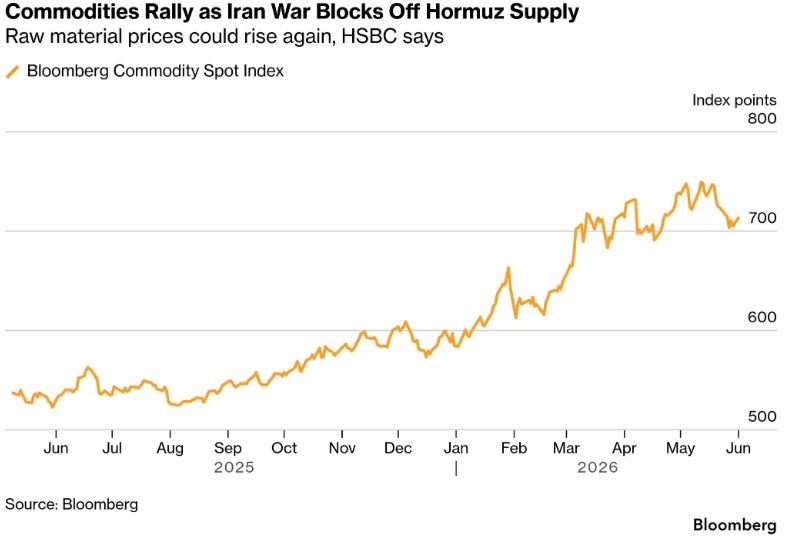
Global commodity prices reached record highs in mid-May but later retreated as the United States sought to extend a truce with Iran. Market participants hope that easing tensions could help restore normal shipping flows through the Strait of Hormuz, a route that in peacetime handled roughly 20% of global oil and liquefied natural gas supplies.
Despite some easing of market concerns, prices for major commodities remain elevated. Brent crude oil is trading near $94 per barrel, while aluminum has climbed to its highest level in four years. Copper prices have risen to nearly $14,000 per metric ton, about 13% higher than a year ago.
HSBC also points to additional supportive factors for commodity markets, including growing demand for industrial metals such as copper and the potential emergence of El Niño weather conditions, which could negatively affect agricultural production and reduce global crop inventories. According to analysts, the combination of geopolitical risks and constrained supply remains the primary driver of current commodity price strength.
Read also
Coming Up in UkrAgroConsult Reports: Key Market Signals
Dragon Capital forecasts reopening of Black Sea grain corridor in 2027
Iran and Afghanistan are the only markets where Russian wheat has gained market share
USDA raises US corn production forecast
Global palm oil stocks to fall to lowest level since 2017/18 — USDA




Got additional questions?
We will be happy to assist!
Write to us
Our manager will contact you soon