

Brazil’s soybean planting ahead of last year, while exports slow
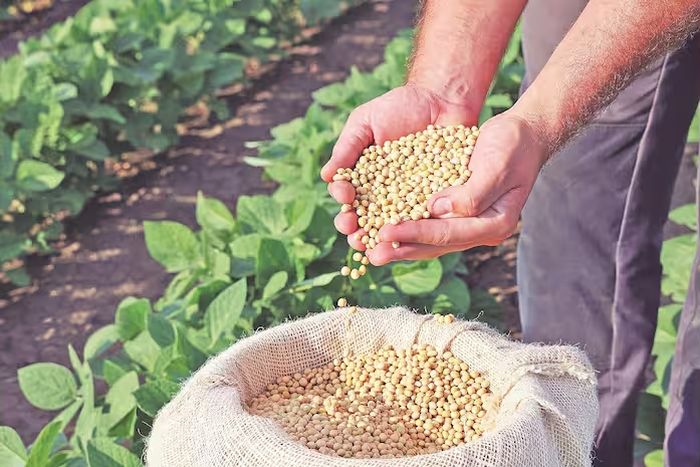
Brazil’s soybean planting campaign for the 2026/27 season is progressing faster than a year earlier. According to the National Supply Company (CONAB), 42.8% of the planned soybean area had been planted as of October 23, compared with 30.1% a week earlier and 34.8% at the same time last year. The current pace is also ahead of the five-year average of 40.2%.
Planting is progressing particularly rapidly in Mato Grosso, Brazil’s largest soybean-producing state, where 75.8% of the planned area has been planted, up from 60.8% a week earlier. This is also above the five-year average of 70.3%. In Paraná, planting has reached 47%, compared with 39% a week earlier, although progress remains below the five-year average of 53%.
According to CONAB, Brazil’s soybean production in 2026/27 could increase by 0.7% to a record 181.62 mln tons. The planted area is forecast at 49.3 mln ha, up 1.4% year-on-year. Meanwhile, average yields could decline by 0.8% to 3.683 tons/ha.
Despite expectations of a record crop, Brazil’s soybean export pace remains below last year’s level. According to Brazil’s Foreign Trade Secretariat (SECEX), the country exported 4.818 mln tons of soybeans from October 1 to 23, compared with 6.728 mln tons during the whole of October 2025. Average daily shipments reached 301.1 thsd tons, down 1.5% year-on-year.
Soybean export revenue totaled $2.36 bln during October 1–23, compared with $2.88 bln for the entire month of October last year. Meanwhile, the average export price increased by 14.4% year-on-year to $489.3/t. Thus, despite a slight slowdown in physical shipments, Brazilian soybeans remain more expensive than in the corresponding period last year.
Read also
Malaysian palm oil prices fall amid high stocks and weak demand
US beef trimmings imports rise 22% despite weak demand
Brazil expands corn production but channels more grain into domestic market
Labour shortages and high logistics costs constrain Ukrainian apple exports
EU may increase sugar imports by 48% amid declining domestic production




Got additional questions?
We will be happy to assist!
Write to us
Our manager will contact you soon