

Argentina develops potato variety to reduce harvesting and processing losses
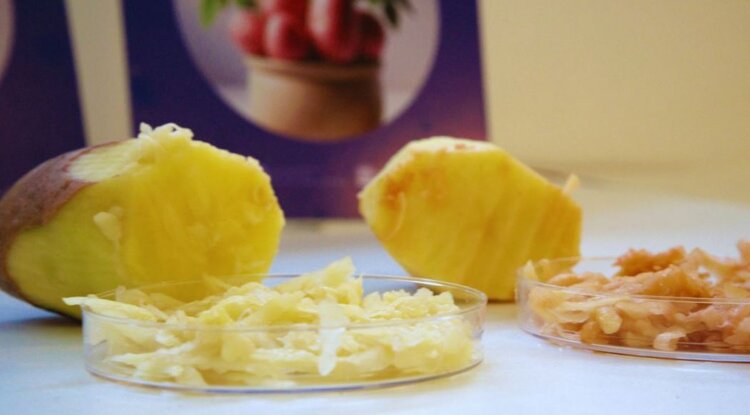
Argentine scientists have developed OLI INTA, a potato variety that does not develop typical dark spots after bruising and cutting during harvesting, transportation and storage. It is Argentina’s first potato variety developed using genome editing, according to the National Agricultural Technology Institute (INTA).
The development has practical benefits for both growers and processors. Mechanical damage to potato tubers can cause internal browning, reducing their market value and leading to rejection during processing. Tests of OLI INTA showed that tubers did not develop such internal bruising after impact.
To achieve this trait, researchers at INTA Balcarce deactivated the polyphenol oxidase gene responsible for enzymatic browning in damaged tissue. According to INTA, enzymatic browning in OLI INTA was about 74% lower than in the Desiree variety.
Importantly, the genome-editing process did not introduce genetic material from other species. As a result, OLI INTA is not regulated as a transgenic crop in Argentina and is subject to the same rules as conventionally bred varieties, potentially making its commercial adoption easier.
OLI INTA has already been included in Argentina’s national variety registers. Researchers expect the technology to reduce raw material losses and waste while improving potato quality for the processing industry. Genome editing could also accelerate the development of varieties with new traits, including greater adaptation to climate change, pests and diseases.
Read also
Romania proposes joint NATO command to protect the Black Sea
Drought in India threatens sugar and biofuel production
Record sunseed harvest in Russia threatens to drive down prices in Kazakhstan
Corn drying costs in Ukraine could exceed the value of the grain at current prices
Oilseeds remain the only profitable segment of crop production in Russia




Got additional questions?
We will be happy to assist!
Write to us
Our manager will contact you soon