

UAE to establish innovative center for processing surplus bread into sustainable animal feed
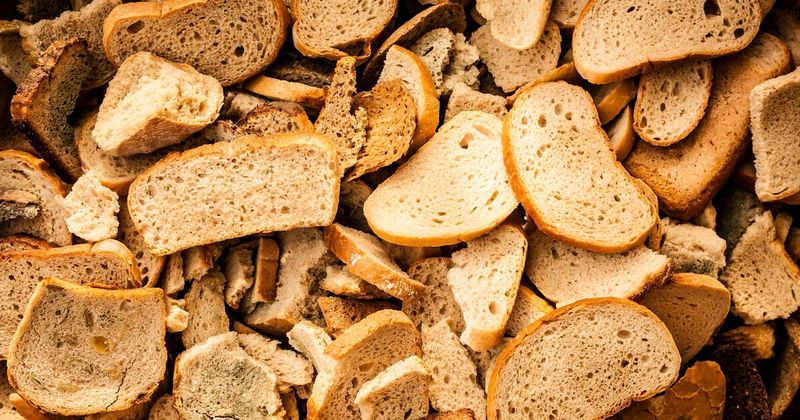
An Australian company is launching a new facility in the UAE that will process surplus bread and grain-processing waste into sustainable animal feed, helping the country reduce annual food waste losses estimated at 13 billion dirhams ($3.54 billion USD).
núaFEEDs, a family-founded company with over 25 years of experience in food and feed processing, is opening the UAE’s first-of-its-kind plant designed to turn bread waste into high-quality animal feed. Its proprietary AEROFLOW technology automatically extracts and processes bread waste, achieving 99.7 % purity of the final product and consistent feed quality.
While the concept of using food leftovers for animal feed is not new, núaFEEDs offers a fully industrial, scalable, and biosecure approach that aligns with the country’s sustainability goals.
“We see waste not as a problem, but as an opportunity to generate additional revenue,” a company representative said. “Our technology turns what would end up in landfill into a premium feed product.”
The initiative directly supports the UAE National Food Security Strategy 2051 and the Circular Economy Policy 2021–2031, both aimed at rational resource use and waste reduction. It also complements Dubai Municipality’s efforts to reduce the volume of food waste sent to landfills.
By reintroducing surplus bread into feed chains, núaFEEDs operates at a higher level of the waste hierarchy than composting or incineration, delivering both environmental and economic benefits.
The new facility’s advantages extend across multiple sectors. For bakeries and retailers, it means lower disposal costs, which can reach 150 dirhams ($41) per tonne. For livestock farms, it provides a more stable and affordable alternative to traditional feeds amid grain market volatility, where prices can fluctuate up to 40 % annually.
The resulting feed is not only sustainably produced but also highly nutritious: it contains 15.9 % crude protein — more than most grain crops — and has a high energy value (16.1 MJ/kg DM), promoting efficient animal growth.
The núaFEEDs model is already successfully operating in Australia, where the facility has processed over 64,800 tonnes of surplus bread — equivalent to around 130 million loaves. Developed under Australia’s stringent biosecurity requirements, the approach ensures stability, safety, and scalability, making it well-suited for implementation in the UAE.
As the company prepares to launch production in the region, it is inviting retailers, wholesalers, bakeries, and farms to collaborate in closing the food product loop.
“Every loaf saved is a step toward a more sustainable and circular food system,” emphasized a núaFEEDs representative.
For almost 30 years of expertise in the agri markets, UkrAgroConsult has accumulated an extensive database, which became the basis of the platform AgriSupp.
It is a multi-functional online platform with market intelligence for grains and oilseeds that enables to get access to daily operational information on the Black Sea & Danube markets, analytical reports, historical data.
You are welcome to get a 7-day free demo access!!!




Got additional questions?
We will be happy to assist!
Write to us
Our manager will contact you soon