

Plant breathing: Scientists develop new technology to optimize yields
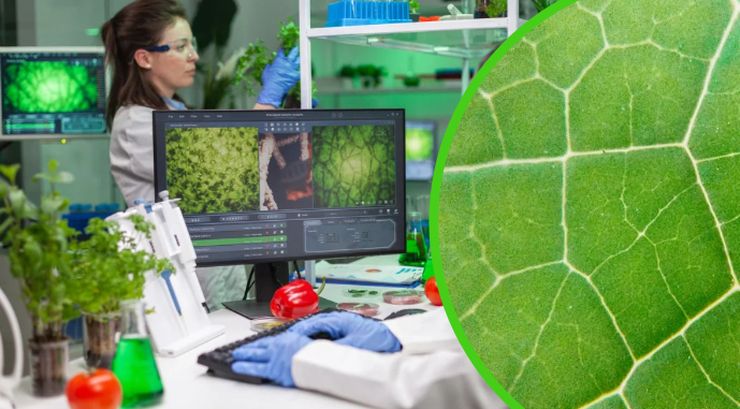
Researchers have developed a new technology that allows live observation of plant “breathing” in high resolution while simultaneously tracking how much carbon and water is exchanged with the air. The study notes that this breakthrough could help develop new crops that grow faster, use less water, and are more drought-tolerant.
Plants take in air through microscopic openings on their leaves called stomata, which act as adjustable valves, letting in CO₂ for photosynthesis while allowing water to evaporate. Until recently, tracking this process in real time was impossible. Scientists at the University of Illinois created the Stomata In-Sight system, which overcomes previous limitations by allowing simultaneous monitoring of stomatal micro-movements and measurement of gas exchange between the leaf and the atmosphere under precisely controlled conditions. This is crucial for yield optimization, as open stomata enable CO₂ uptake for growth but also result in water loss.
Previous methods forced researchers to choose between observing stomata or measuring their activity, and leaf molds provided only static snapshots, while conventional microscopes could not control environmental factors like light, humidity, temperature, and CO₂—conditions to which stomata are highly sensitive.
The Stomata In-Sight system combines three main advantages: real-time confocal microscopy to visualize living cells without damage, precise leaf gas exchange measurements (CO₂ intake and water loss), and a controlled environment where light, temperature, humidity, and CO₂ can be adjusted. This creates a “window into a living leaf,” enabling scientists to identify the physical and chemical signals that trigger stomatal opening and closing, and understand how stomatal density affects plant efficiency. Improving water-use efficiency directly increases crop survival and yield under heat and drought conditions.
Read also
Wet corn prices in Poland rise 58% year on year, dry corn up 42%
MHP considers investment in poultry production in Moldova with an annual capacity ...
Czech grain harvest falls 16% due to drought and spring frosts
German biodiesel producers call for wider B10 adoption to reduce fuel costs
Brazil’s wheat imports could reach a record 9 mln tons due to lower domestic...




Got additional questions?
We will be happy to assist!
Write to us
Our manager will contact you soon