

No november breakthrough: New signals for Ukraine’s agricultural exporters
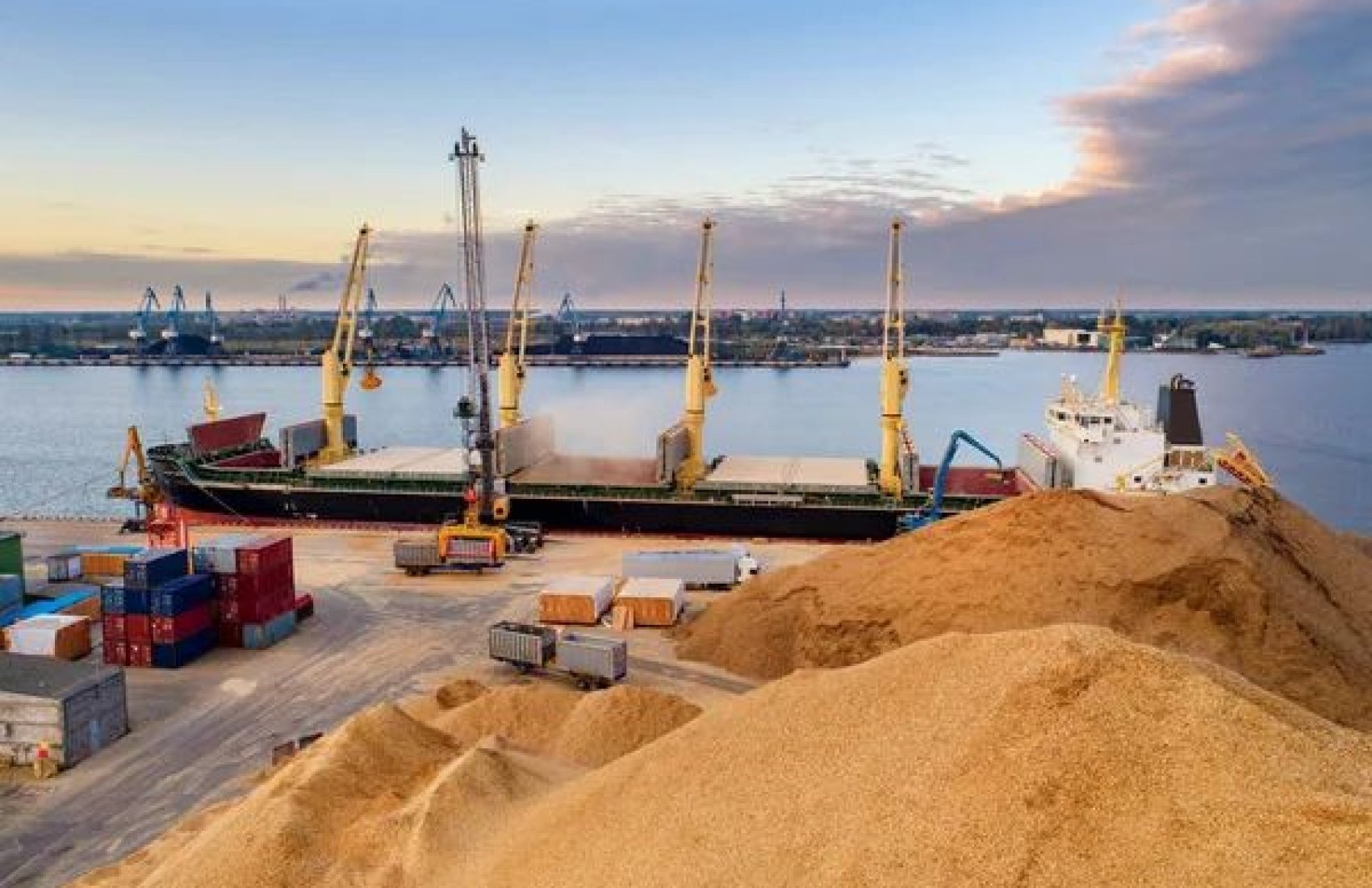
November has brought no meaningful acceleration in Ukraine’s agricultural exports despite the shift of cargo flows toward alternative corridors. Shipments reached about 1.3 mln tones in the first half of the month, broadly in line with the first-half October pace. According to UkrAgroConsult, rail transport and the Danube ports remain essential for keeping agricultural trade moving.
Transport flows over the year illustrate how sharply traditional seaborne capacity has been constrained and how alternative logistics have become more important. After stronger shipments in the spring, overall export activity weakened considerably, while rail and the Danube could not fully substitute for Greater Odesa ports. The evolving transport mix underlines the limits of the current network in offsetting reduced deep-water port access.
The Danube corridor remains critical but exposed to weather disruptions and vessel congestion. A temporary suspension of navigation through the Sulina Channel in early November led to queues of ships waiting to enter and leave the river. Subsequently, higher water levels enabled heavier barge loading and improved vessel availability, providing some relief in freight-market conditions.
At the same time, early signs of improving activity have emerged around Ukraine’s deep-water ports. More shipowners have shown willingness to consider calls at Greater Odesa, and freight agreements have been reported for certain destinations. A gradual recovery of seaborne shipments could ease pressure on the rail and Danube routes, although it has not yet produced a clear increase in total agricultural exports.
Future performance will depend not only on available corridors but also on actual vessel calls, war-risk insurance costs, congestion at Sulina and the freight-rate spread between Danube and deep-water routes. UkrAgroConsult identifies these market signals as particularly important for tracking export recovery and assessing the competitiveness of Ukraine’s logistical options.
Key trends
- Alternative routes continue to sustain Ukraine’s agricultural trade, but their combined efficiency still falls short of replacing constrained shipments through Greater Odesa.
- Railways and Danube ports remain the principal export channels, while overall cargo volumes have yet to demonstrate a meaningful recovery despite the reallocation of transport flows.
- Danube logistics remain sensitive to weather, navigation interruptions and vessel queues, even as higher water levels can temporarily improve loading conditions and freight availability.
- Greater shipowner interest in deep-water port calls offers an early signal of potential maritime recovery, but this has not yet translated into higher aggregate exports.
- The outlook will hinge on actual vessel arrivals, war-risk insurance, Sulina congestion and the freight-cost differential between the Danube and deep-water export corridors.
Would you like to receive the full analytical report with all insights and data? Please complete the form to gain access to the material. The full version will be sent to your email.
Full version of the article is available to subscribers ‘BLACK SEA & DANUBE GRAIN REPORT’ and ‘BLACK SEA & DANUBE OILSEED REPORT’. You may request a sample report and apply for subscription. Be confident with your business strategy based on professional analysis and forecasts of the Black Sea & Danube agri market!
Read also
Malaysian palm oil prices rebound from nine-month lows
Jordan purchases 60 thsd tons of wheat in tender
Favorable conditions in Ukraine for the completion of winter crop vegetation
Mustard oil prices rise in India amid declining raw material stocks
Pakistan increases Romanian wheat imports, but flour prices continue to rise




Got additional questions?
We will be happy to assist!
Write to us
Our manager will contact you soon