

Low Danube water levels limit Ukraine’s ability to reroute grain via Constanta

Record-low water levels on the Danube are complicating efforts to reroute Ukrainian grain through Romania’s port of Constanta amid restricted operations at Black Sea ports. Heat and prolonged lack of rainfall are forcing barges to operate with reduced loads, cutting transport capacity and increasing grain delivery costs.
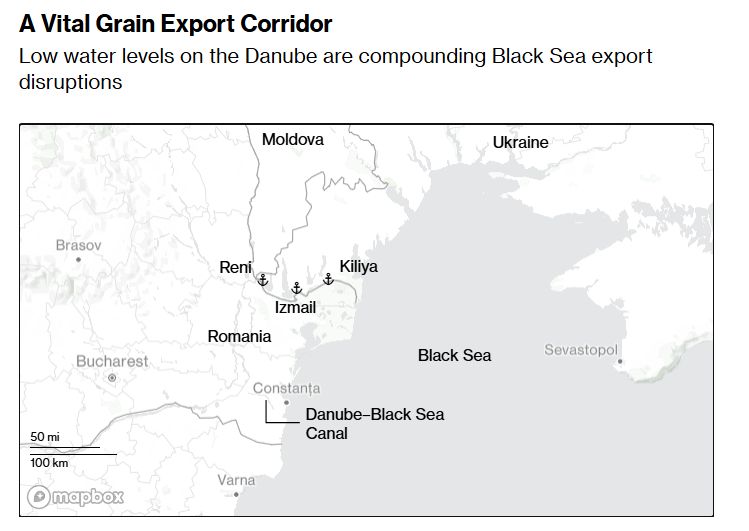
The Danube remains a key route for Ukrainian grain exports, but low water levels are exacerbating logistics problems in the Black Sea region.
Since the start of the full-scale war, Constanta has become one of the key alternative gateways for Ukrainian agricultural exports. Cargo reaches the port by rail, road and barges along the Danube. However, the current low water levels mean more barge trips are required to transport the same volumes of grain, while delivery times and freight rates are increasing.
Growing pressure on overland routes is already creating additional problems in Romania. Local farmers report a shortage of trucks and a sharp increase in transportation costs. For wheat, sunflower seed and rapeseed moving down the Danube to Constanta, low water levels mean fewer barge rotations, longer waiting times and freight rates above seasonal norms.
Constanta itself still has capacity to handle more Ukrainian cargo. Viorel Panait, president of the Constanta Port Business Association and general director of grain terminal operator Comvex, said his terminal could handle around 20% more grain under the EU Solidarity Lanes initiative. However, low Danube water levels are preventing sufficient cargo volumes from reaching the port.
Alternative logistics capacity remains significantly below Ukraine’s seaborne export capacity. According to Ukrainian estimates, rail and Danube routes combined can handle only about one-third of the capacity of Ukraine’s Black Sea ports. As a result, increased Ukrainian transit through Romania is intensifying competition for barges, rail wagons and trucks.
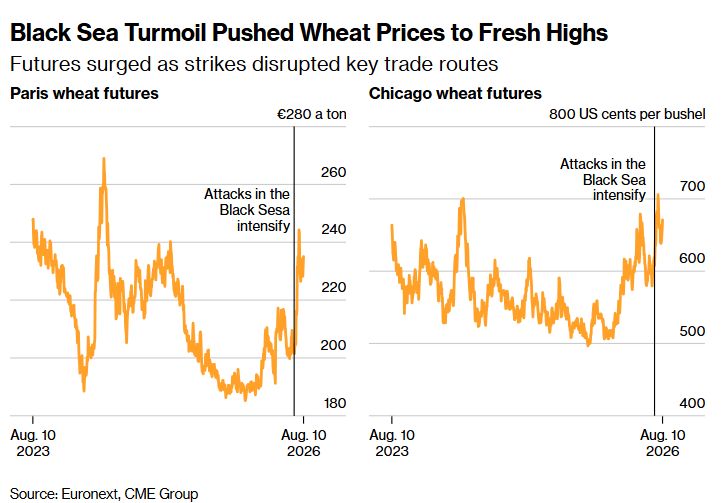
Attacks on key Black Sea export routes have triggered a sharp rise in wheat prices. Source: Euronext, CME Group.
Pressure on the Constanta route could increase further in the coming months. Romania is expecting a record wheat, barley and rapeseed harvest, while the later arrival of the corn crop could overlap with the tail end of wheat shipments. Unless Danube water levels recover, the route’s capacity will remain constrained precisely when Ukraine needs alternatives to its Black Sea ports the most.
Read also
Romania proposes joint NATO command to protect the Black Sea
Drought in India threatens sugar and biofuel production
Record sunseed harvest in Russia threatens to drive down prices in Kazakhstan
Corn drying costs in Ukraine could exceed the value of the grain at current prices
Oilseeds remain the only profitable segment of crop production in Russia




Got additional questions?
We will be happy to assist!
Write to us
Our manager will contact you soon