

India plans to grow peanuts with sugarcane to reduce vegetable oil imports
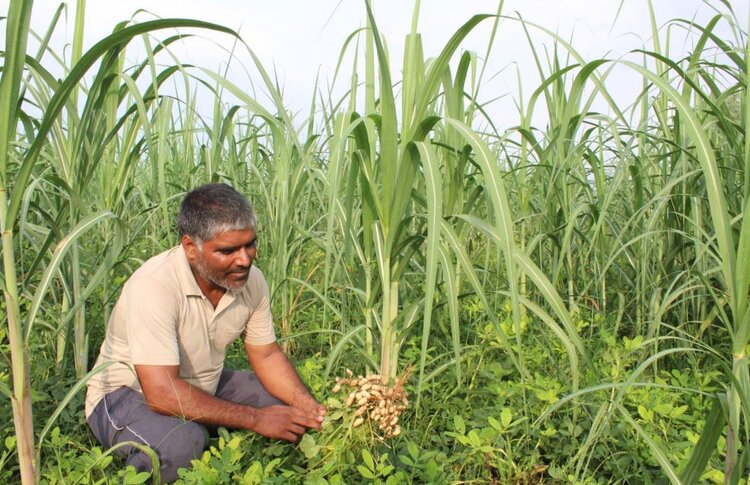
India is expanding the use of peanut-sugarcane intercropping to increase domestic oilseed production without bringing additional farmland into production. The initiative by CIMMYT and the Indian Council of Agricultural Research involves planting early-maturing peanuts between sugarcane rows during the first months of the crop cycle.
The system makes use of vacant space between sugarcane rows, which are traditionally spaced 60–120 cm apart. Peanuts can be harvested before the sugarcane canopy expands and shades the inter-row area. This allows farmers to produce an additional oilseed crop without reducing the area planted to sugarcane.
According to the project developers, the system also provides agronomic benefits. As a legume, peanuts contribute to nitrogen fixation, while their ground cover helps retain soil moisture and suppress weeds. Trials showed that sugarcane yields increased by 10% when the crop was grown together with peanuts.
The technology could also help reduce India’s dependence on imported vegetable oils, which currently account for around 60% of the country’s domestic requirements. Uttar Pradesh has about 2.7 mln ha planted with sugarcane. According to project estimates, introducing peanut intercropping on just 20% of this area could generate an additional 652.8 thsd tons of peanuts annually.
The Uttar Pradesh government has already launched a program aimed at expanding the system to 1 mln ha of sugarcane plantations. The initiative includes scientific support, seed development and mechanization. For India, which is seeking greater self-sufficiency in oilseeds, the approach offers a way to increase domestic feedstock for vegetable oil production without requiring additional agricultural land.
Read also
Paraguay expands beef exports to Israel
New-crop supply continues to weigh on Ukrainian corn prices
China expands waste oil processing for sustainable aviation fuel production
Turkey increases fresh vegetable exports by 10%, with Ukraine among largest buyers
Weak demand for US wheat increases price pressure on Ukrainian and EU markets




Got additional questions?
We will be happy to assist!
Write to us
Our manager will contact you soon