

China uses tiger nuts to turn over 3 thsd ha of desert into farmland
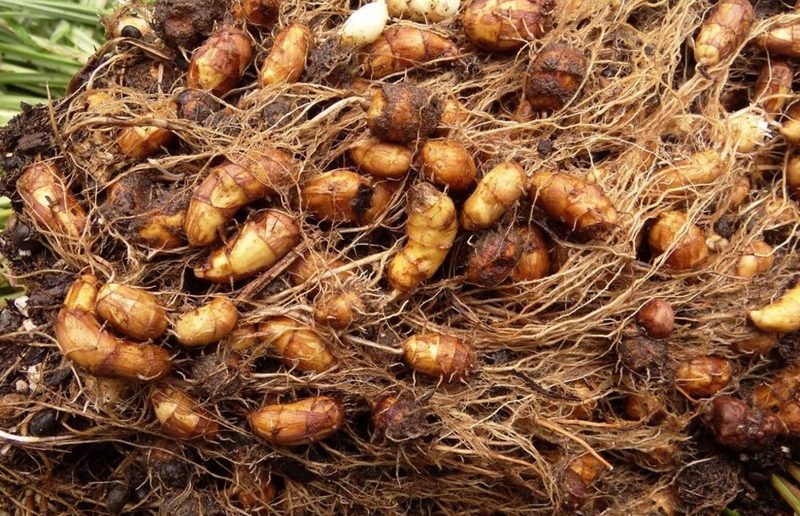
A large-scale project in China’s Xinjiang Uyghur Autonomous Region is transforming desert and saline land into productive farmland with the help of tiger nuts, also known as chufa. Experiments with growing the crop on sandy soils on the edge of the Gobi Desert began in 2017, and commercial plantings have now expanded to nearly 1.33 thsd ha.
Tiger nuts were selected because of their high drought and salt tolerance as well as their extensive fibrous root system. The roots stabilize shifting sands, reduce wind erosion and protect neighboring farmland from sandstorms. This has made it possible to cultivate areas previously considered virtually unsuitable for agriculture due to scarce rainfall, strong winds, soil salinity and extremely low levels of organic matter.
Over nine years, the project has significantly transformed the area. Vegetation coverage has increased from 8% in 2017 to around 50% today, while wind pressure has declined considerably. In total, more than 3 thsd ha of former desert and heavily saline land have been reclaimed, improved and brought into agricultural production.
At the same time, tiger nuts have evolved from a tool for combating desertification into a profitable agricultural crop. Their tubers are processed into vegetable oil and flour. Some farms also combine tiger nut plantations with fruit orchards to diversify production. One such operation now generates annual income of around 500 thsd yuan.
The project has developed into China’s largest scientific and demonstration base for tiger nut cultivation. In addition to expanding planted areas, the operation is developing breeding and seed production, testing specialized agricultural machinery and attracting investment in deep processing facilities.
The longer-term goal is to establish a closed-loop agricultural production system. Tiger nuts will be processed into oil and flour, processing by-products will be used as livestock feed, and organic fertilizers produced by the livestock sector will be returned to the fields to improve sandy soils. A crop initially introduced mainly to stabilize desert sands has thus become the foundation of a new agricultural processing industry in the region.
Read also
EU risks becoming dependent on China amid aviation fuel feedstock shortages
Ukraine to compensate shipowners for up to 80% of losses from Russian attacks
Soybean cultivation in Europe shifts north due to drought
Global beef production to decline by more than 3% for the first time in five years
Indonesia launches new palm oil export monitoring system




Got additional questions?
We will be happy to assist!
Write to us
Our manager will contact you soon