

China is returning to the international urea market
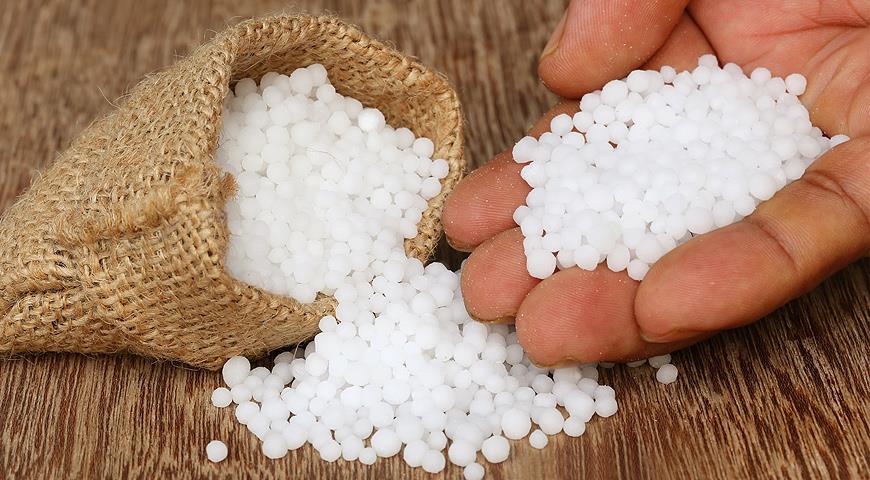
China is effectively returning to the global urea market after issuing export quotas to individual producers and distributors. This is reported by several international and Chinese market sources, Profercy writes.
According to preliminary estimates, Chinese producers received export quotas in June-August totaling 1.5-1.6 million tons. Another 400 thousand tons may be allowed for intergovernmental supplies.
In parallel, China has set minimum export prices at $660/ton FOB for bulk urea and $670/ton FOB for granular product. This is significantly higher than domestic prices on the Chinese market, which are equivalent to less than $300/ton FOB.
There have been no official statements from the Chinese authorities, in particular the National Development and Reform Commission (NDRC). As last year, information about the quotas is being transmitted directly to local suppliers.
The market expects that the current export restrictions and CIQ inspection requirements will remain in force.
Last year, China officially restricted sales of urea to India, the largest foreign market for the refined product. At the same time, deliveries were still carried out through large tenders. According to the latest data, direct exports to India may be allowed, but the minimum prices for this direction will be $ 20/t higher than for other markets.
Beijing has maintained tight control over fertilizer exports since late last year. Restrictions have already been extended to NK fertilizers, phosphate exports remain under strict control, and market participants report increased inspections of ammonium sulfate supplies.
After an almost complete halt in exports in 2024, China increased urea supplies in 2025 to 4.89 million tons – the highest figure since 2021.
What does this mean for Ukraine
LNZ Group trader Roman Kadenyuk notes that the appearance of additional Chinese volumes is a positive signal for the market against the backdrop of a deficit caused by the crisis in the Middle East.
“The closure of the Strait of Hormuz knocked more than 30% of world urea production out of the global balance. A sharp reduction in supply provoked a rapid increase in prices, and it is in this context that the appearance of 1.5-1.6 million tons of Chinese urea is an unquestionably positive signal for the market,” he noted.
According to him, additional volumes will put pressure on world prices, which will also affect the market of the Black Sea region and Ukraine.
“However, one should not count on a significant drop in prices: importers will include geopolitical risks associated with the conflict in the Middle East, limited alternative supplies and high market volatility in pricing,” explained Roman Kadenyuk.
He also advises Ukrainian farmers not to postpone the purchase of fertilizers.
“Under such conditions, a Ukrainian farmer should not postpone the purchase. The optimal strategy is to gradually build up reserves for the upcoming application season now, without waiting for a price that may not be there,” added the LNZ Group trader.
Read also
Ukraine’s oilseed harvest may reach 20 mln tons in 2026
Maersk revises container freight rates between Ukraine, Gdansk and Constanta
Egypt increases its share of EU urea imports to nearly 60%
Wet corn prices in Poland rise 58% year on year, dry corn up 42%
MHP considers investment in poultry production in Moldova with an annual capacity ...




Got additional questions?
We will be happy to assist!
Write to us
Our manager will contact you soon