

China and the US have agreed to reduce tariffs and expand agricultural trade
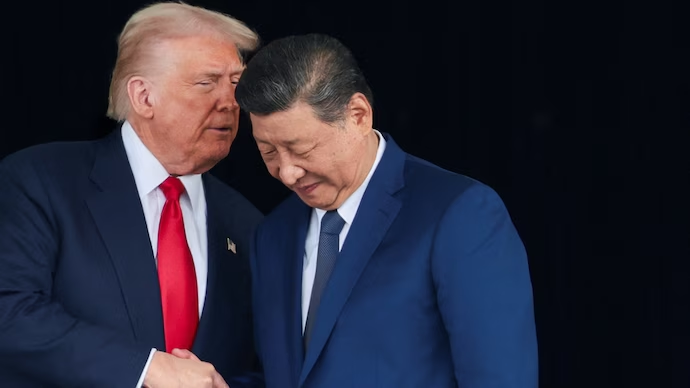
China and the United States have agreed to mutually reduce tariffs on certain goods and expand bilateral trade. This was announced by the Chinese Ministry of Commerce after a two-day summit in Beijing with the participation of US President Donald Trump and Chinese leader Xi Jinping.
The department noted that the parties agreed on a package of measures to stimulate trade in agricultural products. This includes a gradual reduction in tariffs on a number of goods, as well as the elimination of trade barriers for the export of meat, poultry, dairy products and seafood. Details of future changes are currently being agreed.
China also stated its readiness to promptly resolve issues related to licenses for the import of American beef and poultry supplies from individual US states. Earlier, Beijing has already renewed import permits for hundreds of American meat processing plants, which may revive meat trade between the countries after long-standing restrictions.
For its part, the United States promised to consider China’s claims regarding delays in Chinese dairy and fish products on the American market. The parties also discussed the export of ornamental plants from the PRC and the recognition of Shandong province as a zone free of highly pathogenic avian influenza, which is of great importance for international trade in poultry products.
Analysts believe that the agreements between the world’s two largest economies could positively affect global agricultural markets and reduce tensions in world trade. At the same time, the final parameters of the tariff policy remain uncertain, and the risk of new customs disputes between Washington and Beijing still persists.
Read also
Coming Up in UkrAgroConsult Reports: Key Market Signals
Dragon Capital forecasts reopening of Black Sea grain corridor in 2027
Iran and Afghanistan are the only markets where Russian wheat has gained market share
USDA raises US corn production forecast
Global palm oil stocks to fall to lowest level since 2017/18 — USDA




Got additional questions?
We will be happy to assist!
Write to us
Our manager will contact you soon