

Brazil’s bet on China for soybean exports could prove risky
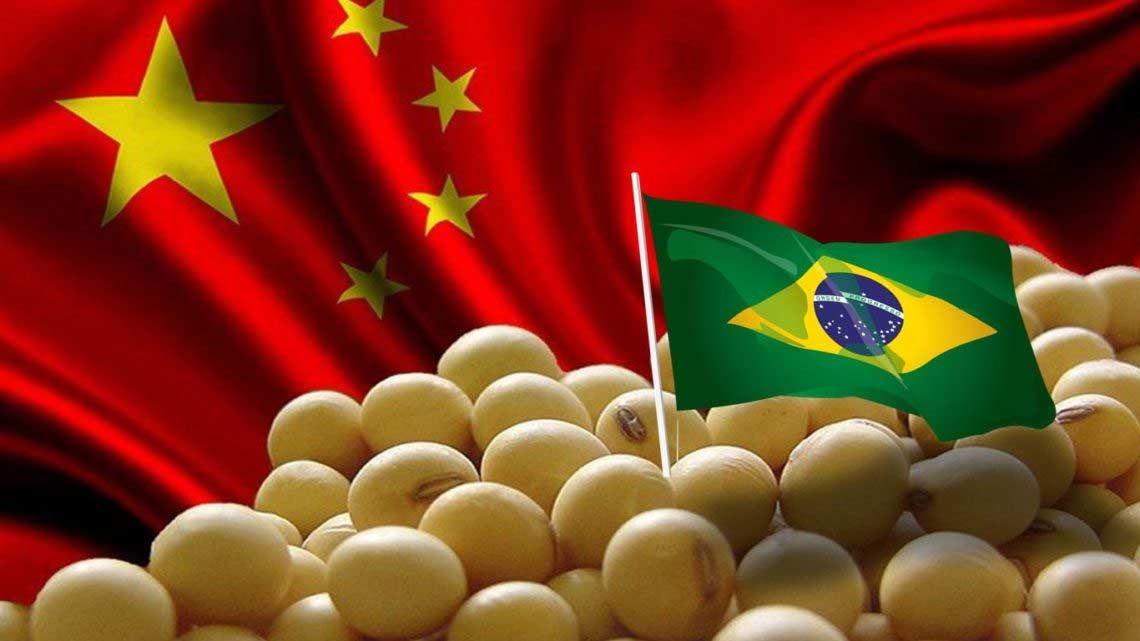
For several months, Beijing’s push to increase domestic food production was viewed in Brazil as a slow-moving but long-term risk rather than an immediate threat. However, recent developments suggest that the shift in China’s import strategy may be happening sooner than expected, raising concerns among major agricultural exporters.
In March, China reportedly returned or delayed around twenty shipments of Brazilian soybeans, citing contamination issues, pests, and prohibited weed seeds. While exporters initially treated this as an isolated incident, the scale and timing of the disruptions have intensified attention on China’s tightening import controls.
The situation reflects Beijing’s broader food security strategy outlined in its new five-year plan for 2026–2030, which prioritizes reducing dependence on foreign agricultural supplies. The policy includes expanding domestic production, upgrading farm technologies, diversifying import sources, and increasing the use of alternative protein inputs for animal feed.
Although China is not expected to fully abandon soybean imports, analysts anticipate a gradual reduction rather than a sudden shift. Some estimates suggest imports could decline by roughly a quarter by the end of the decade if domestic production improves as planned.
Other projections are even more ambitious, indicating that China could significantly cut its reliance on imported soybeans over the next decade by boosting yields and improving efficiency. For Brazil, which remains heavily dependent on China as its main soybean buyer, this growing diversification strategy introduces a potential long-term structural risk for export revenues.
For almost 30 years of expertise in the agri markets, UkrAgroConsult has accumulated an extensive database, which became the basis of the platform AgriSupp.
It is a multi-functional online platform with market intelligence for grains and oilseeds that enables to get access to daily operational information on the Black Sea & Danube markets, analytical reports, historical data.
You are welcome to get a 7-day free demo access!!!
Read also
Ukraine’s oilseed harvest may reach 20 mln tons in 2026
Maersk revises container freight rates between Ukraine, Gdansk and Constanta
Egypt increases its share of EU urea imports to nearly 60%
Wet corn prices in Poland rise 58% year on year, dry corn up 42%
MHP considers investment in poultry production in Moldova with an annual capacity ...




Got additional questions?
We will be happy to assist!
Write to us
Our manager will contact you soon