

Black Sea attacks push wheat prices to a two-year high

Global wheat prices climbed to their highest level since May 2024 as escalating tensions in the Black Sea fueled concerns over grain exports. Futures initially surged by more than 3% before giving up part of the gains after weak US weekly export sales data were released.
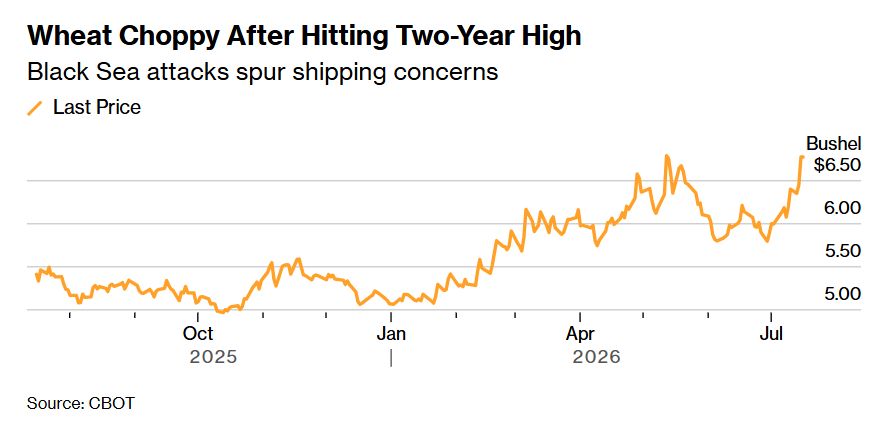
The US Department of Agriculture reported weekly wheat export sales of just 235,000 tons, the lowest since May and well below market expectations. US wheat also remains more expensive than European supplies, limiting its competitiveness on the global market.
Despite the weak export data, the security situation in the Black Sea remains the main driver supporting wheat prices. Ukraine and Russia are among the world’s largest grain exporters, and the Black Sea is the key route connecting their crops with global markets. Recent strikes on ports and maritime infrastructure have heightened concerns over potential disruptions to grain shipments.
According to market analysts, grain trade through the Sea of Azov and the Kerch Strait has virtually come to a halt, while Russian attacks on the ports of Chornomorsk, Odesa, and Pivdennyi have already reduced Ukraine’s grain export capacity by about one-third. Traders also fear that further escalation could disrupt fertilizer logistics in addition to grain exports.
Analysts note, however, that the current situation differs significantly from the market shock seen at the start of the full-scale war in 2022. At that time, prices reflected concerns over both production losses and export disruptions. In 2026, the market’s primary focus is on logistics, while global grain supplies remain relatively comfortable.
Market participants believe that wheat prices will continue to be driven mainly by developments in the Black Sea. If attacks on ports and shipping intensify, the geopolitical risk premium in wheat prices could increase further despite weak demand for US wheat exports.
Read also
Cambodia exports over 1 mln tons of rice for the first time as shipments to the Ph...
China loses share of Argentine beef exports as US and Israel increase purchases
Global sugar market faces deficit of over 6 mln tons due to poor harvests
Ukraine advised to make greater use of Galati and Braila ports for grain exports
Jordan makes no wheat purchase in 120 thsd ton tender




Got additional questions?
We will be happy to assist!
Write to us
Our manager will contact you soon