

Argentina’s soybean production will increase to 49 mln tons
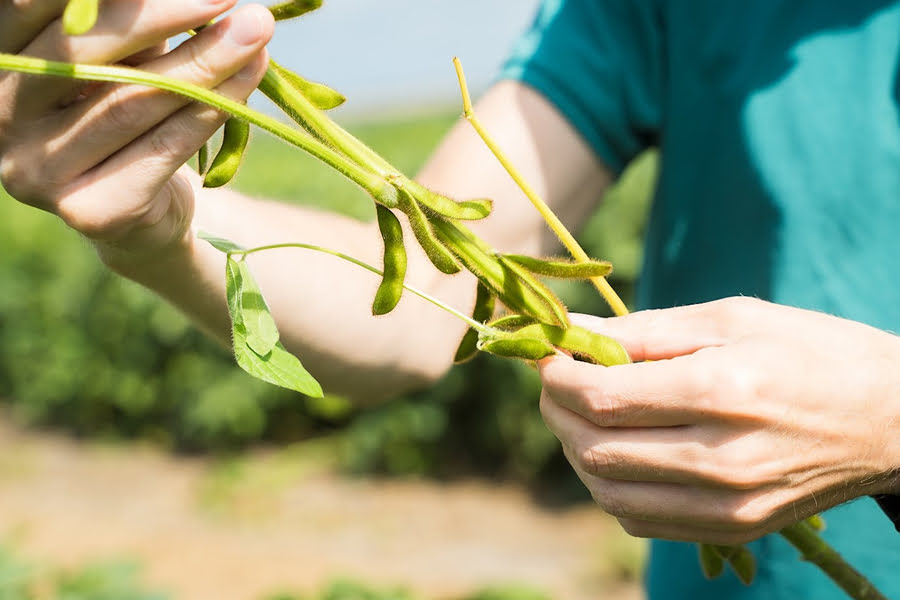
Soybean production in Argentina in the 2026/27 season is projected at 49 million tonnes, 1 million tonnes higher than the previous year. This growth will be driven by a slight increase in soybean acreage and a return to more typical yields following the strong results of the current season, according to a report from the Foreign Agricultural Service (FAS) of the U.S. Department of Agriculture.
Soybean acreage could increase to 17.4 million hectares from 16.5 million hectares in the 2025/26 season. This expansion is largely due to a reduction in corn acreage, according to the annual oilseed review published on April 9.
FAS emphasizes that Argentina’s soybean acreage remains stable and is unlikely to shrink significantly regardless of price conditions or global demand. Most of the suitable land is already in agricultural use, and annual fluctuations in acreage are primarily determined by crop rotation and the relative profitability of soybeans and corn.
Fertilizer prices will be a key factor in the 2026/27 season, potentially influencing final decisions on cropping patterns. Specifically, in Argentina, fertilizer prices rose by more than $200 per ton in one week amid the events in Iran, leading to higher global prices. The country has limited fertilizer reserves and relies heavily on imports.
Soybean crushing capacity in 2026/27 is projected to decline by 1 million tonnes to 42 million tonnes (approximately 63% of installed capacity) amid deteriorating margins. This will lead to a 2% decline in soybean meal production to 31.9 million tonnes, while exports will remain high at approximately 30 million tonnes. Despite the decline, crushing volumes will remain significantly above the 10-year average (38.9 million tonnes).
Currently, Argentina has 345 crushing plants with a combined capacity of approximately 67 million tonnes per year. Approximately 80% of this capacity is concentrated in the province of Santa Fe, where the plants have direct access to the Paraná River and well-developed infrastructure.
“Argentina is expected to maintain its position as the world’s largest exporter of soybean meal and soybean oil, thanks to one of the most advanced crushing industries in the world. In the 2026/27 season, approximately 86% of the soybean harvest will be crushed domestically—slightly below the previous year’s level (90%), but generally in line with medium-term trends,” FAS notes.
Almost all soybean exports from Argentina traditionally go to China, which accounts for over 90% of shipments. In the 2026/27 season, exports will remain at the previous year’s level of approximately 5.5 million tonnes.
Further growth is expected in the sunflower segment: the cultivated area will increase by 14% to 3.3 million hectares, continuing a long-standing upward trend. The main growing regions are the western and southern provinces of Buenos Aires, La Pampa, as well as the northern regions of Chaco and northern Santa Fe.
Sunflower production is forecast at 6.8 million tonnes, an increase of 300,000 tonnes year-on-year and 1 million tonnes above the 2024/25 season.
Sunflower processing could increase to 5.6 million tonnes (+5% year-on-year). More than 80% of the harvest is expected to be processed domestically, with high-value-added products subsequently exported.
For almost 30 years of expertise in the agri markets, UkrAgroConsult has accumulated an extensive database, which became the basis of the platform AgriSupp.
It is a multi-functional online platform with market intelligence for grains and oilseeds that enables to get access to daily operational information on the Black Sea & Danube markets, analytical reports, historical data.
You are welcome to get a 7-day free demo access!!!




Got additional questions?
We will be happy to assist!
Write to us
Our manager will contact you soon