

World Bank Warns Sumatra Floods Could Hit Indonesia’s Economy
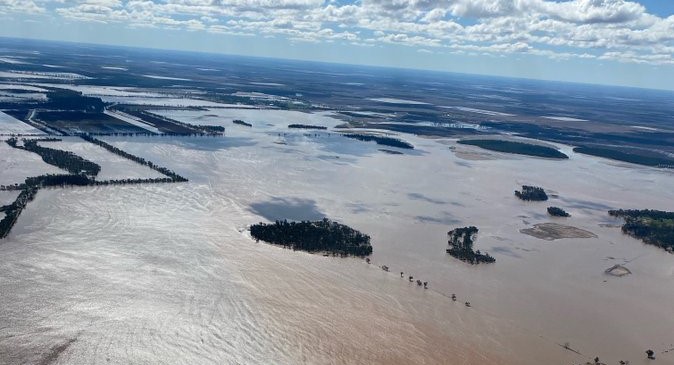
Flash floods and landslides in several regions of Sumatra in Indonesia have been highlighted by the World Bank. According to the institution, the disasters that occurred since late November 2025 in several areas of Sumatra, including Aceh, North Sumatra, and West Sumatra, have the potential to have a negative impact on Indonesia’s economy.
Lead Economist of the World Bank for Indonesia and Timor Leste, David Knight, said that flood disasters are part of the downside risk for the national economic growth towards the end of 2025.
“Related to risks, which are downside risks, natural disasters such as the floods in Sumatra and also in several other locations will have a negative impact on economic activities in Indonesia,” said David during the launch of the Indonesia Economic Prospects (IEP) report at the Energy Building, Jakarta, on Tuesday, December 16, 2025, as quoted by Antara.
Meanwhile, the World Bank also noted the potential risk of upside risk, including the improvement of the growth of main trading partners such as China and the relatively favorable prices of Indonesian export commodities. Successful trade and investment reforms are considered to strengthen the prospects of national economic growth.
However, the World Bank warned that several structural challenges still loom. One of them is the pressure on public consumption due to a decrease in real wages.
The World Bank noted that real wages have fallen by an average of 1.1 percent per year since 2018. The largest decline occurred in highly skilled workers, reaching 2.3 percent, followed by medium-skilled workers at 1.1 percent.
Meanwhile, the wages of informal or low-skilled workers only grew by 0.3 percent. “For medium-skilled workers, this has a significant impact on household welfare and the overall economy,” said David.
Regarding employment, the World Bank noted an increase in labor absorption in August 2025 by 1.3 percent compared to August 2024. But the growth is still dominated by the informal sector with low wages. This condition is considered a challenge for the labor market, although macroeconomic stability remains preserved.
Specifically for Indonesia’s trade performance, the World Bank anticipates future challenges amid escalating global trade tensions. Indonesia’s trade surplus reached US$ 2.39 billion in October 2025, with a cumulative surplus of US$ 35.88 billion throughout January-October 2025. This surge in exports was largely driven by frontloading activities, where exporters expedited the delivery of goods before reciprocal tariffs from the US were imposed.
The World Bank then recommended some policy priorities to maintain growth momentum, including strengthening the digital foundation, improving job quality, and fiscal and financial policy reforms. In the fiscal field, the optimization of digitalization and tax administration is considered to increase state revenue without significant policy changes.
As for the financial sector, the World Bank suggests expanding access to financing, including through credit guarantee programs and support for MSMEs, is crucial to encourage private investment and create sustainable economic growth.
Coordinating Minister for Economic Affairs Airlangga Hartarto previously estimated that economic growth in flood-affected areas of Sumatra would weaken. “Growth in disaster areas is expected to decline in North Sumatra, Aceh, and West Sumatra,” said Airlangga in Jakarta on Thursday, December 4, 2025.
He made the statement in response to the projection of maximum economic growth of 5.6 percent in the fourth quarter of this year. At the same time, he stated that the government will continue to boost economic growth in other regions to achieve its targets.
The Golkar politician ensures that the government will provide some financial relaxation for the people in flood-affected areas of Sumatra. One of them is the restructuring and write-off of bad loans for MSMEs. “The regulations are already there, and it can apply automatically,” he said.
For almost 30 years of expertise in the agri markets, UkrAgroConsult has accumulated an extensive database, which became the basis of the platform AgriSupp.
It is a multi-functional online platform with market intelligence for grains and oilseeds that enables to get access to daily operational information on the Black Sea & Danube markets, analytical reports, historical data.
You are welcome to get a 7-day free demo access!!!
Read also
Ukraine 2026–2030: Global Drivers and Local Transformation
Ukraine Adjusts to Costly Spring Campaign and Builds a New Farming Model
Thailand promotes the use of B20 biodiesel with subsidies
Ukraine offers new-crop grain without the usual discount to old-crop prices
World Bank develops roadmap to modernise wheat sector in Pakistan




Got additional questions?
We will be happy to assist!
Write to us
Our manager will contact you soon