

When Sumatra floods meet palm oil and biofuel ambitions
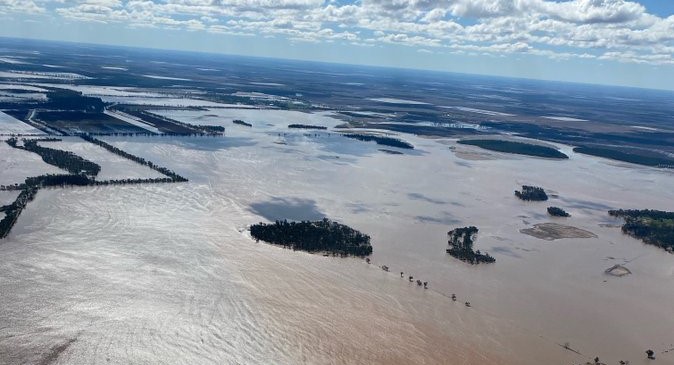
Flash floods and landslides that struck three provinces on the island of Sumatra — Aceh, North Sumatra, and West Sumatra — in late November claimed more than a thousand lives, left hundreds missing, and displaced thousands of residents from their homes.
Images of large logs swept away by floodwaters sparked public outrage, reinforcing perceptions that environmental damage contributed to the disasters. An aerial photograph showing vast palm oil plantations submerged by floodwaters also drew widespread attention.
In response to the catastrophe, Indonesia’s Ministry of Environment sealed and installed monitoring notices at the operational area of a palm oil plantation and mill owned by PT Tri Bahtera Srikandi (PT TBS) in Central Tapanuli, North Sumatra.
Minister of Environment Hanif Faisol Nurofiq said the measure was intended to temporarily halt activities that could potentially worsen hydrological conditions in the area.
He said the decision was taken to ensure compliance with environmental regulations, safeguard public safety, and support ecosystem restoration.
According to the minister, the move reflects the government’s recognition that land clearing for oil palm plantations, particularly when carried out in violation of regulations, can damage landscapes and pose serious risks to surrounding communities.
At the same time, the government continues to promote the development of environmentally friendly fuels, known as biofuels, using crude palm oil as the main raw material.
The ambition to develop biofuels is reflected in the mandatory use of diesel fuel blended with vegetable oils, known as fatty acid methyl esters (FAME) or biodiesel. The FAME used in Indonesia’s biodiesel program is derived from crude palm oil (CPO).
The Ministry of Energy and Mineral Resources said the use of biodiesel between 2020 and 2025 helped save up to US$40.71 billion in foreign exchange by reducing diesel fuel imports.
Since early 2025, the ministry has implemented a policy requiring diesel fuel to contain a 40 percent blend of vegetable oil, known as biodiesel 40 or B40.
As of September 2025, the implementation of the B40 program reached 10.57 million kiloliters, increasing the added value of crude palm oil by up to Rp14.7 trillion, equivalent to about US$853 million.
The program also contributed to foreign exchange savings of Rp93.43 trillion, or around US$5.4 billion, supported employment for more than 1.3 million workers, and reduced carbon emissions by up to 28 million tons.
FAME demand under the B40 program stands at 15.6 million kiloliters and is projected to rise to 20.1 million kiloliters in 2026, as the government plans to implement the B50 mandate in the second half of that year as part of efforts to end diesel imports.
Rising demand for CPO-based FAME indicates that Indonesia will require additional palm oil supplies to support the B50 program.
To secure CPO availability, the government is considering several options, including intensifying existing oil palm plantations to boost productivity, opening new plantation areas, or reducing palm oil exports through the implementation of a domestic market obligation (DMO) policy.
These considerations emerge as crude palm oil remains a key raw material for a wide range of daily necessities, including cooking oil, cosmetics, and hygiene products.
Without alternative supply measures, the expansion of the B50 program could disrupt the availability of palm oil for essential consumer goods.
Furthermore, recent flash floods and landslides in Sumatra have also underscored concerns that land clearing should not be pursued as a solution to meet growing CPO demand.
Further development of the grain and oilseed markets of Ukraine and the Black Sea region will be in the spotlight of the BLACK SEA GRAIN. KYIV conference, taking place on April 22–23 in Kyiv. The event will focus on strategic directions for the agricultural sector through 2030, including investments, energy independence, processing, and exports of high-value products.
Join strategic discussions and networking with industry leaders to gain актуальна insights, discover new business opportunities, and build partnerships with key market players.
Read also
Black Sea & Danube: Crop and Export Forecast
Rapid exports of Ukrainian flour to China unlikely despite market opening
Soybean harvest begins in Argentina
Ukraine, Syria and Turkey discuss logistical routes bypassing the Strait of Hormuz
Brazil ships first DDG batch to China, opening new feed market




Got additional questions?
We will be happy to assist!
Write to us
Our manager will contact you soon