

US winter wheat acreage could increase by 8%
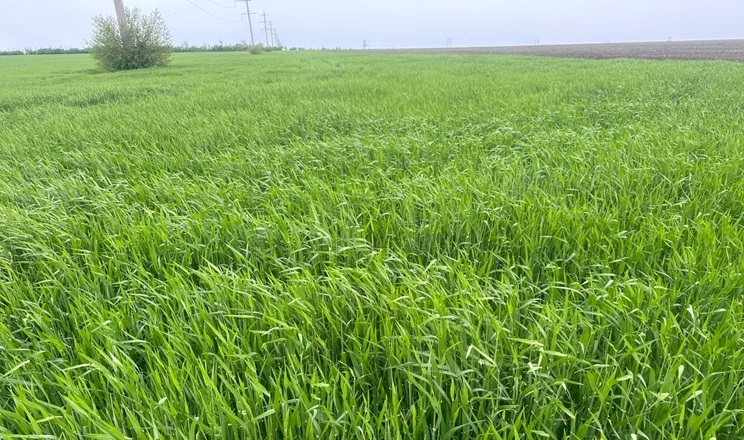
US winter wheat planting area for the 2027 harvest could increase by 8% to 33.8 mln acres, or approximately 13.7 mln hectares. The forecast was released by US agricultural lender CoBank, which noted that improved soil moisture across the Great Plains and higher crop insurance price guarantees are encouraging farmers to expand plantings. Following severe drought and a sharp decline in production in 2026, US farmers are expecting a recovery in next season’s wheat harvest.
One of the main incentives for expanding acreage is a significant increase in the prices used to calculate crop insurance coverage. In Kansas, the projected insurance price for hard red winter wheat (HRWW) has risen to $8.11 per bushel, compared with $5.61 a year earlier. Combined with improved soil moisture conditions, this is encouraging farmers to reduce fallow acreage in favor of wheat planting. Record-high fuel costs have become another factor, making the maintenance of fallow land less economically attractive.
The largest expansion in plantings is expected in the central and southern Great Plains, where weather conditions have improved following last year’s drought. According to CoBank, hard red winter wheat acreage could increase by 8% to 23.9 mln acres, or approximately 9.7 mln hectares. An improving wheat-to-corn price ratio is also supporting planting decisions. Grain market analyst Bruce Burnett considers the forecast realistic and estimates that total US winter wheat acreage could increase by 5–10%.
Meanwhile, soft red winter wheat (SRW) plantings in the US Midwest could rise by 15% to 6.2 mln acres, or approximately 2.5 mln hectares. White winter wheat acreage in the Pacific Northwest is projected by CoBank to remain unchanged at 3.7 mln acres, or around 1.5 mln hectares. Thus, most of the expected expansion will be concentrated in regions producing hard and soft red winter wheat.
Additional support for the 2027 crop outlook could come from weather conditions associated with El Niño, which typically brings increased winter precipitation to Texas, Oklahoma and parts of Kansas. If adequate moisture conditions persist into spring, US wheat production could recover significantly following the smallest harvest since the 1970/71 season. According to USDA, 49% of the winter wheat crop was rated good to excellent as of November 8. The US Department of Agriculture traditionally publishes its first official winter wheat acreage estimates for the 2027 harvest in mid-January.
Read also
Romania declares area near Sulina Canal dangerous for navigation
Coming Up in UkrAgroConsult Reports: Key Market Signals
Brazil raises soybean oil export forecast by 29% to 1.8 mln tons
Ukrainian corn in Egypt cheaper than Brazilian and Argentine supplies
India may cut soymeal exports by 40% in 2026/27




Got additional questions?
We will be happy to assist!
Write to us
Our manager will contact you soon