

Thailand to increase US corn imports amid declining supplies from neighboring countries
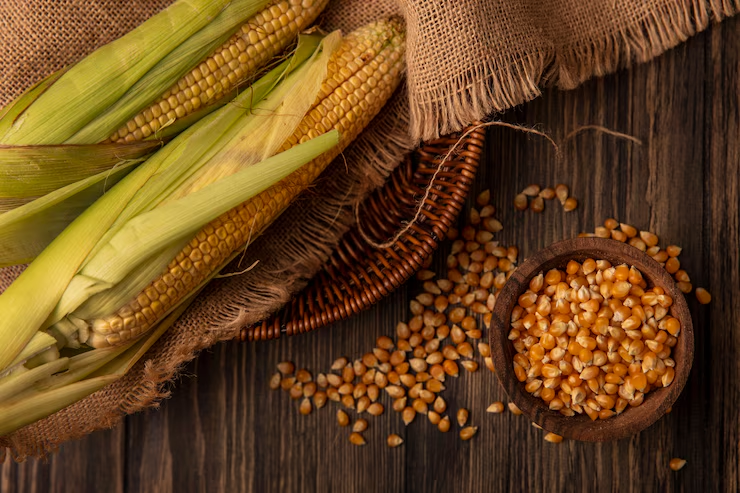
Thailand plans to import between 200,000 and 300,000 tons of U.S. corn in the fourth quarter of 2026 to offset a shortage of feed ingredients caused by declining supplies from neighboring countries. Even so, the planned purchases will remain well below the country’s import quota of 570,000 tons.
According to Sompob Auesongtham, Secretary General of the Thai Feed Mill Association (TFMA), corn imports from neighboring countries could decline to around 800,000 tons this year, increasing pressure on the domestic feed market.
The situation has been further aggravated by disruptions to agricultural raw material supplies from Cambodia due to the border conflict between the two countries. Thailand is expected to lose access to about 2 mln tons of cassava, a key ingredient traditionally used in animal feed production.
To cope with the shortage, feed manufacturers have increasingly turned to alternative ingredients, including rice bran and palm kernel meal. However, industry representatives warn that these substitutes may reduce animal productivity and slow growth rates.
Market participants believe that higher imports of U.S. corn will help partially offset the feed ingredient deficit and support the stability of Thailand’s feed industry. Nevertheless, logistical challenges and geopolitical tensions continue to pose significant risks to the country’s feed and livestock sectors.
For almost 30 years of expertise in the agri markets, UkrAgroConsult has accumulated an extensive database, which became the basis of the platform AgriSupp.
It is a multi-functional online platform with market intelligence for grains and oilseeds that enables to get access to daily operational information on the Black Sea & Danube markets, analytical reports, historical data.
You are welcome to get a 7-day free demo access!!!
Read also
Zelenskyy warns of continued Russian attacks on Black Sea ports
Canada’s new wheat crop quality exceeds expectations
Ukrainian farmers may reduce pea planting due to low prices and high logistics costs
Ukrainian farmers expand commercial pumpkin production
US soybean crush falls to 13-month low




Got additional questions?
We will be happy to assist!
Write to us
Our manager will contact you soon