

Iran ceasefire shifts soybean market focus to Brazil and rising global supply

The announcement of a two-week ceasefire in the Iran war on April 7 triggered sharp declines in energy and vegetable oil prices, while the soybean market remained relatively stable. Unlike crude oil and diesel, which fell by double digits, soybean oil prices dropped only by 3–4%, while soybean and soybean meal prices saw little change.
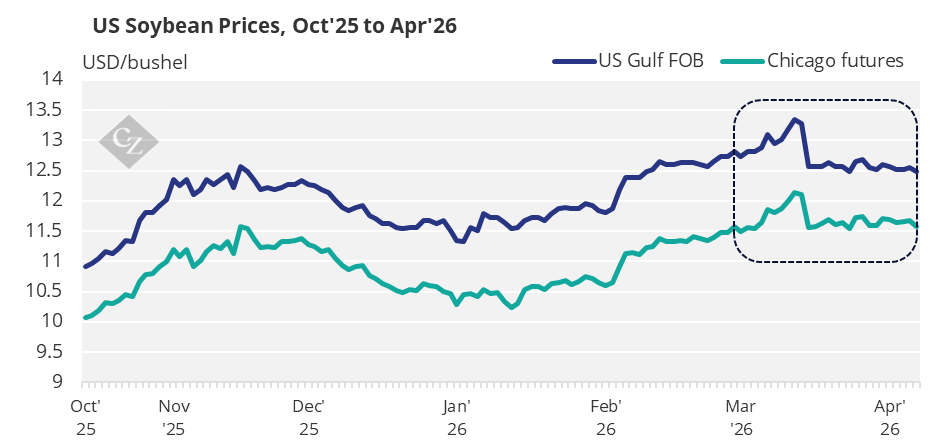
The muted response of the soybean complex reflects the dominance of fundamental factors, particularly Brazil’s record crop and ongoing uncertainty in US–China trade relations. Although the conflict briefly influenced markets through biodiesel and links to palm oil, these effects were not strong enough to significantly alter soybean price trends.
Additional pressure on prices is coming from Brazil’s strong export campaign. In March, the country shipped 14.5 million tons of soybeans, while total exports for the first quarter reached 23.47 million tons, exceeding last year’s level. Although China remains the largest buyer with a 69% share, shipments to China declined, while exports to the EU, Mexico, Bangladesh, and Thailand increased.
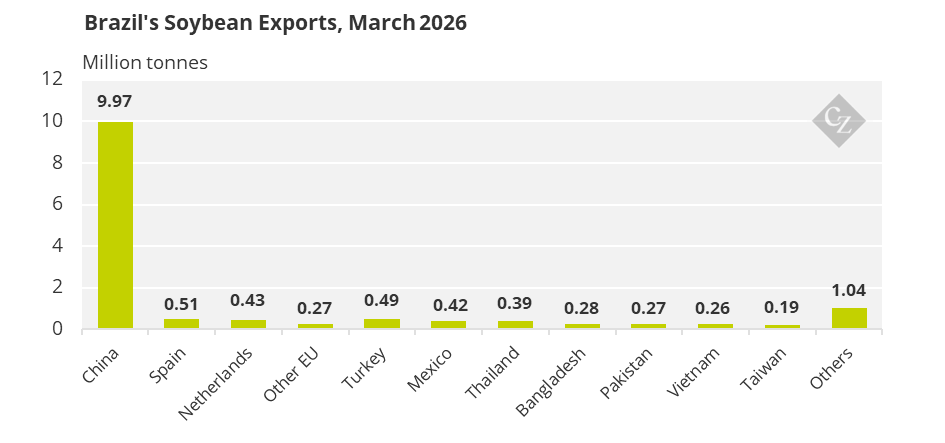
The drop in exports to China is partly linked to stricter quality controls. Chinese importers raised concerns over weed seeds, pesticide residues, and grain damage, leading to vessel delays at ports and contract adjustments. In response, Brazil introduced new inspection procedures, but uncertainty in trade with China persists.
At the same time, risks to Chinese demand are increasing. A surge of Brazilian soybeans is expected to arrive between May and July, potentially leading to market saturation. Weak economic growth, challenges in the livestock sector, and falling pork prices are limiting demand for feed and soybean meal. Under these conditions, part of Brazil’s exports is likely to continue shifting to other markets, while expanding US acreage will further add pressure to global soybean prices.
Further development of the grain and oilseed markets of Ukraine and the Black Sea region will be in the spotlight of the BLACK SEA GRAIN. KYIV conference, taking place on April 22–23 in Kyiv. The event will focus on strategic directions for the agricultural sector through 2030, including investments, energy independence, processing, and exports of high-value products.
Join strategic discussions and networking with industry leaders to gain актуальна insights, discover new business opportunities, and build partnerships with key market players.
Read also
Oil Market Enters a Phase of High Risks and Unstable Margins
Trump warns Iran over shipping fees in the Strait of Hormuz
Brazil’s grain sector continues structural transformation
Black Sea & Danube: Crop and Export Forecast
Turkey expects a better wheat harvest, but the agricultural sector faces new chall...




Got additional questions?
We will be happy to assist!
Write to us
Our manager will contact you soon