

Indonesian Palm Oil Export Up Over 25% to $20.2 Billion
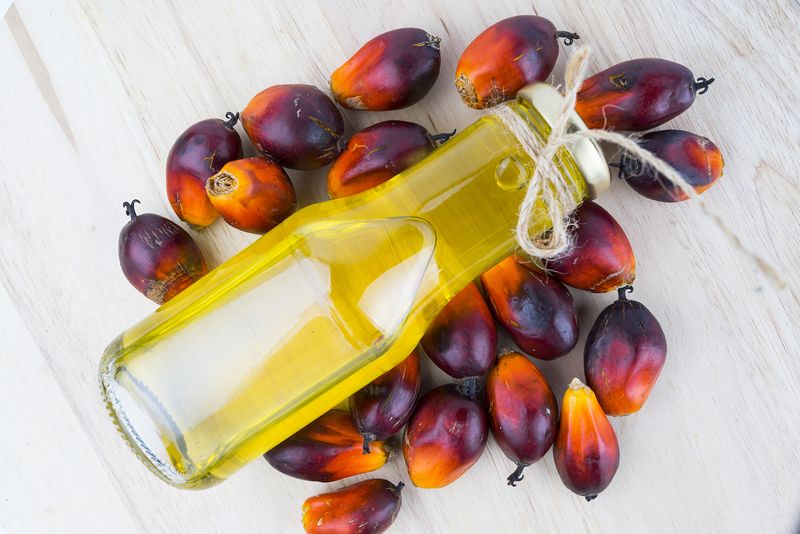
Indonesia registered a double-digit growth in its palm oil exports as of October, enabling the resource-rich economy to enjoy 66 months of being in the black, according to the Central Statistics Agency (BPS).
The agency data showed that Indonesia exported about $20.2 billion of palm oil, be it crude or processed, between January and October 2025. Palm oil — which is pivotal in food manufacturing and beauty products — made up 9.05 percent of Jakarta’s non-oil and gas exports that period.
“Our export of CPO [crude palm oil] and its derivatives jumped 25.73 percent as of October, value-wise compared to 2024,” Pudji Ismartini, a deputy at BPS, told a press briefing on Monday.
Indonesia’s foreign palm oil sales totaled $16.07 billion in the same ten-month period of 2024.
Southeast Asia’s biggest economy also enjoyed a price advantage as palm oil prices rose 0.80 percent month-month on global markets in October, reaching $1,045.04 per metric ton.
From a volume standpoint, the 2025 January-October palm oil exports totaled 19.49 million tons, up 7.83 percent versus 2024 levels. The country sold 18.08 million tons to foreign markets in the first ten months of last year. Palm oil exports stood at 1.91 milion tons in October alone.
BPS did not disclose the top buyers, although the commodity had been key to Jakarta’s trade relations with India.
Indonesia’s non-oil and gas exports to India hit $15.32 billion so far this year as of October. Some $1.38 billion of those exports were goods categorized as animal fat/vegetable oil. This export category includes palm oil, which often sees soaring demand in New Delhi during the festival season as people consume more sweets and fried foods.
Animal fat/vegetable oils added a $28.12 billion surplus to Indonesia’s trade balance as of October. Jakarta has maintained a 66-month surplus streak since May 2020.
As Indonesian palm oil remains popular in global markets, more good news are also coming from the European Union (EU).
The European Parliament recently voted in favor of postponing the bloc’s anti-deforestation regulation, dubbed the EUDR, by another year. Under this regulation, agribusinesses must prove that their palm oil products do not come from deforested land by showing the exact geolocation data of where they are produced — a requirement that Indonesia finds to be a future headache for smallholders.
If the EU proceeds with the delay, large operators and traders will have time until Dec. 30, 2026 before the EUDR kicks in. The grace period for micro-sized and small enterprises will last until June 30, 2027.
Senior minister Airlangga Hartarto even commented on this postponement to the regulation that had caused a strain in Indonesia’s relations with the EU.
“I’d say this [delay] is a victory for Indonesia. Because Indonesia and other like-minded countries have been demanding some improvements to the EUDR,” Airlangga told a business conference later that day.
Indonesia is pursuing zero tariffs on its US-bound palm oil in its ongoing trade negotiations. Airlangga remained confident that the US would exempt Indonesian palm oil from the import, citing that the commodity could not grow on American soil.
For almost 30 years of expertise in the agri markets, UkrAgroConsult has accumulated an extensive database, which became the basis of the platform AgriSupp.
It is a multi-functional online platform with market intelligence for grains and oilseeds that enables to get access to daily operational information on the Black Sea & Danube markets, analytical reports, historical data.
You are welcome to get a 7-day free demo access!!!




Got additional questions?
We will be happy to assist!
Write to us
Our manager will contact you soon