

How much Palm oil does India consume
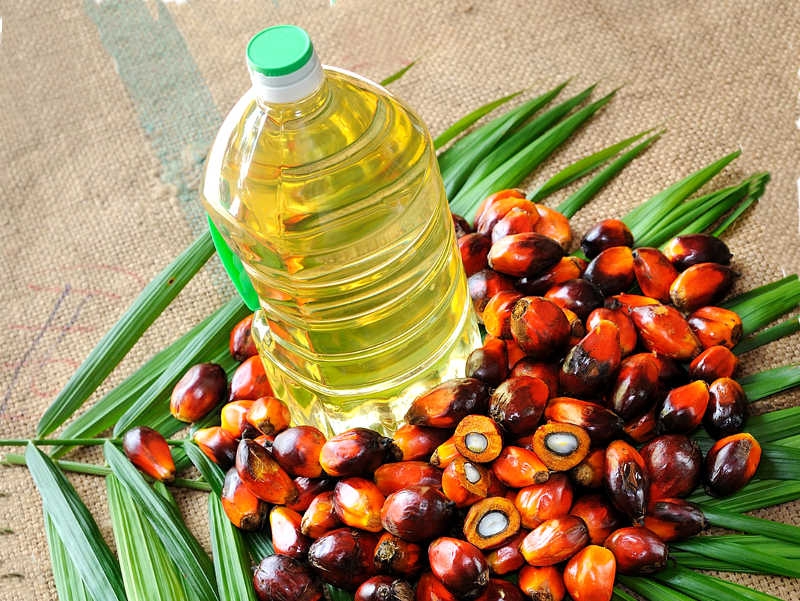
India consumes 23 to 25 million tonnes of edible oil a year. Of that, nearly 8-10 million tonnes is palm oil. 90% of this palm oil is consumed as food.
About 15 to 16 million tonnes of edible consumed in India is imported from other countries. Palm oil accounts for 60% of all imported vegetable oils and 37% of overall edible oil consumed. Most of India’s palm oil imports come from Indonesia, Malaysia, and Thailand.
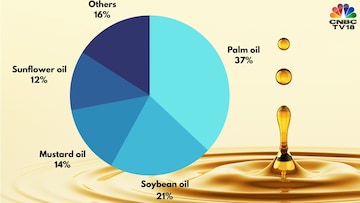
Edible oils are used actively for cooking, frying, garnishing and seasoning. Palm oil in India is sold as a direct edible oil or as a blend with other oils like soybean, sunflower, rice bran oil, etc.
Palm oil is used in processed foods like bread, biscuits, instant noodles, chips, chocolates, ice creams, margarine, sweets, pizzas and doughnuts. Palm oil is also used in Indian fried snacks like samosas, farsan, namkeen, and French fries.
Palm oil is in nearly everything: lipsticks, toothpaste, soaps, shampoos, and deodorant to detergents and house cleaners. It is said that almost 50% of all packaged products on a supermarket shelf will have a derivative of Palm oil.
India’s palm oil demand has increased in recent years because it’s cheaper, has a longer shelf life, and has a neutral taste.
In the last decade, annual palm oil demand in India has been stable between 8.5 and 9.5 million tonnes. The import of refined, bleached, and deodorised (RBD) palm olein was placed under open general licence in the mid-1990s.
The volume of imported oils started increasing thereafter as the industry shifted to cheaper imported oils.
The price of palm oil increased 22% in 2024. The industry now expects the prices to stabilise in 2025 and the demand to improve.
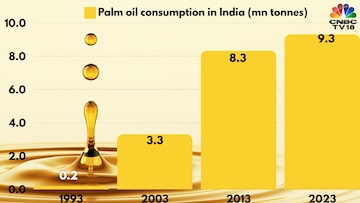
Source: Indexmundi
Further development of the grain and oilseed markets of Ukraine and the Black Sea region will be in the spotlight of the BLACK SEA GRAIN. KYIV conference, taking place on April 22–23 in Kyiv. The event will focus on strategic directions for the agricultural sector through 2030, including investments, energy independence, processing, and exports of high-value products.
Join strategic discussions and networking with industry leaders to gain актуальна insights, discover new business opportunities, and build partnerships with key market players.
Read also
Black Sea & Danube: Crop and Export Forecast
Ukraine to expand sunflower and rapeseed area while soybeans decline — FAS USDA
Wheat faces biggest weekly drop in eight months on higher inventories
Cargill’s head of world trading departs firm after three decades
Indonesia deploys African weevils to boost palm oil output




Got additional questions?
We will be happy to assist!
Write to us
Our manager will contact you soon