

High export duties on oilseeds in russia increase pressure on domestic prices
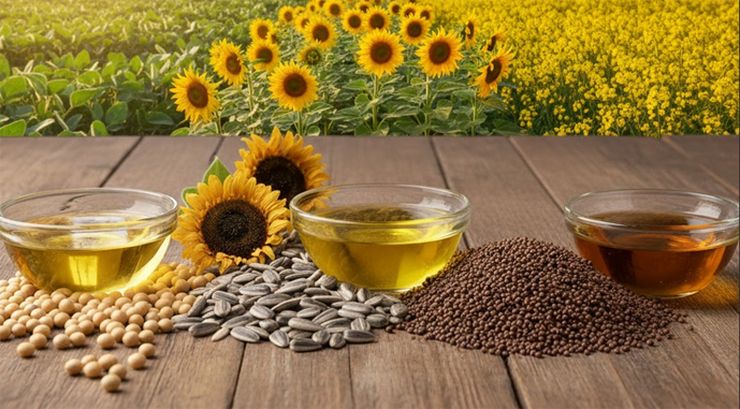
In 2026, russia continues to maintain high export duties on oilseeds, significantly restricting raw material shipments to international markets. The strictest conditions apply to sunseed, with an export duty of 50% of customs value, but no less than RUB 32,000/t (approximately $386/t). Soybeans are subject to a 20% duty, but no less than $100/t, rapeseed to 30%, but no less than €165/t, and linseed to 10%. These restrictions make exports of certain oilseeds economically unviable.
Sunseed producers are particularly affected by the tariff policy, as the minimum duty effectively blocks exports outside the Eurasian Economic Union. Meanwhile, soybean and rapeseed exports remain possible, although high duties significantly reduce exporters’ profitability. For example, at a soybean price of $450/t, the minimum duty of $100/t represents more than 22% of its value, reducing the competitiveness of russian products in international markets.
The main objective of export duties is to encourage domestic oilseed processing. Restrictions on raw material exports allow russian crushing plants to purchase sunseed, soybeans, and rapeseed at lower prices, supporting capacity utilization. However, this policy creates unfavorable conditions for farmers, who lose opportunities to sell their products at more attractive prices in international markets.
The impact of export duties becomes particularly significant during periods of large harvests and excess supply. With limited access to export markets, producers are forced to rely primarily on domestic demand, increasing competition among sellers and putting downward pressure on purchasing prices. As a result, processors benefit from cheaper raw materials, while profitability for oilseed farmers declines.
The export duty on sunseed has been extended until August 31, 2028, while a possible review of certain restrictions is expected in September 2027. Agricultural producers are interested in lower duties to expand export opportunities, while processors favor maintaining existing measures to protect the domestic market. Future tariff policy decisions will reflect the balance of interests between farmers and processors and influence oilseed prices in russia.
Read also
Quality of Ukrainian milling wheat returns to pre-war levels
Ukraine and EU discuss expanding agricultural exports and supporting farmers
Kazakhstan’s grain stocks exceed 19.5 mln tons
Kernel plans to resume operations at its oil extraction plants once security condi...
Brazil to increase corn acreage by 4.9% in MY 2026/27




Got additional questions?
We will be happy to assist!
Write to us
Our manager will contact you soon