

Global ports struggle to keep pace with ships’ transition to alternative fuels
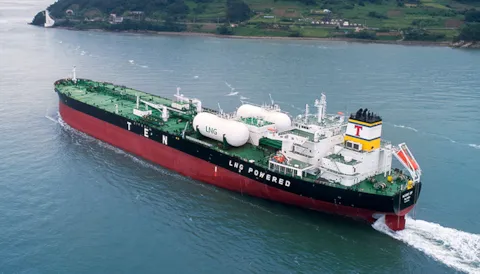
Global port infrastructure is developing significantly more slowly than the growing number of ships capable of operating on alternative fuels. According to a new Lloyd’s Register (LR) study, Fuel for Thought: Ports, the global orderbook included 1,942 alternative-fuel-capable vessels at the beginning of 2026, accounting for 47% of total orderbook tonnage. However, the infrastructure required to support these vessels remains limited, creating potential fuel supply shortages along certain shipping routes. According to DNV, another 364 alternative-fuel vessels were ordered during 2026, representing a 57% increase compared with the same period of the previous year.
Liquefied natural gas (LNG) has the most developed bunkering infrastructure, with refuelling facilities available at 222 ports worldwide. Meanwhile, methanol bunkering is offered at only 25 ports, while commercial ammonia bunkering had been recorded at just one port by the time the study was completed. At the same time, the global orderbook already includes 385 methanol-capable vessels and 45 ammonia-capable ships. This imbalance raises the risk of a two-tier global port network, where modern vessels may only be able to obtain the required fuels at a limited number of major ports.
Another major challenge is the limited availability and high cost of low-carbon fuels. According to Lloyd’s Register, announced low-carbon methanol production projects represent a total capacity of 61.8 mln tons, but only 6–12 mln tons of renewable methanol production capacity is expected to become operational by the end of 2031. Meanwhile, green methanol and ammonia cost two to three times more than conventional marine fuels, while cargo owners are willing to pay an average premium of just 3% for more environmentally friendly transportation.
The development of alternative-fuel infrastructure is also highly uneven across regions. Most investment and commercial projects are concentrated in Northern Europe, East Asia and Singapore, while ports in Africa, South Asia, Latin America and the Pacific region are significantly lagging behind. Key obstacles include a shortage of specialised bunkering vessels, licensing requirements, the development of safety systems and berth modernisation. For international trade, particularly grain and other agricultural commodity shipments, this situation could lead to additional logistics costs and fewer route options for vessels operating on alternative fuels.
Biofuels remain the most accessible short-term solution, as they can largely be supplied through existing bunkering infrastructure. According to Lloyd’s Register, marine biofuel deliveries were recorded at 90 ports worldwide, although 77.5% of total volumes were concentrated in just 13 locations. Experts emphasise that ports do not need to develop infrastructure for every alternative fuel simultaneously. Instead, investment decisions should reflect actual demand from shipping companies, prospective trade routes and the ability to ensure a stable fuel supply.
Read also
Global rice production to decline for the first time in 11 years — IGC
Wheat and corn prices rose, while soybeans declined in Chicago on Thursday
Uruguayan beef export prices continue to rise, reaching a new high
India’s wheat area could fall 6%, marking the steepest decline in 26 years
Ukraine increases rapeseed oil exports to EU, accounting for over 83% of imports


Got additional questions?
We will be happy to assist!
Write to us
Our manager will contact you soon