

Global agricultural commodity prices post strongest monthly rise since 2012

Global agricultural commodity prices are heading for their strongest monthly increase in more than a decade in August as wars and extreme weather disrupt supplies. The Bloomberg Agriculture Spot Index, which tracks 10 major agricultural commodities, was up more than 13% for the month as of the end of last week, putting it on course for its steepest gain since July 2012.
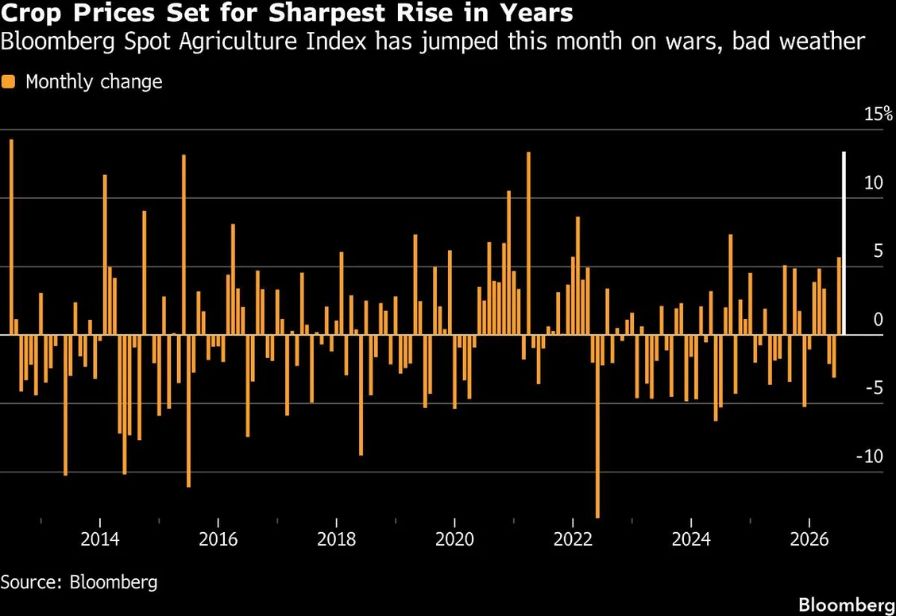
Wheat has been one of the main drivers of the rally, with prices reaching a three-year high amid growing risks to supplies from the Black Sea region. Attacks on port infrastructure and shipping have slowed exports from Ukraine and Russia, which together account for more than a quarter of global wheat exports.
Agricultural markets are facing additional pressure from rising energy and transportation costs amid the war in Iran. The combination of higher commodity, energy and logistics costs is fueling concerns about another acceleration in food inflation and higher prices for basic food products, from bread to meat and dairy.
The risks extend beyond wheat. Ukraine and Russia are also major suppliers of barley, corn and sunflower oil, meaning prolonged disruptions to Black Sea logistics could affect several segments of the global agricultural market simultaneously. According to Lachstock Consulting, there are few obvious options to quickly replace any potential shortfall in supplies.
At the same time, export disruptions are already causing unsold grain to accumulate in producing countries. In Ukraine, limited opportunities to market the crop are putting additional pressure on farmers, while lower revenues and a shortage of storage capacity are increasing the risk of reduced planting for future crops.
Meanwhile, Turkey is seeking a new agreement on the safety of shipping in the Black Sea. Turkish Foreign Minister Hakan Fidan said on Monday that Ankara was working toward a deal. His comments, combined with end-of-month profit-taking, pushed wheat futures down as much as 3.5%, the biggest decline in a month. However, the drop did little to dent the strong rally recorded throughout August.
Analysts warn that unless stable Black Sea exports resume, the situation could evolve from a short-term logistics disruption into a multi-season supply problem. This means the current disruptions could affect not only prices in the coming months but also production and the global grain balance in subsequent seasons.
Read also
Palm oil prices rise nearly 4% over the week on stronger Malaysian exports
Coming Up in UkrAgroConsult Reports: Key Market Signals
US soybeans cheaper than Brazilian supplies, but China’s demand constrained ...
Australia could increase global wheat supplies thanks to a strong harvest in Victoria
Global sugar market could shift from surplus to deficit due to lower Brazilian pro...




Got additional questions?
We will be happy to assist!
Write to us
Our manager will contact you soon