

Farm Europe warns of growing EU dependence on agricultural raw material imports
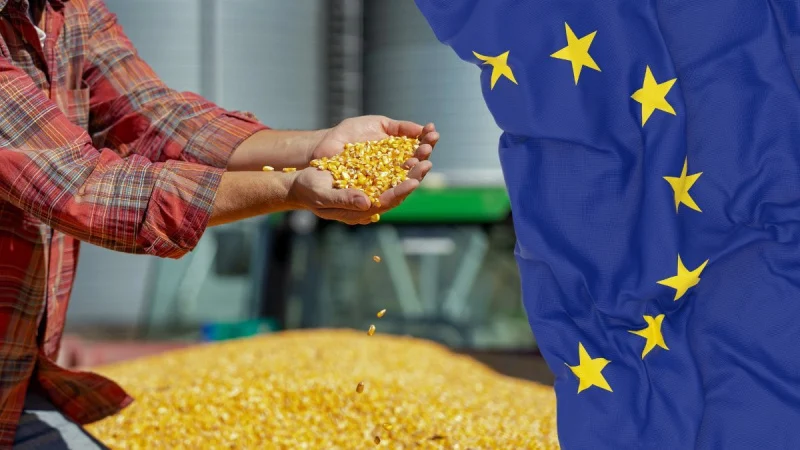
The European Union is becoming increasingly dependent on imports of agricultural raw materials amid declining domestic production and rising farming costs, according to Farm Europe. The organization said EU agri-food imports are growing almost six times faster than exports.
According to Farm Europe, the EU’s cereals surplus has halved in recent years, while cereal acreage has declined by 4 mln ha. Wheat imports in 2023 were 2.4 times higher than in 2019, while EU corn exports have fallen by 48% since 2019.
The EU’s dependence on imported oilseeds and feed materials has become particularly pronounced. Farm Europe said net imports of oilseeds and feed materials reached a record 62.3 mln tons, up from 58.9 mln tons in 2019. Soybean meal imports increased to 41.7 mln tons, 21% above the 2019 level.
High fertilizer costs are adding further pressure on producers. Nitrogen fertilizer prices in April 2026 were 71% above the 2024 average, while EU fertilizer prices rose by another 13.4% y/y in Q2, even as agricultural output prices declined by 5.8%.
Farm Europe called for stronger investment in domestic agricultural production, processing, biofuels and biomethane to reduce the EU’s import dependence. The organization argues that current policies risk replacing one form of external dependence with another rather than strengthening Europe’s food and energy autonomy.
Read also
Moldovan farmers threaten protests over possible lifting of restrictions on Ukrain...
Global durum wheat market faces shortage of high-quality grain
Argentina expands sunflowerseed production and crushing amid high global sunflower...
Spanish producers call for withdrawal of up to 20% of olive oil from market amid f...
Jordan buys 60 thsd tons of wheat in tender




Got additional questions?
We will be happy to assist!
Write to us
Our manager will contact you soon