

Black Sea disruption reshapes Ukraine’s grain trade and export forecasts
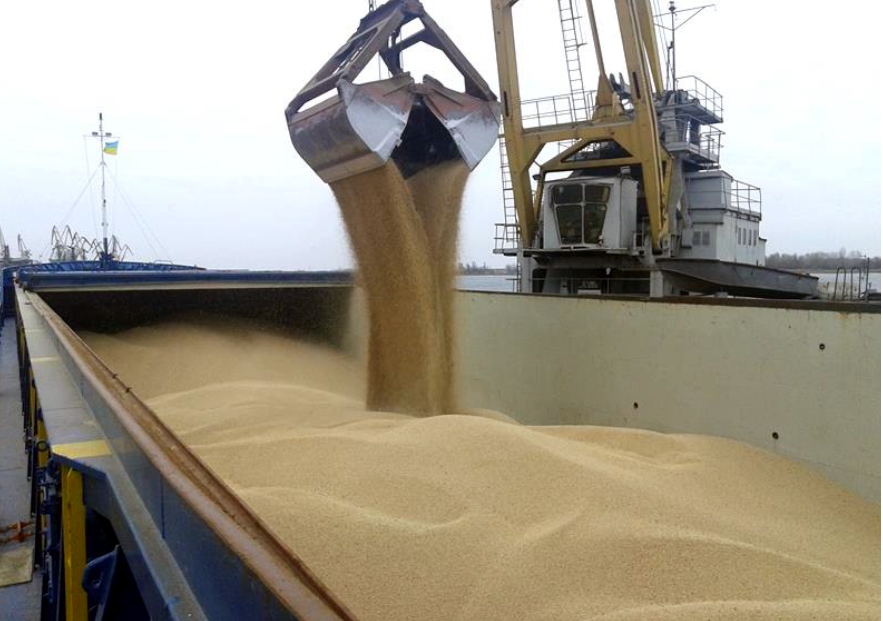
Ukraine’s agricultural exports remain subdued despite some recovery in overland shipments. October deliveries of agricultural commodities, including vegetable oils and meals, reached 2.44 mln tones, only marginally above September. More cargo is moving by road and rail, while deep-water ports have lost most of their former role. The change in the transport mix over the year illustrates how alternative corridors keep trade moving but cannot restore the export capacity previously provided by large-scale maritime shipments.
The effective blockade of Greater Odesa continues to shape shipment economics. Danube ports and western border crossings operate under capacity constraints, while adverse weather, navigation delays and congestion near the Sulina Canal reduce reliability. Longer voyages and higher freight and handling costs weaken Ukrainian competitiveness in distant destinations and weigh on domestic purchase prices. According to UkrAgroConsult, rising overland shipments still fall short of offsetting the loss of the main maritime outlet.
The grain segment is showing a pronounced imbalance between wheat and other crops. Wheat dominates current shipments, whereas barley and corn are moving at a much slower pace. This is particularly unusual for corn, whose exports normally accelerate in autumn and winter as the new harvest becomes available. Instead, the current seasonal pattern remains well below the historical range, suggesting that the constraint is not merely the timing of supply but the ability to move grain abroad.
The weak start to the corn export season is putting the existing forecast under pressure. Only about 0.53 mln tones was shipped in September–October, leaving a sharp and sustained acceleration necessary over the remaining months to meet the earlier projection. Historical seasonal export patterns offer little basis for assuming such a rebound while logistics remain constrained. UkrAgroConsult is therefore considering a downward revision to its corn export outlook as the gap between available grain and feasible shipments persists.
The near-term outlook depends primarily on the security of Black Sea navigation. Even potential de-escalation agreements would not translate immediately into a return of substantial volumes: actual vessel calls, war-risk insurance and shipowners’ willingness to operate would still be necessary. Until deep-water port operations recover, alternative routes will remain essential but costly and insufficient for Ukraine’s full export potential. This leaves corn shipments and farm economics exposed to continued pressure.
Key trends
- Growing road and rail shipments do not remove the fundamental bottleneck, as alternative corridors remain too constrained to replace the throughput of deep-water Black Sea ports.
- Danube congestion, weather-related delays and elevated freight costs undermine shipment predictability and margins, particularly for exporters serving more distant destinations.
- Wheat continues to dominate grain exports while corn and barley move much more slowly, highlighting how different crops are exposed to limited logistics access.
- An unusually slow start to corn exports increases the likelihood of a downward forecast revision, since the sustained recovery needed to meet the previous projection is not supported by recent volumes.
- A meaningful maritime recovery will require more than diplomatic signals: safe navigation, viable insurance and actual vessel arrivals will determine when Ukrainian exports can expand.
Would you like to receive the full analytical report with all insights and data? Please complete the form to gain access to the material. The full version will be sent to your email.
Full version of the article is available to subscribers ‘BLACK SEA & DANUBE GRAIN REPORT’ and ‘BLACK SEA & DANUBE OILSEED REPORT’. You may request a sample report and apply for subscription. Be confident with your business strategy based on professional analysis and forecasts of the Black Sea & Danube agri market!
Read also
Asia overtakes Europe as the largest importer of shelled US walnuts
Biofuel mandate rollback could pressure US soybean prices and crushing industry
Shortage of modern grain storage forces Russian farmers to use plastic silo bags
China raises 2026/27 sugar production forecast to 13.6 mln tons
EU pumpkin production reaches 1.37 mln tons




Got additional questions?
We will be happy to assist!
Write to us
Our manager will contact you soon