

Algae-based fertilization and nitrogen recovery from wastewater — Europe unveils Fertilizer Action Plan
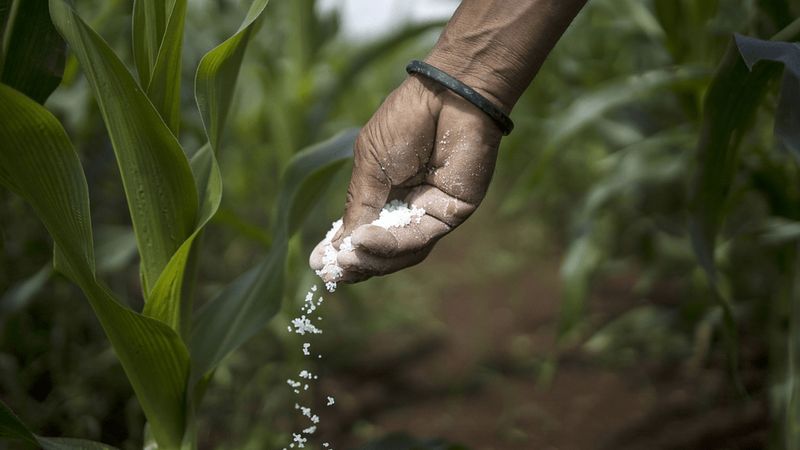
On May 19, the European Commission adopted a Fertilizer Action Plan — an initiative aimed at supporting farmers amid rising prices and fertilizer shortages, strengthening domestic production, and reducing Europe’s dependence on imports. This was stated in a European Commission announcement published on its website.
Recent supply disruptions and sharp price fluctuations have seriously affected farmers across Europe. Therefore, the new plan combines immediate support — ensuring fertilizers remain available now — with long-term solutions, including the development of domestic production, reduced import dependence, and a transition to more environmentally friendly fertilizers.
European Commission President Ursula von der Leyen stated that the EU is investing in strengthening its fertilizer industry, supporting farmers, and developing sustainable solutions. According to her, the energy crisis demonstrates that climate leadership and economic resilience are closely interconnected.
Support for farmers
The European Commission will provide targeted financial support to farmers through EU agricultural policy instruments. Plans include increasing the agricultural reserve and launching a financial aid package to cover current expenses ahead of the new production cycle.
The plan also предусматривает:
- new tools to support farmers’ working capital;
- greater flexibility in advance payments;
- incentives for more efficient fertilizer use and a transition to biofertilizers;
- expansion of advisory services for farmers.
Special attention will also be given to nutrient management and the implementation of practices that reduce fertilizer use.
Production and decarbonization
The EU plans to support its domestic fertilizer industry in order to avoid deindustrialization and reduce dependence on imports. Key priorities include:
- development of organic and biofertilizers;
- use of alternatives such as algae, microbial solutions, and biostimulants;
- recovery of nitrogen and phosphorus from wastewater.
The European Commission also intends to reduce bureaucracy and market barriers in order to boost demand for environmentally friendly fertilizers produced in Europe and improve the functioning of the internal market.
In addition, the fertilizer sector will gain better access to funding for “green” modernization. In particular, EU funds will support the development of biogas, biomethane, and wastewater processing infrastructure, enabling the scaling up of nutrient recovery.
Market and transparency
The European Commission is launching a fertilizer partnership that will bring together producers, farmers, and member states. In the coming months, the partnership will hold its first discussions involving all market participants to develop solutions for issues related to supply, production, sales, and fertilizer use. These discussions will form the basis for practical solutions for both farmers and the industry.
The Commission will also strengthen market monitoring, early warning systems, and ensure regular updates of fertilizer-related data across the EU. In particular, it will prepare a report on how costs associated with the Carbon Border Adjustment Mechanism (CBAM) and the Emissions Trading System (ETS) affect fertilizer prices for farmers and, ultimately, food prices.
European farmers may reduce nitrogen fertilizer application for the 2027 harvest due to a sharp increase in gas and fertilizer prices following the escalation of the war in Iran and the closure of the Strait of Hormuz.
According to the European Commission, the spring sowing campaign in the EU has largely been secured with fertilizers, as many farmers purchased supplies before the crisis began. However, farmers are now placing orders for autumn sowing, and economic conditions are worsening for them: wheat prices remain roughly at pre-war levels, while fertilizer costs have risen significantly.
As a result, some farmers may reduce nitrogen application or switch to crops that require less fertilizer. Both scenarios could lead to lower harvests in 2027 and further increases in food prices.
Read also
Palm oil rises as crude oil prices climb
A reduction in sown area will bring soybean production in China down to 20.1 mln tons
US boosts Brazilian beef imports amid record minced beef prices
Uzbekistan interested in buying 500 thsd tons of Russian wheat via the Caspian Sea
Ukraine loses global lead in sunflower oil exports for the first time in 20 seasons




Got additional questions?
We will be happy to assist!
Write to us
Our manager will contact you soon