

US corn prices rise again due to unexpectedly high demand
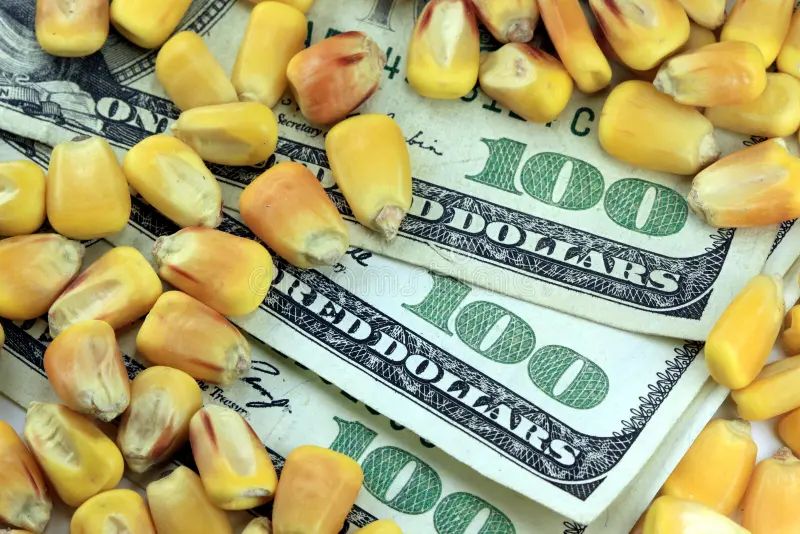
Corn prices have begun to creep back up after a precipitous drop last month, despite record corn production in the U.S. However, overall feed costs should remain reasonable, according to Iowa State University economist Chad Hart.
According to the U.S. Department of Agriculture (USDA), U.S. corn exports from September to January likely exceeded 1.3 billion bushels, up 100 million bushels from the previous month. Strong export figures added a few cents per bushel to the cost of corn last month, and the upward trend is likely to continue as demand shows no signs of weakening anytime soon.
“When the USDA raises its export figures, warehouse inventories get really low, and that should lead to higher prices, and that’s what we’re seeing in the futures market,” Hart noted.
However, any price increase should be self-limiting, Hart added: as prices rise, the pace of sales should slow. “We’re not talking about $5 corn,” he said. “We’re talking about prices in the $4.50 range.”
Within the U.S., consumer demand for protein—especially beef and chicken—remains unusually strong despite high prices. And this trend appears to be spreading globally, driving increased demand for feed and, consequently, for U.S. corn, Hart explained.
The same can’t be said for soybeans, which rose nearly 30 cents per bushel last week. Current soybean prices, according to Hart, are based on speculation that China will purchase more U.S. soybeans than it currently does—speculation that the USDA emphatically refuted in its February 10 report.
“China is reportedly considering purchasing more U.S. soybeans.” “Global soybean import demand was virtually unchanged from last month, so if China buys more from the United States, global soybean exports will likely shift, with more U.S. supplies going to China and less to other markets,” the report said. The USDA left its expected average soybean price for farmers unchanged at $10.20 per bushel.
U.S. soybean producers face stiff competition from Brazil, which typically has lower production costs and has grown a record 6.6 billion bushels of soybeans this season, Hart noted.
“This means that many countries are now turning to Brazil for their soybean purchases because they have huge volumes to sell,” he said.
Global markets appear to be converging on a pattern in which Brazil dominates soybean production and the U.S. dominates corn production. And the upcoming season is unlikely to reverse this trend—farmers, at least in Iowa, are preparing most of their acreage for another year of corn production, Hart said. Early USDA estimates suggest the potential 2026 corn harvest will be only slightly smaller than the 2025 record.
Read also
MERCOSUR Agri Markets: The Forces Reshaping Global Supply
Corn prices in Ukraine are rising, but competition with Argentine grain is intensi...
Escalation of conflict around Iran could trigger rise in corn prices
Pig population in the EU has decreased slightly
Wheat exports from Ukraine exceeded 10 mln tons




Got additional questions?
We will be happy to assist!
Write to us
Our manager will contact you soon