

Ukraine’s veterinary and phytosanitary legislation undergoes EU screening
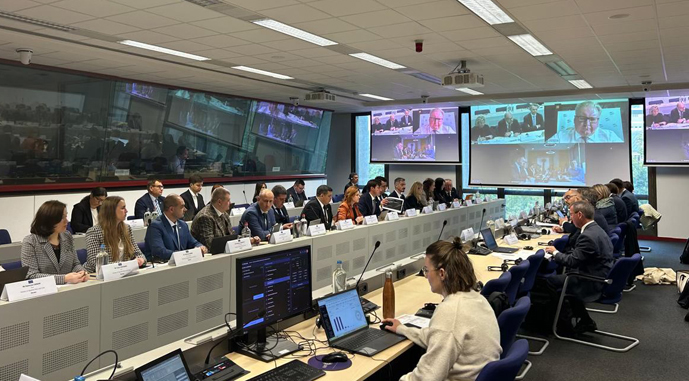
A bilateral meeting between Ukraine and the European Commission, as part of the official screening of Ukraine’s legislation for compliance with EU law under Negotiating Chapter 12 “Food Safety, Veterinary and Phytosanitary Policy”, began on September 15 in Brussels, according to the Ministry of Economy, Environment and Agriculture.
Deputy Minister Taras Vysotskyi emphasized that Chapter 12 covers a key area fundamental to consumer protection, animal and plant health, as well as the functioning of the internal market. “Consistent alignment of Ukraine’s legislation with the EU acquis in food safety, veterinary and phytosanitary policy will significantly improve public health protection and enhance competitiveness. To this end, we seek close cooperation with the European Commission, sharing experience and relying on expert support to achieve full compliance with EU requirements in the shortest possible time. Progress in this area will protect public health and strengthen trust among consumers and trade partners,” he stated.
On the first day, the Ukrainian side presented in detail the state of adaptation of national legislation in food safety, veterinary, and phytosanitary measures to EU law. The discussions covered issues such as harmonization with the EU Acquis on food safety standards; the veterinary sector, including animal health and welfare, official control of products of animal origin, and systems for disease prevention, surveillance, and control; as well as phytosanitary aspects covering plant health, seeds, planting material, and pest prevention.
According to the Office of the Deputy Prime Minister for European and Euro-Atlantic Integration, the Chapter 12 screening will last five days, until September 19. The agenda includes reviewing legislation, administrative structures, animal identification systems, official laboratories, programs for preventing and eradicating infectious diseases, animal movement control, handling of animal by-products, biosafety, animal feed, human nutrition, veterinary medicines, animal welfare, novel food technologies, pesticide residues, general food law, phytosanitary measures, GMOs, and the sustainable use of pesticides.
A separate section of the talks is dedicated to the implementation of Regulation (EU) 2017/625, which concerns the system of competent authorities, delegation of tasks, staff training, analytical methods, certification, financing of control activities, as well as import control systems.
Read also
Food, Fuel, Future: How Will Ukraine Scale Processing?
Ukraine Loses the EU Market and Returns to Fierce Wheat Competition
Brazil’s soybean exports drop nearly 18% in March amid shipping challenges
Indian vegetable oil buyers reduce purchases, expecting prices to ease after Iran war
EU soft wheat and rapeseed yields expected lower in 2026




Got additional questions?
We will be happy to assist!
Write to us
Our manager will contact you soon