

South Africa harvests record 2.771 mln tons of soybeans
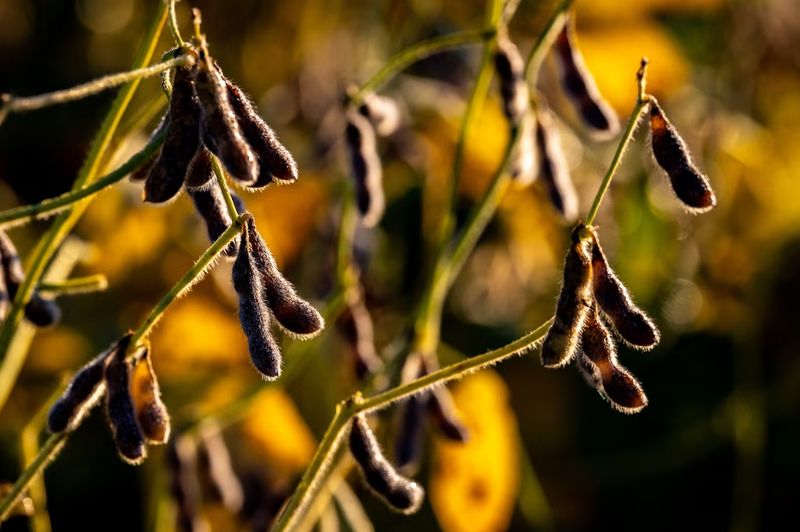
The soybean industry remains one of South Africa’s success stories in agriculture and is now breaking new records. The country harvested a record soybean crop in the 2024-25 season, estimated at 2.771 million tonnes, up 50% from the previous season. This is on the back of the expansion in area plantings and the higher yields following favourable rainfall.
Significantly, this harvest marginally exceeded the last ample crop of 2.770 million tonnes in the 2022-23 season. This abundant harvest further entrenches South Africa’s position as a net soybean exporter.
Importantly, this is remarkable progress, given that in the 2010s South Africa was a net importer of soybean oilcake, bringing in close to a million tonnes a year. We are now in a far better position than we were in that distant past. We are now a net exporter.
What follows is a brief synopsis of how we got to this excellent position: a superb soybean harvest.
In the 2010s, South Africa experienced a strong demand for soybean oilcake or meal. The growing demand for oilcake, in turn, was underpinned by increased consumption of high-protein foods, particularly poultry products, in the country.
South Africa’s per capita consumption of poultry meat has almost doubled over the past two decades, currently estimated at around 41 kilograms.
To meet the growing demand, South African agribusinesses, supported by the government, invested to increase domestic soybean processing capacity from roughly 860,000 tonnes in the 2010s to over 2 million tonnes today.
This was primarily aimed at stimulating domestic soybean production as part of the country’s import-substitution strategy. South African farmers responded positively to these incentives.
The plantings increased 21-fold over the past 30 years to 1.151 million hectares in the 2024-25 production season. It is this expansion in plantings and favourable rains that have now delivered the 2024-25 season’s record harvest of 2.771 million tonnes.
Notably, technological improvements, such as improved seed cultivars, fertilisers, and better farming practices, also contributed to increased production over the years.
Yield improvements, which doubled from the 1993-94 production season to over 2.41 tonnes per hectare this season, illustrate the contribution of better farming practices and technological advancements.
One of the most notable technological improvements was the adoption of genetically modified seeds (GM) in the early 2000s, which continues to spread across the country.
In the 2024-25 production season, GM seed constituted roughly 95% of South Africa’s soybean plantings. This is the only country on the African continent that produces GM soybeans.
Therefore, it is unsurprising that South Africa continues to enjoy tremendous growth in soybean output while production in other African countries remains pedestrian.
This success is not unique to South Africa; the world’s leading soybean producers, such as the U.S., Argentina, Brazil, Paraguay, Canada and Uruguay, all grow GM soybeans. About 75% of global soybean production in the 2024-25 production season was GM.
In essence, the investment in expanding South Africa’s soybean processing capacity and improving production techniques has led to a success story in import substitution for soybean meal.
Over 80% of the local soybean meal consumption was imported in the 2010s, but South Africa is now a net exporter. In the 2025-26 marketing year, which corresponds with the 2024-25 season, South Africa’s soybean exports are estimated at 350,000 tonnes.
We are likely to see our production improving in the coming years, as we grow our position as an exporter of soybeans.




Got additional questions?
We will be happy to assist!
Write to us
Our manager will contact you soon