

India: Officials issue dire warning about potential food shortages that could impact millions: ‘We should be worried’
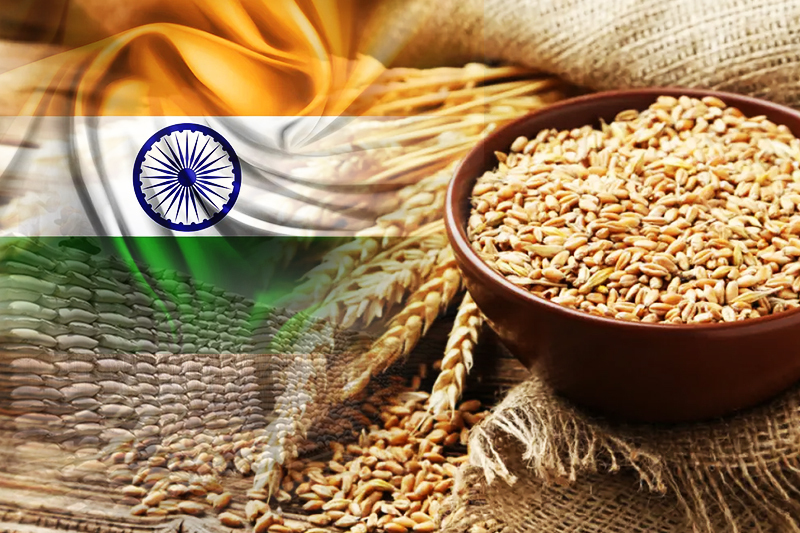
India is the second-highest producer of both wheat and rice, according to the World Economic Forum. But with rising atmospheric temperatures changing rainfall and other weather patterns, experts warn that these agricultural outputs will soon be dramatically lower.
Outlook Planet reported on the concerning patterns, sharing that India’s wheat and rice outputs are expected to dip by 6 to 10% in the coming decades.
This is largely due to a loss in freshwater supply. Atmospheric temperatures are climbing — 2024 was India’s hottest year on record, the Times of India reported — and this has changed the weather.
Western Disturbances, the weather systems that migrate from the Mediterranean, are decreasing in India. These systems are responsible for bringing winter rain and snow, which in turn supplies much of the springtime freshwater supply needed to grow crops. And without this water supply, crops cannot grow.
“Water availability is decreasing,” said Dr. M Ravichandran, who works as the Secretary with the Indian government’s Ministry of Earth Sciences. “Over two billion people, including those in India and China, depend on this water. It is a very serious issue, and we should be worried about the future.”
Outlook Planet cited the National Innovations in Climate Resilient Agriculture (NICRA), a project piloted by the Indian Council of Agricultural Research. NICRA’s research predicts that India’s wheat yield will decline by 6 to 25% by 2100, and that their irrigated rice yields will drop 7% by 2050 and 10% by 2080.
Outlook Planet quoted Mrutyunjay Mohapatra, the Director General of the India Meteorological Department. Mohapatra said that the decrease in these staple crop yields will start “significantly impacting farmers and food security of the country.”
Right now, approximately half of India’s population works in the agricultural sector. With these losses, they may be unable to supplement their income.
A decrease in both food and water supplies could threaten to upend entire economies in India and beyond. This could ripple into higher prices at the grocery store or major shortage supplies — similar to the ones the U.S. has been experiencing with eggs due to a climate-related bird flu outbreak.
A similar issue is happening with fishing in India. With ocean temperatures rising, many fish are moving away from warm coastal waters toward deeper seas. “This is creating major problems for the fishing community and impacting their livelihoods,” Ravichandran explained.
Much of the onus of slowing down the planet’s warming is coming down to the decisions made by governments and corporations to create — and then adhere to — plans for emissions reductions.
However, looking for ways to stay informed and take local action is an excellent way to be empowered in the fight against the drastic impacts of the planet’s overheating. For example, choosing to upgrade to electric cars or non-polluting home energy systems is a great way to minimize your own energy usage.
Further development of the grain and oilseed markets of Ukraine and the Black Sea region will be in the spotlight of the BLACK SEA GRAIN. KYIV conference, taking place on April 22–23 in Kyiv. The event will focus on strategic directions for the agricultural sector through 2030, including investments, energy independence, processing, and exports of high-value products.
Join strategic discussions and networking with industry leaders to gain актуальна insights, discover new business opportunities, and build partnerships with key market players.
Read also
Black Sea & Danube: Crop and Export Forecast
Ukraine to expand sunflower and rapeseed area while soybeans decline — FAS USDA
Wheat faces biggest weekly drop in eight months on higher inventories
Cargill’s head of world trading departs firm after three decades
Indonesia deploys African weevils to boost palm oil output




Got additional questions?
We will be happy to assist!
Write to us
Our manager will contact you soon