

Farmers’ protests in Greece escalate into clashes with police
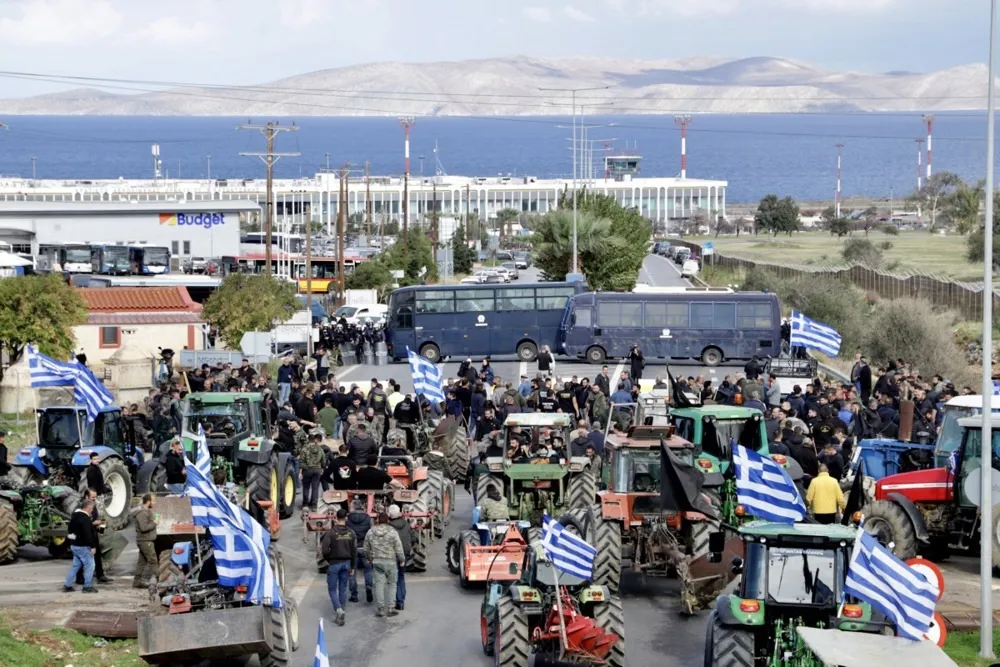
Greek farmers have intensified their protests, which began in November, over delays in the payment of subsidies that farmers were supposed to receive from OPEKEPE (the Greek agency that distributes EU subsidies), according to national media.
The delays are due to an investigation into a corruption scandal. According to the investigation, some farmers, with the help of civil servants, forged land ownership documents to obtain payments. The checks are still ongoing, which has slowed further payments.
The funding delays come at a time when Greek farmers are battling an outbreak of sheeppox that has led to the slaughter of hundreds of thousands of sheep and goats.
Protesters have pulled out thousands of tractors to block important routes, including the main highway between Athens and Thessaloniki, as well as roads to borders and ports.
The blockades reached their largest scale on the previous day. On the island of Crete, protesters entered the runway of the airport in the city of Heraklion, which led to the suspension of flights.
Similar attempts were made in other places, including near airports and border crossings.
Police used tear gas and special equipment against the blockaders, trying to prevent the blockade of critical infrastructure.
On Tuesday, protesters also blockaded bypass roads for two hours, and on Wednesday a group of farmers with tractors will travel to Volos to help farmers and fishermen from Magnesia who are blocking the port.
At a meeting held yesterday in Trilofos (Thessaloniki), farmers from the area decided to blockade particularly important infrastructure, such as the Kalohori oil refinery, the Central Macedonia regional building and the port of Thessaloniki.
The government says it is ready for dialogue but warns it will not allow a complete blockade of strategic points – airports, ports, border crossings.
If and when tensions ease, officials say the sides are expected to meet for talks in the week before Christmas.
By then, the government will be struggling to pay out about half of the 1.2 billion euros in aid, or about 600 million euros, due by December 31.
Protests by farmers are common in Greece, and such blockades have in the past sometimes brought road traffic between the north and south of the country to a standstill for weeks.
The subsidy scandal led to the resignation of five senior officials in June and the gradual closure of the state agency that handled agricultural subsidies. Dozens of people have been arrested on suspicion of making false declarations as part of an investigation by the European Union’s Office of the Prosecutor.
The EU’s independent financial crime body said in late October that the investigation was related to “systematic large-scale subsidy fraud and money laundering activities.”
According to the European Public Prosecutor’s Office (EPPO), 37 people were arrested in 2025 as part of an investigation into agricultural subsidy fraud, and they are believed to be members of an organised crime group.
According to the investigation, the group abused the system by deliberately submitting false applications (for example, false data on land or animals), declaring “shares” or “property” that did not actually exist or did not meet the criteria.
The amount of the fraud alone is estimated to be tens of millions of euros. The EPPO estimates the losses at at least 19.6 million euros.
Read also
Black Sea & Danube: Crop and Export Forecast
Rapid exports of Ukrainian flour to China unlikely despite market opening
Soybean harvest begins in Argentina
Ukraine, Syria and Turkey discuss logistical routes bypassing the Strait of Hormuz
Brazil ships first DDG batch to China, opening new feed market




Got additional questions?
We will be happy to assist!
Write to us
Our manager will contact you soon