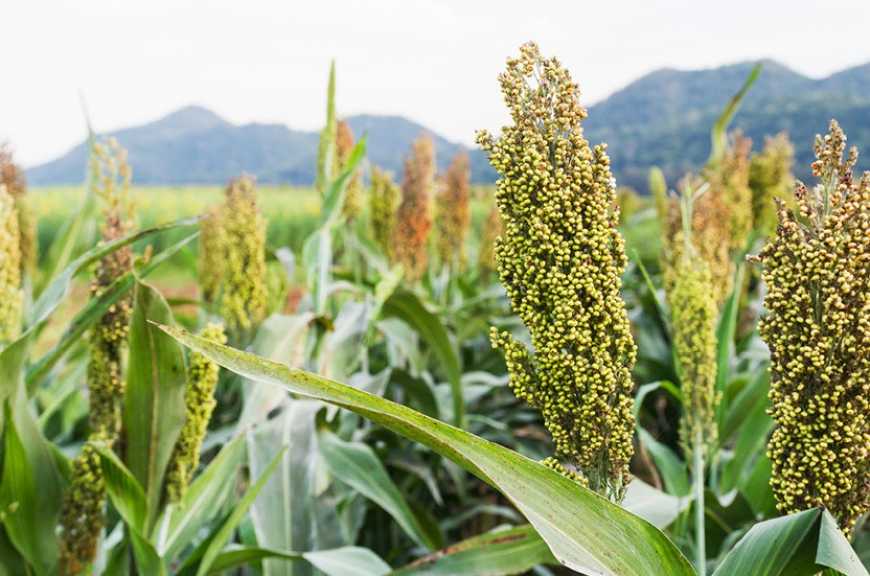
Ethiopia has announced a national programme aimed at increasing sorghum production as output continues to decline while demand rises across both food and feed markets. The initiative was introduced by the Ministry of Agriculture during a validation workshop held on March 24 in Addis Ababa, bringing together farmers, researchers, and development partners.
Minister of Agriculture Addisu Arega said the government will prioritize expanding access to improved seeds and promoting the adoption of modern farming technologies. According to him, these investments are expected to strengthen food security, support economic growth, and reduce reliance on imports, particularly through stronger links with the beverage and poultry sectors. However, details on the programme’s budget and timeline have not yet been disclosed.
Sorghum remains a key staple crop in Ethiopia alongside maize, wheat, and teff, playing a vital role in household nutrition, especially in arid regions where other crops struggle to perform. Despite its importance, production has been on a downward trend in recent years.
Data from the Food and Agriculture Organization shows that sorghum output fell from 5.63 million tonnes in 2020 to around 4.1 million tonnes in 2024, marking a decline of roughly 27%. Forecasts by the United States Department of Agriculture indicate that production is likely to remain near 4 million tonnes in both 2025 and 2026. The decline has been driven by limited access to improved seeds, recurring droughts, pest pressure, and ongoing conflicts in key regions such as Tigray, Oromia, and Amhara. The spread of the parasitic Striga weed is also a major constraint, often causing yield losses exceeding 30%.
Despite falling supply, demand for sorghum continues to grow. It is widely used in traditional foods such as injera and porridge, as well as in local beverages. Beyond food consumption, sorghum is gaining traction in animal feed and small-scale processing industries, including flour, snacks, and baby food production. Given its strong drought tolerance and ability to grow with minimal rainfall, the government sees sorghum as a strategic crop for food security and aims to use the new programme to stabilize output while supporting farmers and local industries.
For almost 30 years of expertise in the agri markets, UkrAgroConsult has accumulated an extensive database, which became the basis of the platform AgriSupp.
It is a multi-functional online platform with market intelligence for grains and oilseeds that enables to get access to daily operational information on the Black Sea & Danube markets, analytical reports, historical data.