

Concerns over deforestation in Brazil rise amid doy expansion
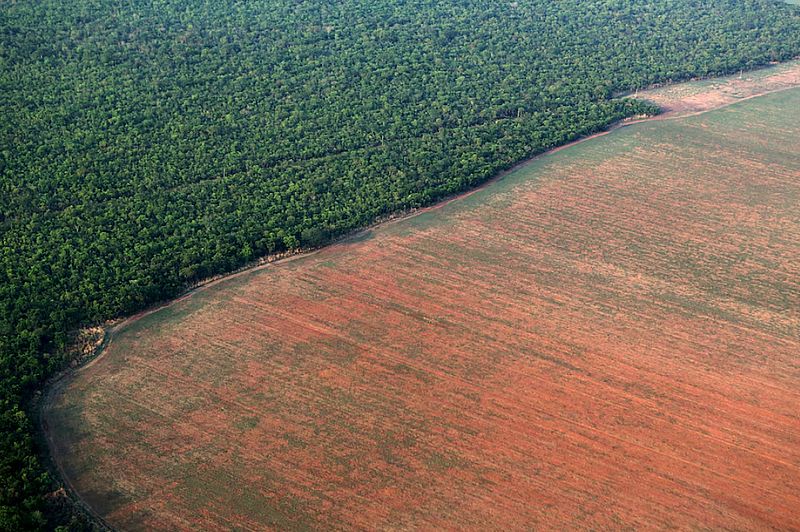
Brazil is forecasting a record soybean harvest in 2026, but the expansion of cultivation areas is raising serious concerns about deforestation. While Argentina expects a slightly smaller harvest than last year, Brazil continues to increase its soybean acreage, threatening the region’s environmental stability.
According to the USDA, Brazil is projected to harvest around 178 million tonnes of soybeans this year—6.5 million tonnes more than in 2025. Expansion of planted areas by 1.7 million hectares to 49.1 million hectares reinforces Brazil’s leadership on the global market ahead of the United States, where the soybean harvest totaled 116 million tonnes, down 3.1 million tonnes from last year. Argentina is expected to harvest approximately 48.5 million tonnes, while China is projected to produce 20.9 million tonnes.
The Union for the Promotion of Oil and Protein Plants (UFOP) expresses concern that this large-scale expansion in Brazil is occurring at the expense of forested areas. The European Union Deforestation Regulation (EUDR) has so far proven largely ineffective (and is not yet in force), as new soybean areas continue to be created even when formal requirements on crop origin are met. UFOP also criticizes the exit of Brazil’s vegetable oil association (ABIOVE) from the Soy Moratorium after the state of Mato Grosso passed laws removing tax incentives for Moratorium participants.
In its January 20, 2026 report, the European Commission classified soybean oil as “iLUC” feedstock. The term “iLUC” stands for indirect land use change, meaning that increased production of soy for animal feed or oil can indirectly drive deforestation in other regions, creating additional greenhouse gas emissions. Biofuels derived from such feedstocks will not be counted toward EU renewable energy quotas from 2030, similar to palm oil.
Some countries, including Belgium and Denmark, have already excluded soybean oil from their biofuel programs. However, UFOP emphasizes that most soybeans are grown for animal feed rather than biofuel production. Applying biofuel legislation to soybean oil is therefore inappropriate and does not reflect the crop’s actual purpose.
Experts urge a careful balance between achieving record harvests and protecting forests, as further deforestation in the Amazon and other regions could have serious consequences for climate and biodiversity.
Read also
Ukraine 2026–2030: Global Drivers and Local Transformation
Ukraine Adjusts to Costly Spring Campaign and Builds a New Farming Model
Thailand promotes the use of B20 biodiesel with subsidies
Ukraine offers new-crop grain without the usual discount to old-crop prices
World Bank develops roadmap to modernise wheat sector in Pakistan




Got additional questions?
We will be happy to assist!
Write to us
Our manager will contact you soon