

China’s soybean imports surge 6.9% to 103.78 million tons in the first 11 months of 2025: GAC
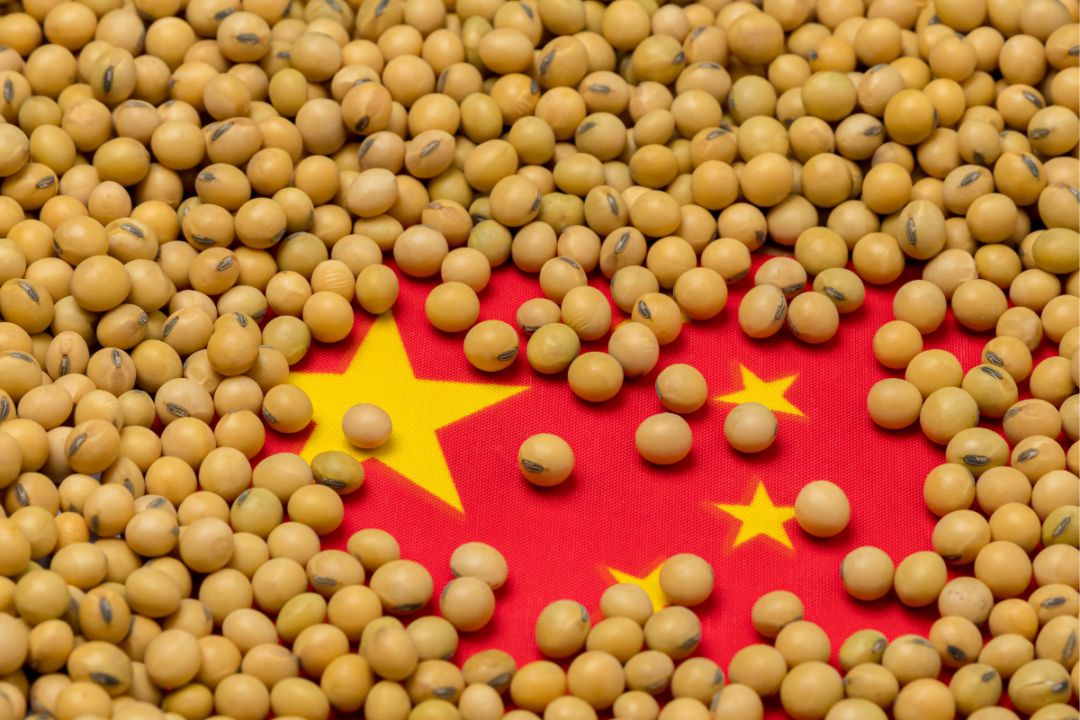
China imported 103.78 million tons of soybeans, up 6.9 percent year-on-year, in the first 11 months of 2025, data from the General Administration of Customs (GAC) showed on Monday.
In November alone, China brought in 8.107 million tons of soybean, according to the GAC data.
Although the GAC data released on Monday did not include country-specific import figures, Chinese analysts said that the fresh understandings reached in China-US Kuala Lumpur talks should ease trade tensions between the two countries, paving the way for agricultural commerce and industry players to accelerate and regain a brisk pace. They noted that the outcome has put bilateral business ties on a firmer, more predictable footing.
Both sides now share the expectation that, following the talks, farm products will operate in a better, more stable environment, setting the stage for soybean cooperation to pick up speed, said Chinese experts.
China is the world’s largest soybean importer. China imported an average of 61 percent of the world’s available soybean supplies over the last five years and China has been the top buyer of US soybeans for years, the Xinhua News Agency reported, citing the American Soybean Association.
Some foreign media outlets have reported recent shipments of US soybeans to China following bilateral economic and trade talks.
A Reuters’ report on December 4, with the headline “More US soybean shipments to China due to load through mid-December,” claimed that shipments of US crops to China are accelerating after a tense tariff war had stalled trade for months, with at least six bulk cargo vessels scheduled to load with soybeans at Gulf Coast terminals through mid-December.
There has been no official confirmation for such shipments made publically.
Responding to a foreign media inquiry about when China and the US are expected to complete the signing of a formal trade agreement and whether any specific details about soybeans can be disclosed, He Yongqian, a spokesperson of the Ministry of Commerce (MOFCOM), said at a regular press conference on November 27 that the ministry has previously issued a statement regarding the joint arrangements made during the China-US economic and trade talks in Kuala Lumpur, outlining the key outcomes and consensus reached, which include agricultural trade. .
He Yongqian said China is willing to maintain close communication with the U.S. team to jointly implement the agreed-upon outcomes of these consultations.
Previously, on November 13, in response to a question on White House’s claim that China has agreed to buy around 12 million tons of US soybeans in November and December, and to buy at least 25 million tons of US soybeans each year for the next three years, He Yadong, a spokesperson for the MOFCOM, said that recently, the commerce ministry has released relevant information on the China-US economic and trade consultations in Kuala Lumpur, introducing the main outcomes and consensus reached during the consultations, which include agricultural trade.
“China is an important participant in global agricultural trade and will continue to uphold an attitude of openness and cooperation, deepening mutually beneficial cooperation with global trading partners and jointly maintaining an open, stable and sustainable global trading system,” He Yadong said.
Notably, Ren Hongbin, president of the China Council for the Promotion of International Trade, led a Chinese business delegation on December 4, to meet Jim Sutter, CEO of the US Soybean Export Council, and other US agricultural leaders in Washington. They have discussed soybean trade, practical cooperation in agriculture, and the implementation of recent high-level consensus between the two countries.
Previously, Sutter said that China remains critical to the US soybean industry. “US soybean farmers are committed to the Chinese market for the long term, and I think they are relieved and pleased to see that the trade tensions between China and the US have eased,” Sutter told the Global Times during the expo in Shanghai in November.
Zhou Mi, a senior researcher at the Chinese Academy of International Trade and Economic Cooperation, told the Global Times on Monday that that China and the US have complementarity in agricultural trade, including in soybeans.
If the US can abide by the consensus reached by the two countries and promote the establishment of stable economic and trade relations, it would also be a good thing for US soybean farmers, Zhou said, adding that for Chinese soybean importers, there is indeed a need for diversified and stable soybean supply. Diversifying import sources is a necessary measure to ensure the stability of soybean imports, Zhou said.
Ma Wenfeng, a senior analyst at the Beijing Orient Agribusiness Consultancy, told the Global Times on Monday that the growth in soybean imports came as demand from China remained persistent and soybean suppliers such as Brazil ramped up supplies. Chinese companies have been ramping up purchases of soybeans as they navigate the impact of global trade uncertainties with a diversification strategy, Ma said, adding that this shift was not only the result of China’s adjustment in its soybean industry chain but also a response to global market uncertainties.
Customs data showed that in 2024, China imported a total of 105 million tons of soybeans. Brazilian soybeans accounted for about 71 percent of imports, while US soybeans accounted for about 21 percent. Additionally, imports of Argentine soybeans reached 4.1 million tons, doubling from 2023.
For almost 30 years of expertise in the agri markets, UkrAgroConsult has accumulated an extensive database, which became the basis of the platform AgriSupp.
It is a multi-functional online platform with market intelligence for grains and oilseeds that enables to get access to daily operational information on the Black Sea & Danube markets, analytical reports, historical data.
You are welcome to get a 7-day free demo access!!!
Read also
Food, Fuel, Future: How Will Ukraine Scale Processing?
Philippines promotes coconut biodiesel to ease rising crude oil prices
Corn Hits Two-Week High as Iran War Threatens Fertilizer Supply
Brazil emerges as a key growth hub for soybean oil demand
Global corn balance may tighten in the new season — IGC




Got additional questions?
We will be happy to assist!
Write to us
Our manager will contact you soon