

US soybean groups plead for no new tariffs
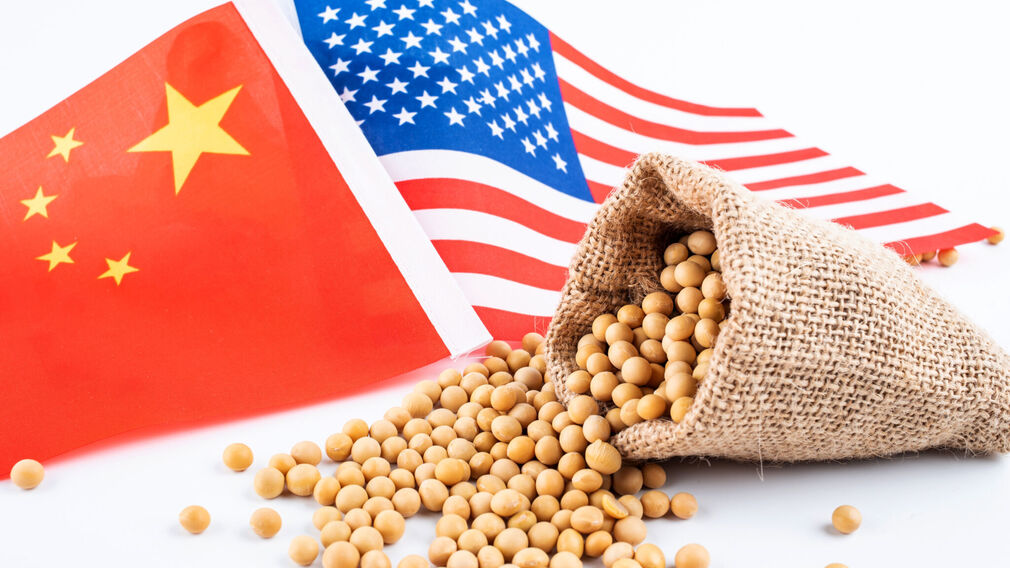
Soybean industry groups told US trade leaders in a public hearing this week that the United States can avoid “mistakes” of the previous trade war with China by forgoing additional tariffs and enforcing existing commitments.
North Dakota farmer Josh Gackle, speaking on behalf of the American Soybean Association (ASA), testified Dec. 16 in Washington. The hearing before the Office of the US Trade Representative (USTR) was convened to review China’s implementation of its commitments made five years ago in the US–China Phase One Agreement.
The public hearing was a component of an active Section 301 investigation into China’s follow-through on the Phase One Agreement between the United States, where soybeans are the largest agricultural export, and China, the top market for US soybeans. The hearing reiterated points addressed in a collaborative letter to Jamieson Greer, who is the US Trade Representative, from the ASA and the US Soybean Export Council (USSEC).
Gackle’s testimony asked the USTR to focus on enforcing existing commitments, thus keeping markets open for US soybean farmers and avoiding the mistakes of the last trade war. The letter compares US soybean exports to China against a pre-trade-war baseline of a record 36.1 million tonnes in 2016-17. Subsequently, the volume dropped to 28.2 million tonnes in 2017-18 (down 22% from 2016-17), 13.4 million tonnes in 2018-19 (down 63%) and 16.1 million tonnes in 2019-20 (down 55%). The letter cited USDA Economic Research Service data stating that soybeans comprised 71% of more than $27 billion in annualized losses to US agriculture due to the trade war.
China purchased nearly 25 million tonnes (valued at approximately $13 billion) from global suppliers in 2023-24. The Chinese market represents more than half of all US soybean exports, and no other market can replace that demand, Gackle said. On average over the past five years, China purchased 61% of global soybean stocks. However, US farmers lost significant market share in that country due to the first round of Section 301 tariffs implemented in 2018.
In the Phase One Agreement, China said it would buy an additional $200 billion worth of US agriculture, manufacturing, energy, services and goods over two years. For the agriculture sector, China agreed to purchase $12.5 billion more US agricultural goods in 2020 than they had in 2017. The figure was to rise to $19.5 billion more than 2017 purchases in 2021. The agreement projected the trajectory of Chinese imports would increase from 2022 to 2025, but the amount required for purchases of individual agricultural products was never specified.
“For the two years of purchase commitments covered by the Phase One Agreement, China imported 62 million tonnes of US agricultural products, or about 77% of the agreed level,” the ASA and USSEC said. “While the targets were unfortunately never reached, it is less clear whether the parameters outlined under the Phase One Agreement were broken in this area.”
The Phase One Agreement stipulated purchases would be made at market prices based on commercial considerations, and that market conditions, particularly in the case of agricultural goods, may dictate the timing of purchases within any given year.
The ASA and USSEC said China has prioritized buying US soybeans when prices were competitive with South America. The groups said the purchase targets could only be met by China modifying its market-driven buying pattern. Ultimately, the market-based and commercial consideration clauses in the purchase agreements can render them meaningless, and any future agreements should avoid similarly ambiguous language, the groups said.
Launching new tariffs or trade penalties might trigger retaliation from China and undermine soybean farmers already facing tight margins and market uncertainty, Gackle testified. He said the 2020 Phase One Agreement is a reminder that easing tariffs helped restore market access and reduce damage to farm country.
The ASA and USSEC asked the USTR to use ongoing negotiations to hold China accountable to its Phase One commitments and “look to a future Phase Two Agreement that is enforceable and provides meaningful continued, certain market access for US soybean farmers into our largest export market.”
Read also
2026-2030 Economic Outlook: New Business Architecture
Geopolitics and Logistics Are Reshaping the Global Wheat Market
Indonesia’s palm oil production expected to see limited growth in 2026
Syria expands wheat and barley cultivation
Argentina has secured the resumption of chicken exports to the EU




Got additional questions?
We will be happy to assist!
Write to us
Our manager will contact you soon