

US Court strips Trump of tariff leverage against China
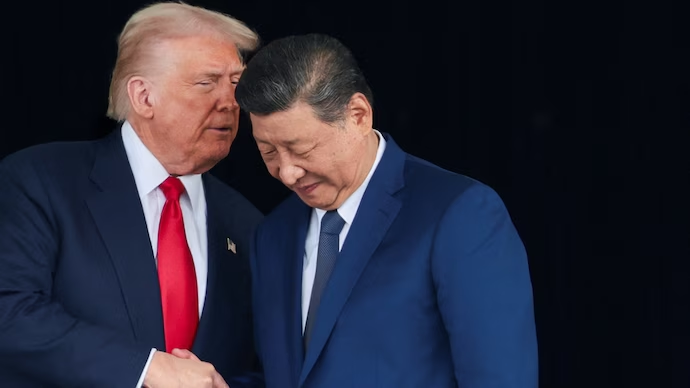
The cancellation of sweeping US tariffs has strengthened China’s negotiating position ahead of the planned leaders’ meeting in Beijing at the end of March, and Bloomberg reported this. The US Supreme Court ruling that invalidated emergency tariff powers effectively deprived Donald Trump of one of his key tools of pressure on Xi Jinping in trade negotiations.
The court struck down a mechanism that had allowed Washington to rapidly raise tariffs for almost any reason. As a result, China now faces only a baseline global tariff of about 15%, which also has a limited duration. This significantly weakens US leverage after tariff rates at times surged to as high as 145% last year.
The decision is particularly significant for agricultural trade. Tariff pressure had previously been a major tool used by Washington to push Beijing to increase purchases of US soybeans. Analysts say China now regains greater flexibility over import volumes, effectively restoring the so-called “soybean card” in negotiations.
This matters for global agricultural markets because China is the world’s largest soybean importer. Reduced political pressure could lead to more flexible procurement policies, stronger supplier diversification, and intensified competition among exporters such as the United States, Brazil, and others.
Beyond agriculture, the removal of tariff threats will make it harder for the US to demand larger Chinese purchases of energy and industrial goods. At the same time, Beijing may take a firmer stance in pursuing its own priorities, including access to advanced technologies and the easing of trade restrictions.
Despite the ruling, analysts note that overall US-China trade tensions are likely to persist. Washington still has alternative legal tools to impose tariffs, meaning continued uncertainty for global trade flows as well as agricultural commodity markets.
Read also
Egypt will refuse to import grain from the occupied territories of Ukraine, — Zele...
MERCOSUR Agri Markets: The Forces Reshaping Global Supply
Corn prices in Ukraine are rising, but competition with Argentine grain is intensi...
Escalation of conflict around Iran could trigger rise in corn prices
Pig population in the EU has decreased slightly




Got additional questions?
We will be happy to assist!
Write to us
Our manager will contact you soon