

Ukrainian sugar can be competitive in the markets of the Middle East and North Africa

In the 2025 calendar year, the main buyer of Ukrainian sugar was Lebanon, Bulgaria took second place. The top five importers of Ukrainian sugar also included Libya, North Macedonia, Syria, and Turkey.
This was told in an interview with The Ukrainian Farmer by Yana Kavushevska, the head of the National Association of Sugar Producers of Ukraine “Ukrtsukor”.
According to her, today everything is decided by the cost of logistics. After all, besides Ukraine, there are other countries – sugar producers with which we have to compete. In particular, Poland itself actively exports its products through northern ports. Not to mention Brazil and India.
Therefore, based on the geographical prerequisites that determine logistics costs, we can say that Ukrainian sugar can be competitive in the markets of the Middle East and North Africa.
“Of course, the European Union is very desirable for us, but access there is limited. On the other hand, there are no quotas on the markets of the Balkan countries, so, in addition to Macedonia, the markets of Montenegro, Albania, and Bosnia and Herzegovina are interesting for us. Serbian sugar has traditionally dominated this region. However, Serbia is reducing production and export volumes, so this is a good opportunity for our producers. However, we need to understand that these countries are small and have a certain level of consumption, and it is limited. So it is not worth counting on the fact that we can export all the excess sugar produced there,” Yana Kavushevska emphasized.
The head of the National Association of Sugar Producers of Ukraine “Ukrsugar” added that, in addition to the Middle East countries, the market of North Africa, in particular Tunisia, is interesting for us.
“However, we need to understand that in that region we are already actually competing with local producers. “After all, some countries, understanding the strategic importance of sugar as a cheap source of carbohydrates and based on food security considerations, developed their own production,” Yana Kavushevska concluded.
Read also
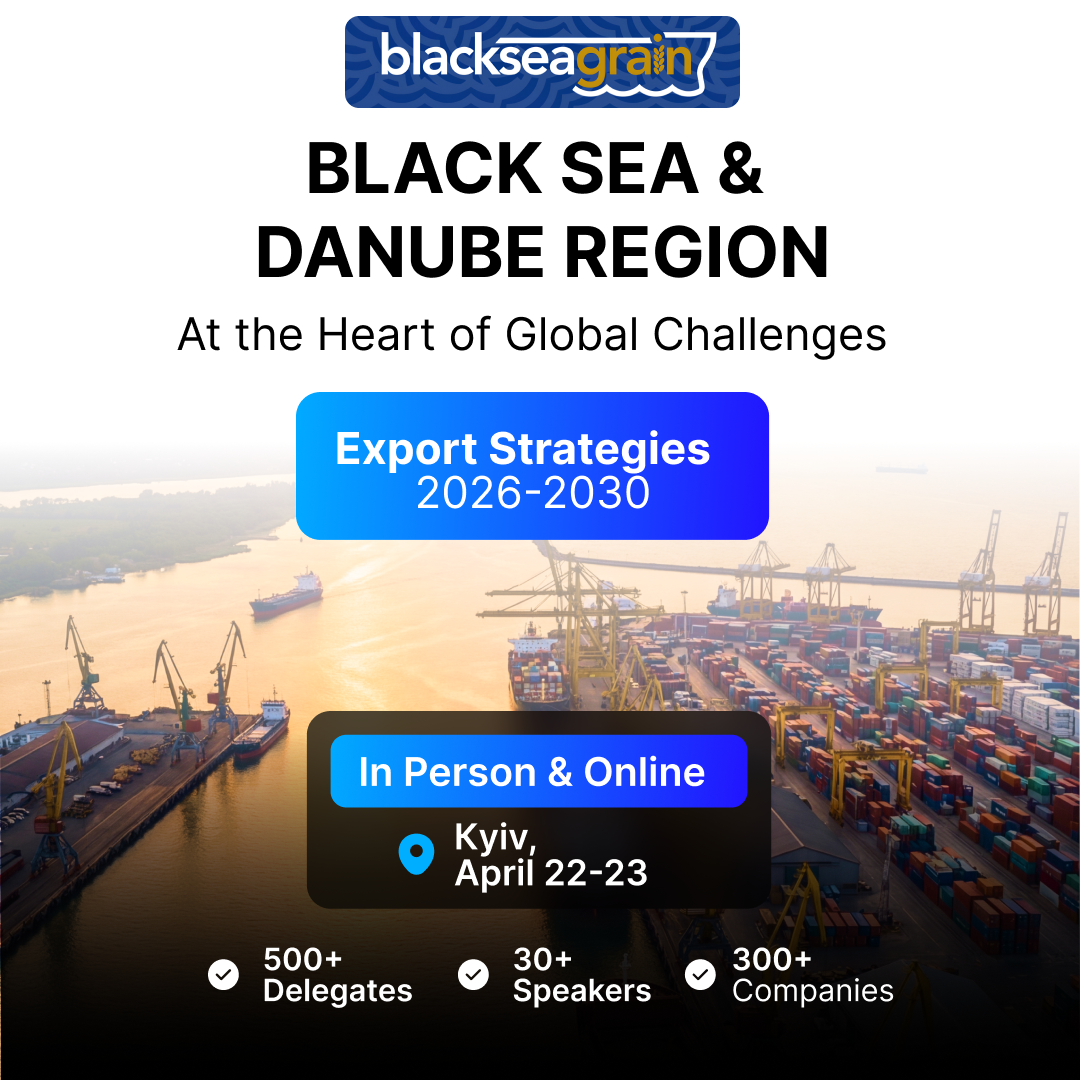
BLACK SEA GRAIN. KYIV: Join with a SMART rate by March 31!
Black Sea vegoil market: Russia’s duty shock opens a window, but raw oilseed suppl...
Global sunseed production to hit record highs
Thailand’s rice exports under pressure from rising costs
Ukraine 2026–2030: Global Drivers and Local Transformation



Got additional questions?
We will be happy to assist!
Write to us
Our manager will contact you soon