

Soybean oil prices rise to highest level in more than two years amid US and Israeli strikes on Iran

Soybean oil prices rose to their highest in more than two years, following a surge in oil prices after the US and Israel carried out strikes on Iran over the weekend, Bloomberg reported.
Chicago futures jumped 3.9% on Monday before paring some gains, although the most active contract is still on track for a sixth straight session of gains. Base palm oil prices in Kuala Lumpur also rose 1.6%.
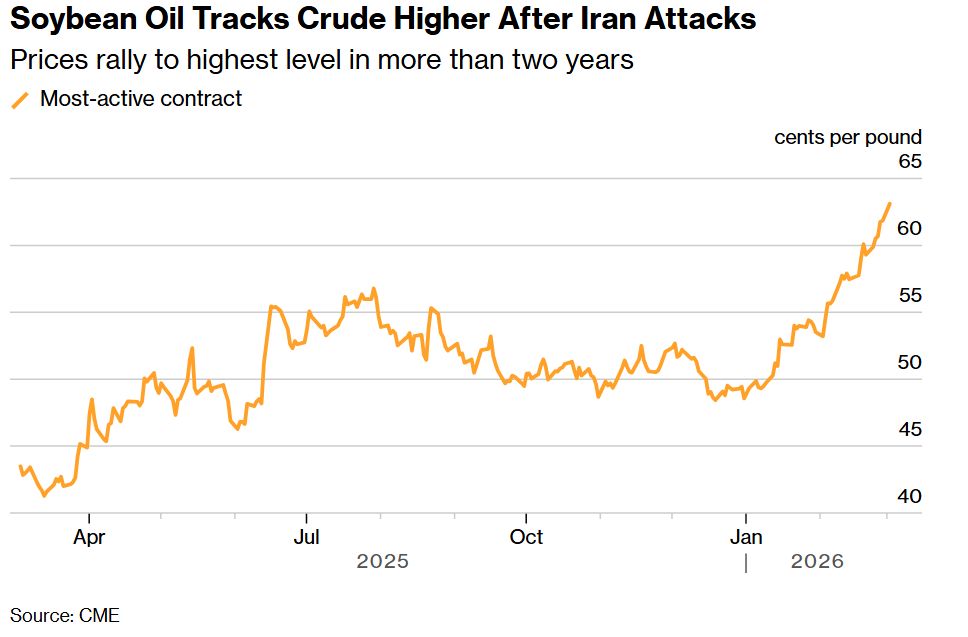
The rally in the energy market supported gains as higher oil prices make alternative fuels, including biodiesel, more attractive and boost demand for vegetable oils.
“Soybean oil will follow oil like a magnet this week after the attacks on Iran,” said Joe Davis, director of brokerage Futures International LLC.
Oil prices jumped sharply, although they later partially retreated from their biggest jump in four years. The US-Israeli war against Iran has destabilized the oil market and raised fears of a prolonged disruption to the Strait of Hormuz.
Although Middle Eastern countries buy less palm oil than India, China and the EU, about 20% of the world’s supply of the tropical oil passes through the Strait of Hormuz, said Aletheia Capital analyst Nirgunan Tiruchelvam. The escalation of the conflict may not lead to a disruption in supplies, as alternative routes exist, but they will take longer.
“Ships heading to the Middle East are avoiding these routes or charging higher freight rates, which could push up vegetable oil prices for the Gulf Cooperation Council countries and affect trade flows,” said Mayur Toshniwal, president and head of trading at Emami Agrotech Ltd., an Indian producer of vegetable oils and biodiesel.
He said the Gulf states, along with Afghanistan and Pakistan, import about 5 million tons of vegetable oils a year. The war in the region will keep prices high and trade volumes could suffer for at least a month or two.
Separately, China said over the weekend that it would impose an anti-dumping duty of 5.9% on Canadian canola imports starting March 1, significantly lower than the previous rates set last year. This came after Beijing announced on Friday that it would lift tariffs on Canadian canola meal following a visit by Canadian Prime Minister Mark Carney in January.
Read also
Food, Fuel, Future: How Will Ukraine Scale Processing?
Poland wants to build new rapeseed processing plants, although it already has exce...
Middle East crisis sees global urea prices established above $700pt fob
Trump administration replaces USAID with new agency
Rice and corn prices soar in North Korea




Got additional questions?
We will be happy to assist!
Write to us
Our manager will contact you soon