

Iran redirects grain imports to bypass the Strait of Hormuz
Iran appears to be shifting import routes to secure key grains, ensuring it can bring in staple food supplies while the Strait of Hormuz remains effectively shut.
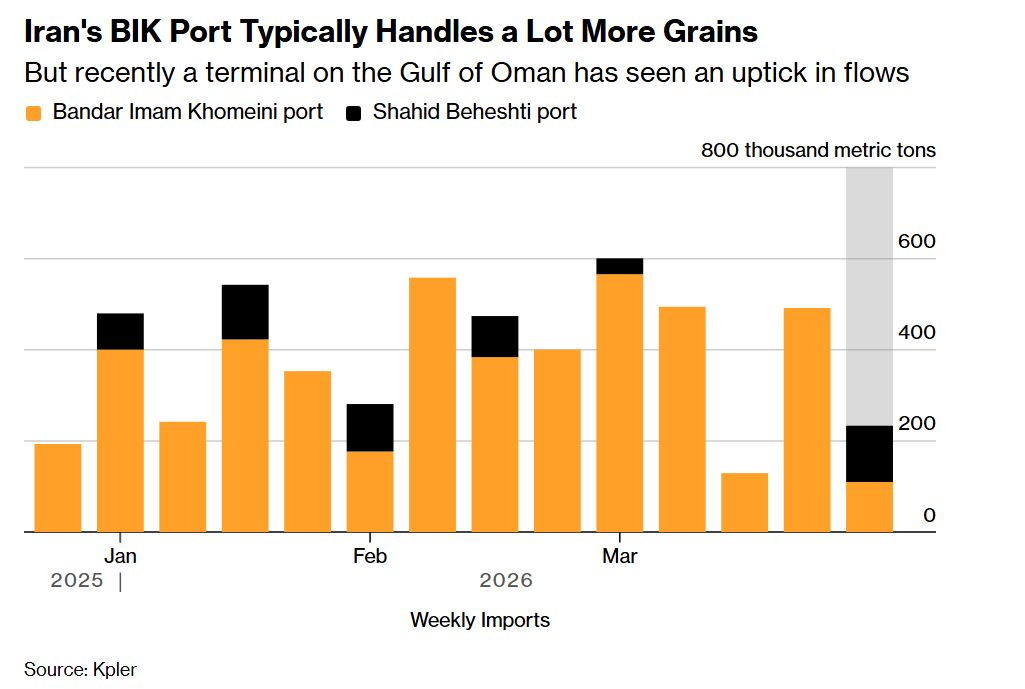
Iran’s Shahid Beheshti port in Chabahar, on the Gulf of Oman, has seen crop shipments rise to more than 120,000 tons this week, according to data from ship tracker Kpler. That’s about 12% more than deliveries into the country’s usual grains hub, Bandar Imam Khomeini port, or BIK, in the Persian Gulf.
It’s a sharp shift from recent months, when Chabahar handled far less grain than the main terminal. Tracking data compiled by Bloomberg and Kpler also show fewer vessels near BIK, where cargoes typically arrive via the Strait of Hormuz.
The country ranks among the world’s largest importers of soybean meal and is a major buyer of Brazilian corn — both used in animal feed and therefore key to the livestock industry. Shipments of all kinds of commodities have been squeezed by the near-halt of traffic through Hormuz this month, driving up prices of everything from fertilizers to fuels.
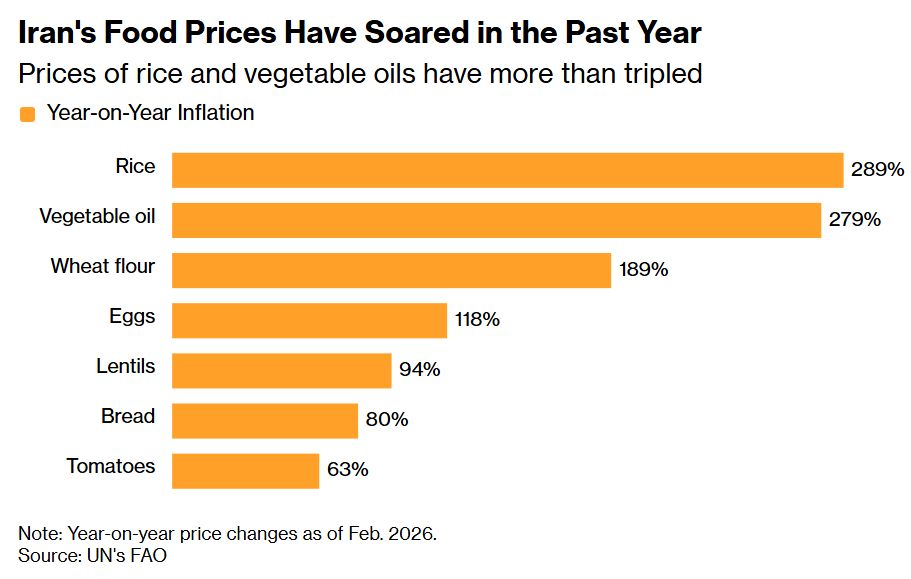
Any prolonged disruptions risk worsening Iran’s food inflation. Prices of some basic foodstuffs have more than doubled in the past year, according to the United Nations’ Food and Agriculture Organization.
“Staple food price inflation in Tehran — rice, wheat flour, vegetable oil — was already extreme in the past six months and will accelerate further,” said Joachim von Braun, professor of economic and technological change at Bonn University.
Iran’s position along the Strait of Hormuz gives it an advantage in terms of influencing freight traffic. A handful of ships have successfully transited the waterway this month, but flows remain severely restricted and the country’s control is not absolute: When Iran itself needs to import goods, high security risks and insurance costs mean some ships may be unwilling to make the journey.
Tracking data show 14 vessels, some loaded with grains and others coal, currently heading toward Chabahar.
Chabahar’s Expansion
Hundreds of ships remain stranded within the Persian Gulf, while others have opted to discharge their cargoes at alternative destinations. For grain traders, Chabahar — which recently undertook an expansion project to increase storage capacity — offers an outlet.
“This is like an early indicator that the bulk grain handling is somehow being shifted over there from BIK so that the vessels can avoid the Strait of Hormuz,” said Madeleine Overgaard, senior market data manager for dry bulk at Kpler. Iran can “definitely increase” imports into Chabahar given the addition of new grain silos, she said.
Among ships diverting to the port is the Niki, a Greek-owned bulk carrier that loaded in Brazil and initially signaled it would dock at BIK. After reaching Fujairah in the United Arab Emirates early this week, the vessel switched its signaled destination to Chabahar and made a sharp turn east, tracking data show. It’s loaded with 65,000 tons of soybean meal, according to data from ship-tracking platform Signal, and previously made stops in Turkey and Malta.
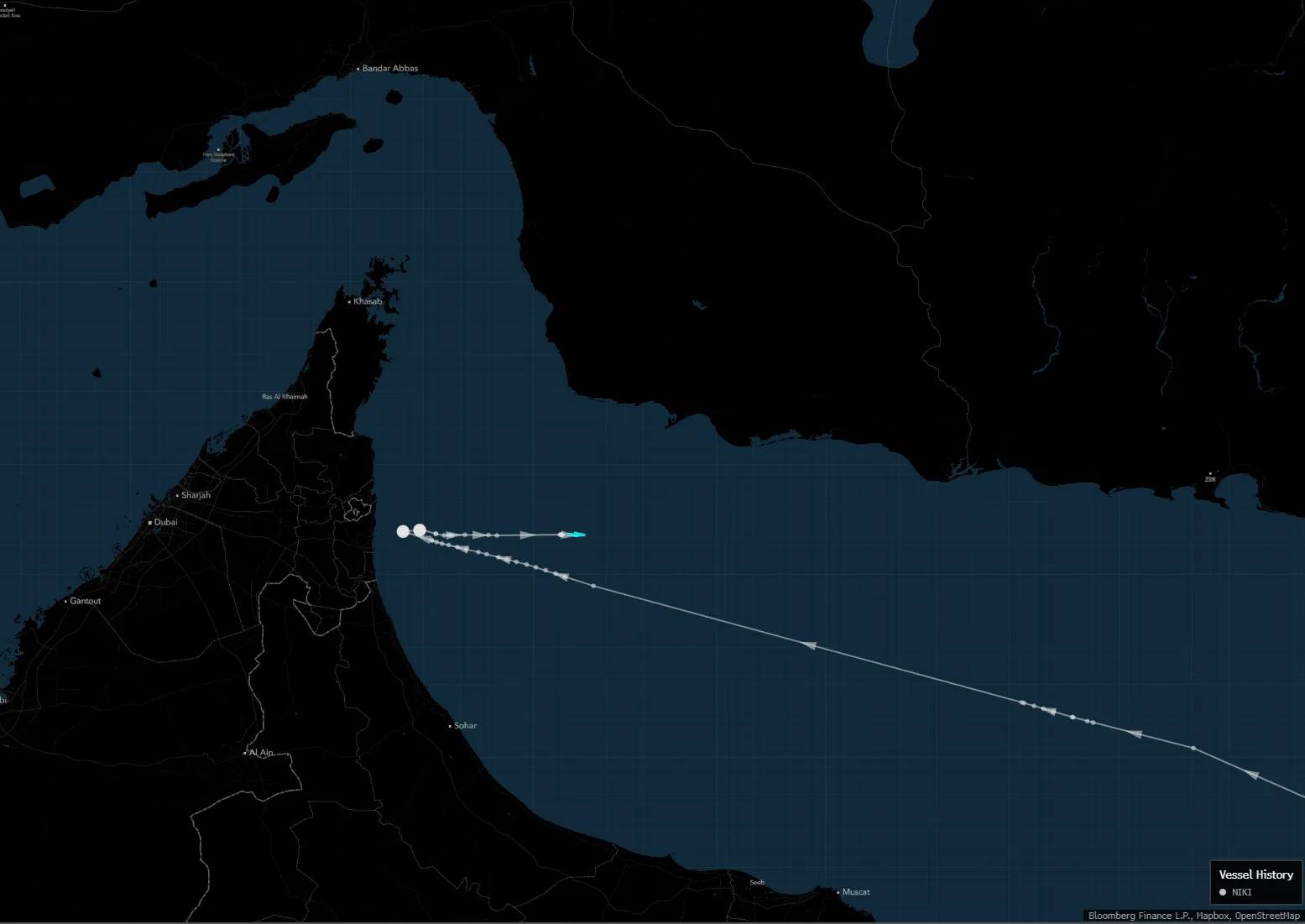
The Niki has not transmitted its location since March 23, shortly after diverting eastward from Fujairah, and its ultimate destination may change. Ships in the region have been known to “go dark,” or stop signaling, as a means to avoid being targeted amid the war. Electronic interference can also indicate false locations.
Greece-based Larus SA, listed as the Niki’s manager in international shipping database Equasis, didn’t immediately respond to a request for comment. There were no contact details listed for the vessel’s owner, Destiny Investments Inc., which shares the same address as Larus.




Got additional questions?
We will be happy to assist!
Write to us
Our manager will contact you soon