

India makes rare long-term soyoil purchases to secure affordable supplies

Indian importers have made unusually large forward purchases of soybean oil for the period from April to July 2026, aiming to secure cheaper supplies amid shifting global vegetable oil markets. According to Aashish Acharya, vice president at Patanjali Foods Ltd., traders have locked in more than 150,000 tons of South American soyoil for each month. The move was driven by soy’s rare discount of $20–30 per ton to palm oil, which typically trades at a lower price.
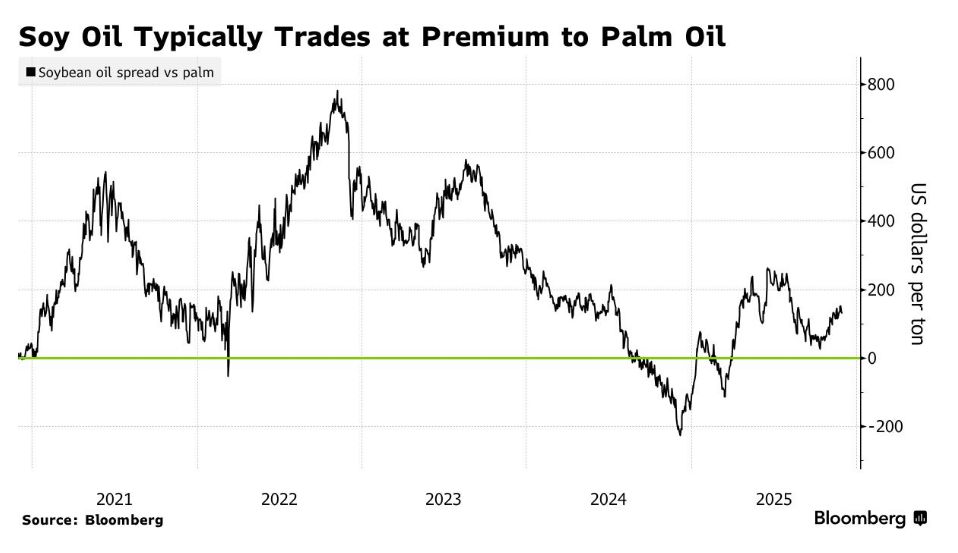
The wave of buying reflects expectations of rising palm oil prices due to Indonesia’s plan to expand its biodiesel mandate. The world’s largest palm oil exporter intends to increase its blending requirement from 40% to 50% (B50) starting in the second half of 2026, a shift that could significantly reduce exportable supplies and tighten global markets. Mayur Toshniwal, president of Emami Agrotech Ltd., described the current level of forward coverage as “exceptionally large,” driven by fears of a potential supply deficit next year.
Traders are also hedging against the risk of tighter sunflower oil supplies. Poor harvests in the Black Sea region and Europe may curb production this season, noted Anilkumar Bagani of Sunvin Group. Already, Black Sea sunflower oil is priced $230–250 per ton above South American soyoil for shipments through July 2026. Acharya added that spot soyoil cargoes for December and January are currently up to $110 per ton more expensive than forward contracts that buyers have already secured.
Despite strong forward interest, soybean oil has temporarily lost competitiveness in the Indian domestic market. Every ton of palm oil is currently about $90–100 cheaper than soy, prompting cost-sensitive buyers to shift toward palm in the short term. Some traders have even canceled 25,000–35,000 tons of soyoil imports, as domestic prices have fallen roughly $50 per ton.
As a result, overall demand for soyoil imports remains subdued despite the winter season, when consumers typically favor soyoil because palm oil tends to solidify at lower temperatures.
Read also
Scientists have created peas with a daily dose of vitamin B12
Egypt will refuse to import grain from the occupied territories of Ukraine, — Zele...
MERCOSUR Agri Markets: The Forces Reshaping Global Supply
Corn prices in Ukraine are rising, but competition with Argentine grain is intensi...
Escalation of conflict around Iran could trigger rise in corn prices




Got additional questions?
We will be happy to assist!
Write to us
Our manager will contact you soon